When big isn’t necessarily better

Reflections on: IN PROCESS… a life, a film, a book, an exhibition, The Vaults, Stroud. Sunday 19th October, 11am-5pm and by appointment until 1st November.
 

“We must, we must, we must increase the bust.

The bigger the better, the tighter the sweater, the boys depend on us.”

I remember chanting that with my boarding school roommates as a teenager, elbows flung back in a futile attempt – in my case at least – to inflate our adolescent chests. Bigger was definitely better, or so we believed.
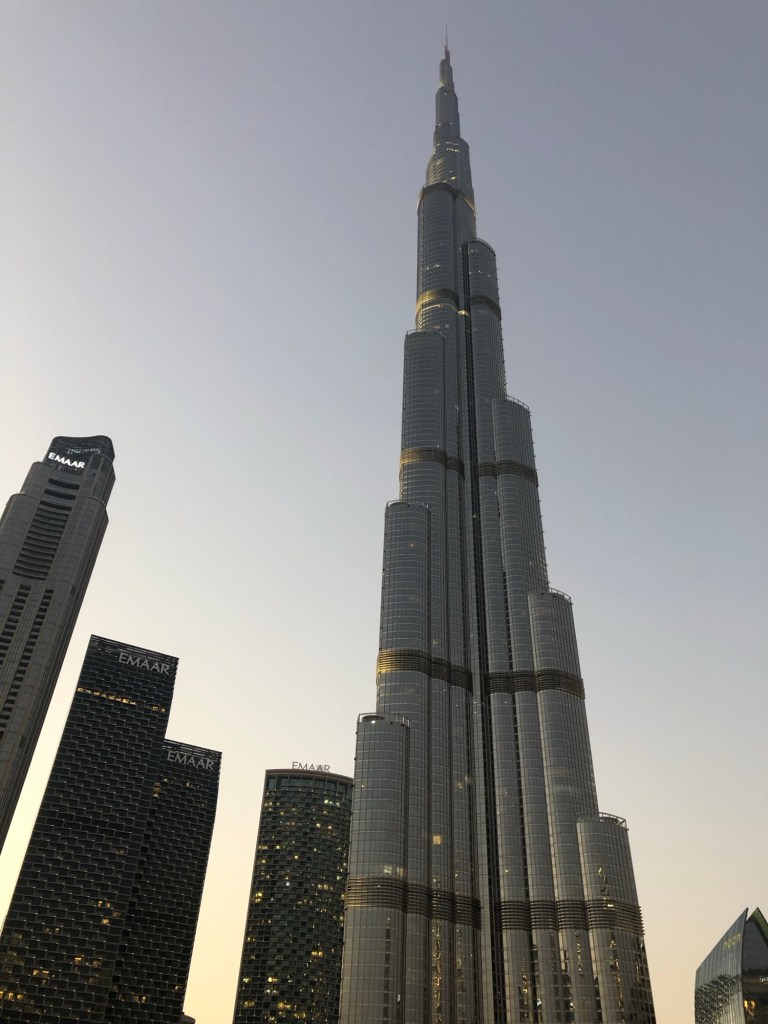
Burj Khalifa, Dubai

Skyscrapers, cars, salaries, houses… In so many areas of modern society, ‘big’ still equals ‘better.’ More followers, more likes, more headlines, more sales. The biggest countries led by the most powerful leaders and largest militaries make the most noise. And yet we know, quantity doesn’t equate to quality. Magnitude doesn’t always reflect meaning or value.

This idea – that bigger isn’t always better – is something I’ve seen reflected both in the trajectory of my great great aunt Joan’s life and in my own development as an artist. (If you are new to Joan’s story, please see my previous blogs for background.)
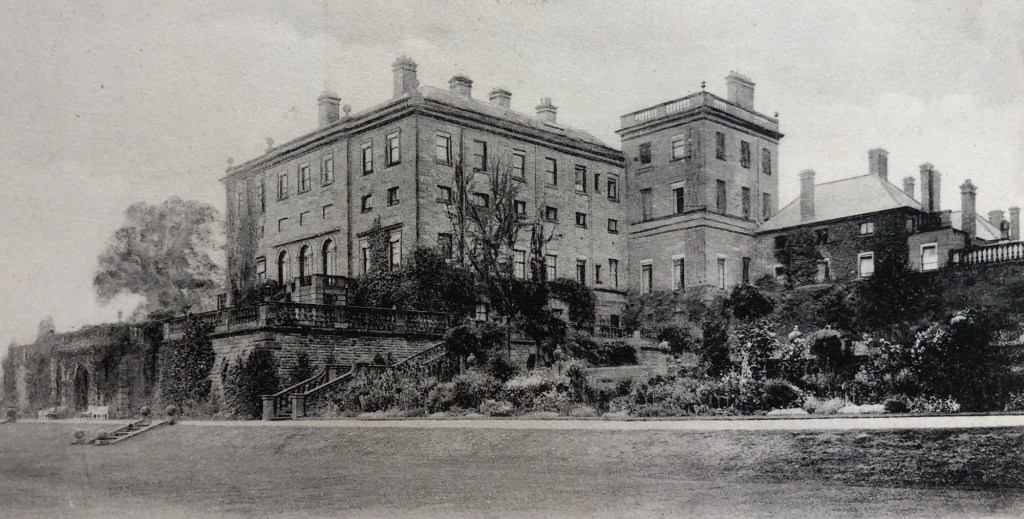
Patshull Hall, Staffordshire

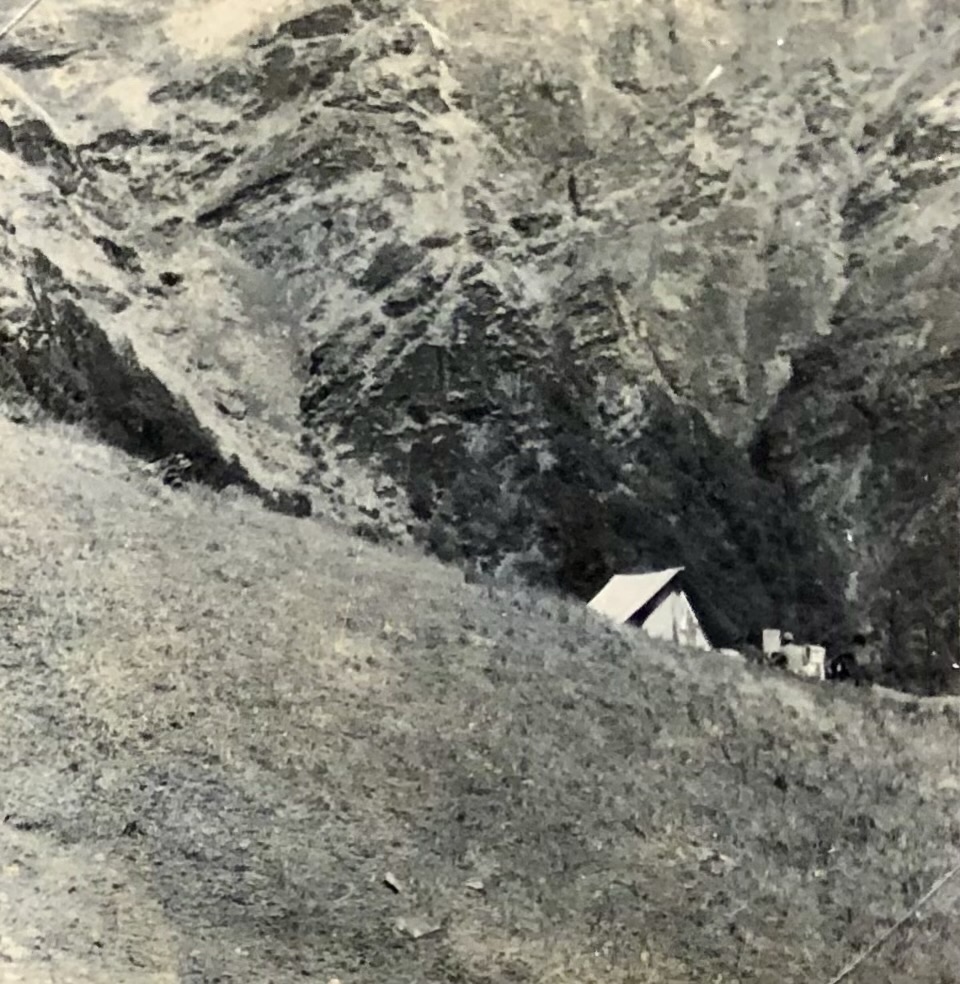
Joan’s tent

Joan grew up in a 147-room stately home in Staffordshire. Yet she spent her final weeks in a single, often soggy Meade tent pitched in a remote Himalayan Valley, surrounded not by grandeur but by shepherds, wildflowers and the sound of rain. She had traded scale for purpose. And her joy, it seems, had grown as her material load had lessened.

My own artistic journey has followed a similarly inverse curve.
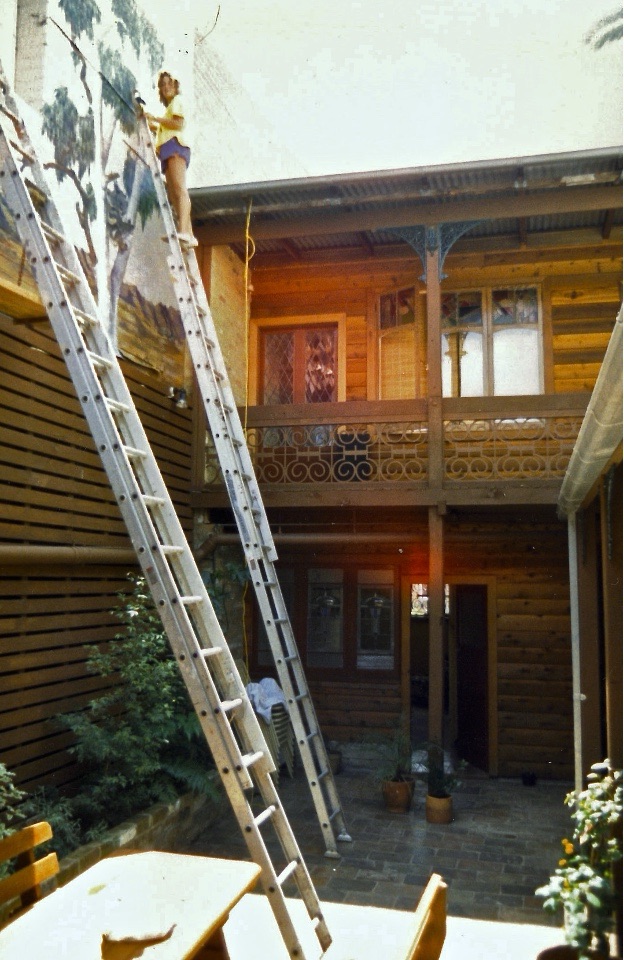
Painting a mural in Sydney, 1987

I began large, unable to contain any drawing or painting within the boundaries of paper or canvas. My work spilled onto walls, first private then public, then grew further to fill stage backdrops for theatres or touring bands. Various mishaps including a paint-splattered boss’s car and a disastrous commission to paint the backdrop for INXS KICK album tour in 1987, which promptly cracked and fell off in large chunks when rolled up, nudged me toward the more forgiving surface of prison walls. There, no amount of damage could make the environment worse than it already was.
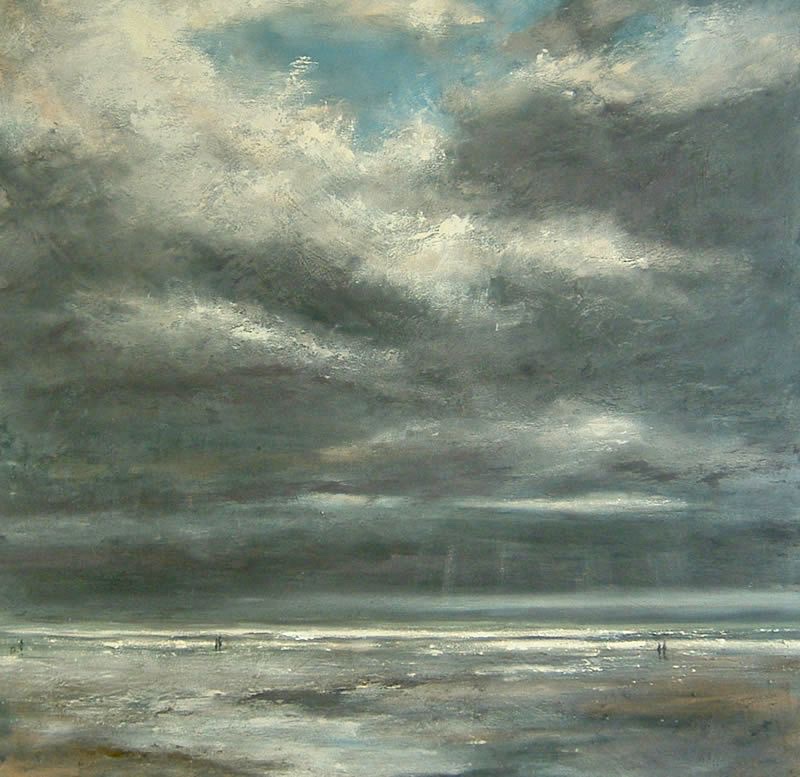
The light danced, 120x120cm

Years later, I turned my focus to canvases of my own, their size dictated by the available studio space and commercial considerations of galleries. And most recently, to works just 28x28cm – or smaller. I have replaced the vast audiences of art fairs with the quiet intimacy of just six or seven visitors at a time into the two vaults beneath my home in Stroud’s Cemetery.

The Vaults

Those vaults now house In Process… a deeply personal exhibition about Joan, her life and the resonance her death still holds for me, our family and small communities she encountered in India.

In one vault, where gravediggers once hung their tools and I now hang mine, visitors watch a short film projected into the open lid of an old trunk telling the story of Joan Margaret Legge.
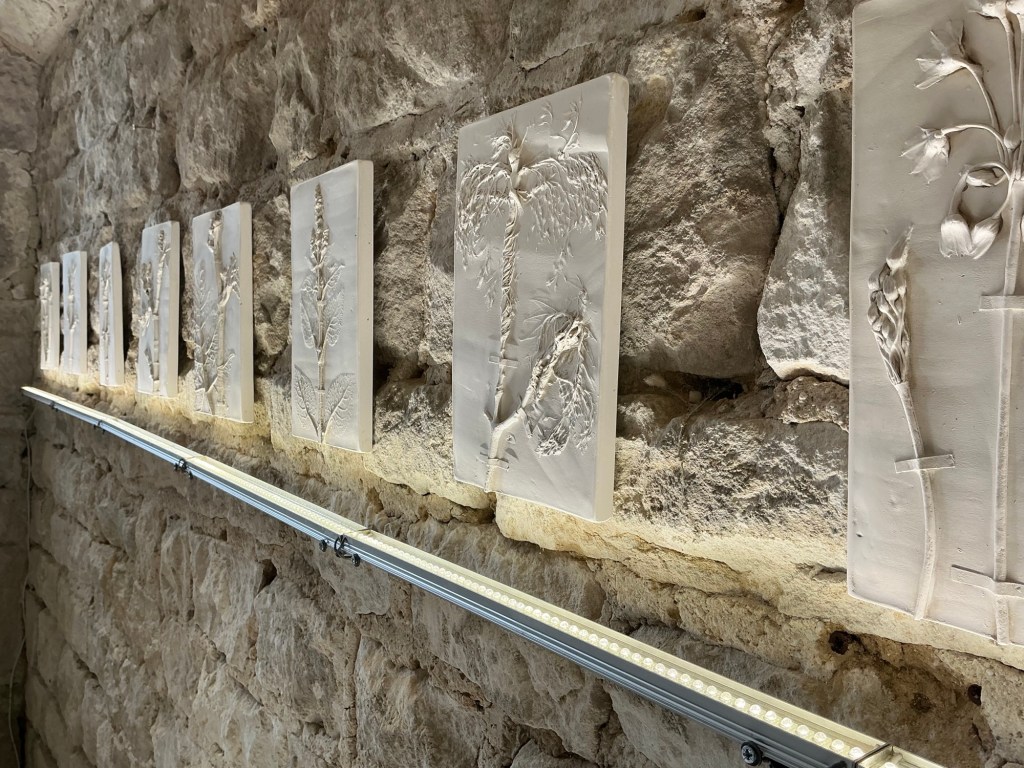
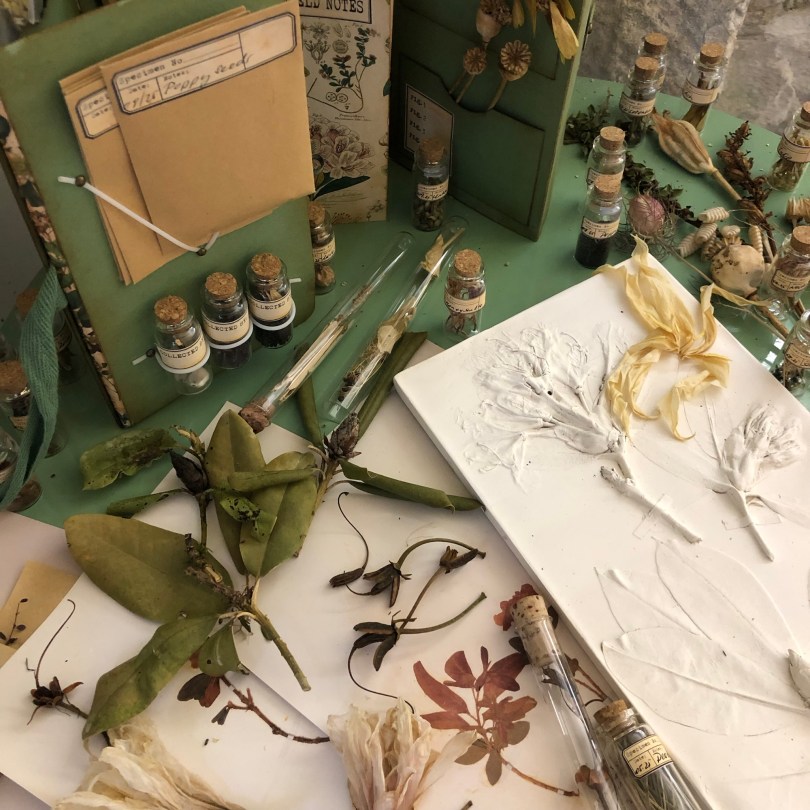
In the other, where those same workers drank tea, ghostly white plaster casts hang like three-dimensional botanical drawings reminiscent of the specimens Joan collected and sent to Kew Gardens.
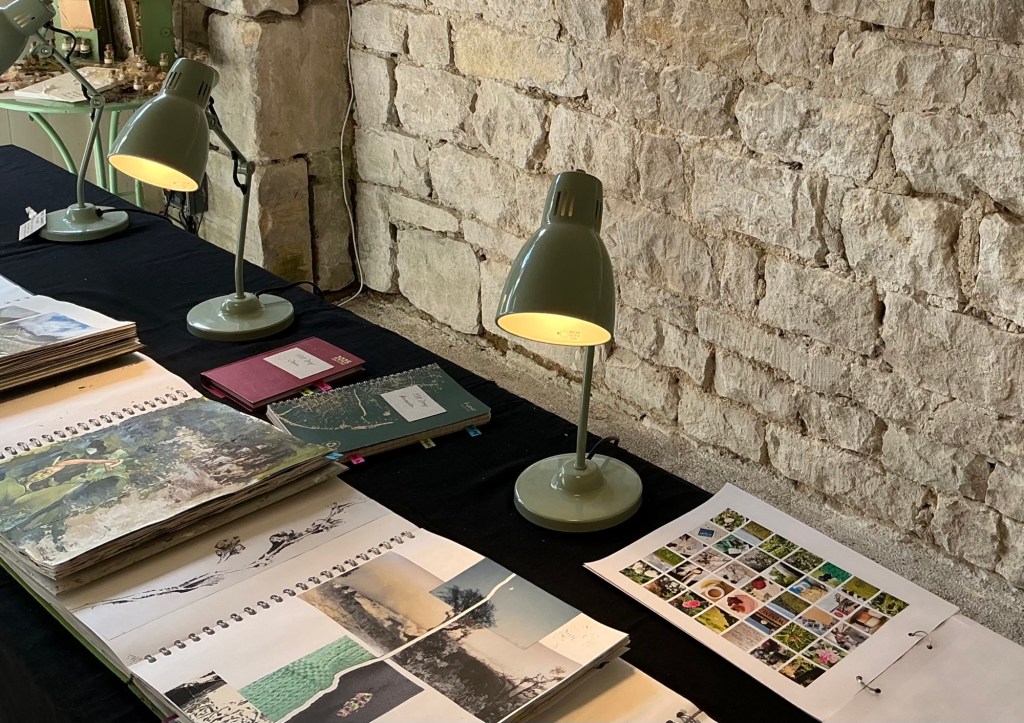
‘138 days’

A series of square sketchbooks chart the 138 days I followed Joan’s 1939 diary entries. Starting on 17th February when I stepped into her shoes as she boarded a ship to India, I step out of them again on 4th July, the day she slipped off the edge of a Himalayan path to her death. One photograph, one sketchbook page, each day a quiet re-embodiment across time. Not a recreation of her journey, but a chance to listen more deeply to the changing tone of her voice in the final months of her life.

At the heart of the exhibition is its smallest piece: a re-working of a first edition of Frank Smythe’s Valley of Flowers, the very book that inspired Joan’s expedition. Through collage, drawings and pressed flowers, it now tells the stories of three visitors to the valley rather than just one: his, hers and mine. Wrapped in brown paper and tied with string like an archival package, the book invites visitors to wear white gloves to turn its delicate pages, not because it is precious in a monetary sense, but out of respect, Unlike most artworks, these ones are meant to be handled and engaged with.
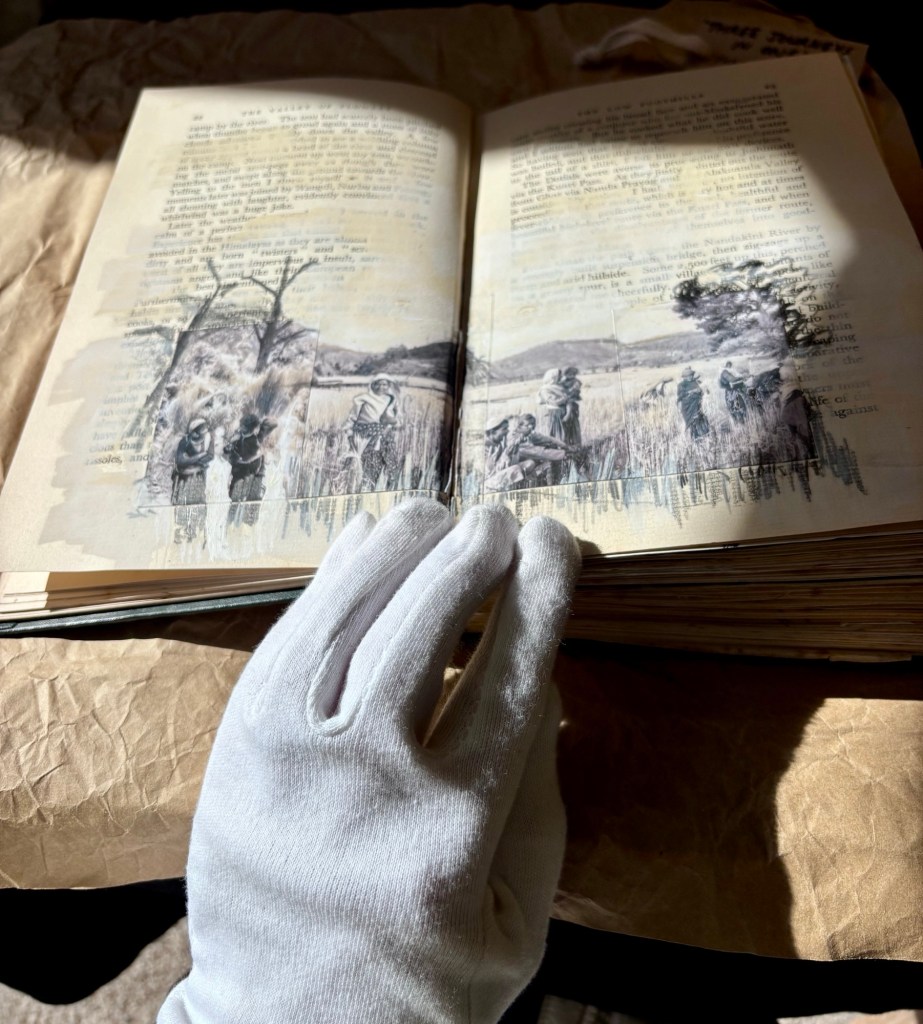
‘Three journeys in one’

There is nothing for sale. No press campaign. No sponsorship. Just a quiet space, tucked away in a garden, found by invitation or chance. A strange but deliberate choice, and to me, a more authentic reflection of the humbleness of where Joan’s life ended than any traditional gallery could offer.

What Joan lost in material possessions, she gained in purpose and joy. Her life distilled into what nine porters could carry. She found a sense of completeness long before she had completed her journey.
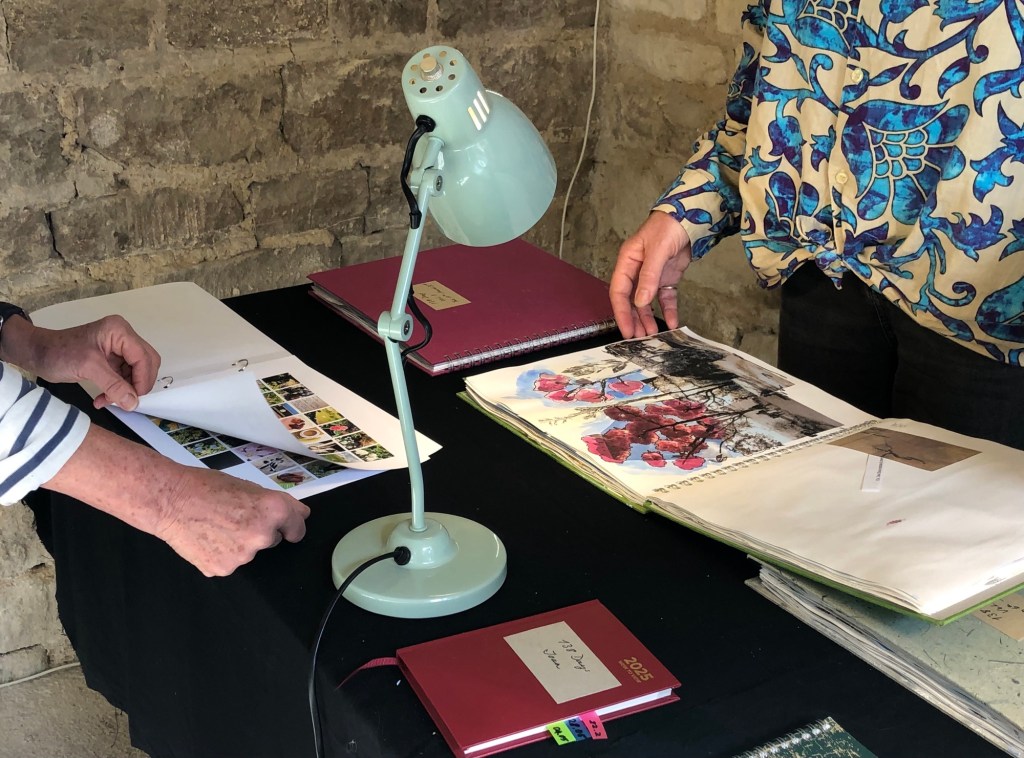
That’s what I hope to convey in the improvised, immersive pieces shown in the warm belly of my limestone vaults. People forgive imperfection and lack of polish as they connect with Joan’s story through their hands, senses and bodies.

Just as artists learn to see not just form but negative space – the shapes between things – so Joan’s outwardly abundant life transformed into an inner world: slower, quieter, less visible, but not lesser in any way.

Maybe this is a natural outcome of ageing… the gentle decluttering of ambition and a reshuffling of values. Or maybe Joan’s story is a simple reminder that richness cannot always be seen and meaning doesn’t always require an audience.

The symmetry in our shrinking trajectories is just an observation.

But it feels strangely right.

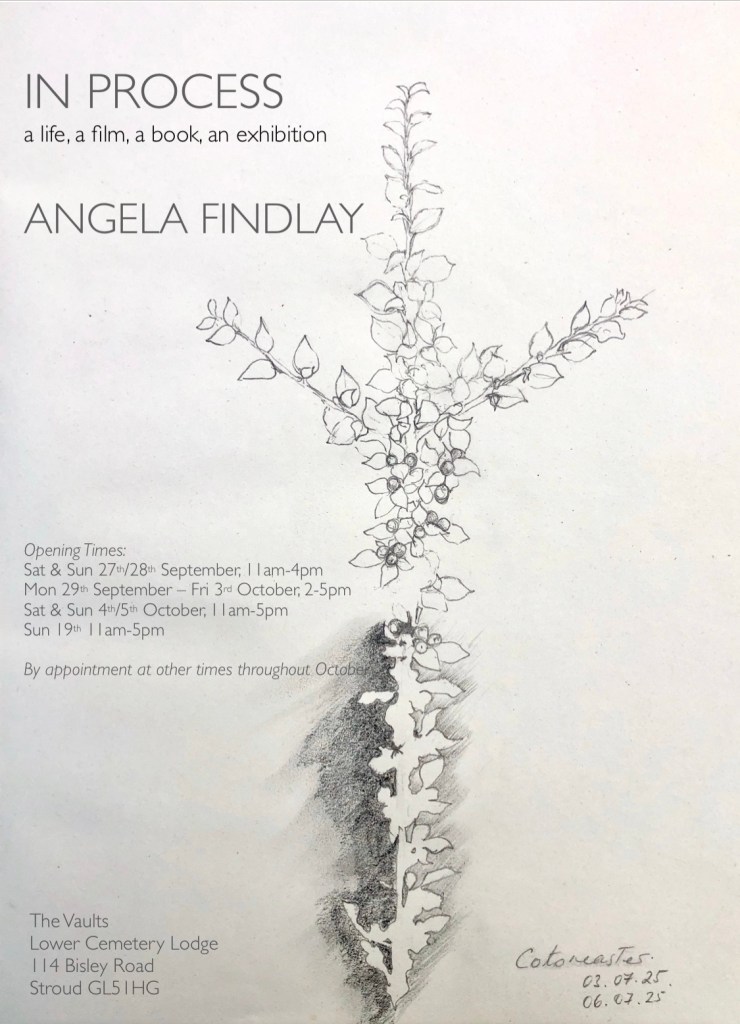
IN PROCESS…

Sunday 19th October, 11am-5pm and by appointment until 1st November.

The Vaults, 114 Bisley Road, Stroud


Following Joan… Part Three

(If you are joining Joan’s story now, you might want to read Following Joan… Parts One and Two first.) 

‘Do you think she jumped… or did she fall?’

It’s 2020 and I am sitting opposite my uncle, a grandfather clock tick-tocking the present into the past.

That question has always lingered around the name of my Great Great Aunt Joan. She was said to have been troubled, never having recovered from the death of her beloved older brother, Gerald, killed at Gallipoli in the First World War. Ill health had dogged her. And as another war loomed on the horizon, perhaps she could not bear to witness more loss. 

I sometimes wish I could type ‘Joan Legge’ into the search box of my life’s hard drive to locate the exact moment her story began to intrigue me. Perhaps it was a conversation with my grandmother, Joan’s niece. Both she and her younger sister had believed, independently, that Joan would not return from her trip to the Himalayas in 1939. Their mother was said to have ‘the gift’ – an unfathomable intuition, a form of knowing that slips past reason. 

That fascinated me, for even as a child I sensed there were hidden channels of communication and knowledge beneath the surface of ordinary life. Perhaps their foreboding of no return planted the idea that Joan’s death had been deliberate.

Joan 1905

Or maybe it came from the anecdotes I gleaned over time from my father and uncle about this eccentric spinster who, after Gerald’s death, cast off the frills and trappings of aristocracy and privilege to forge a life of farming, service and adventure. A life that ended in solitude, in a remote valley half a world away. 

Some lives close with a sense of completeness, even peace. Death may be welcomed after a struggle with illness or the slow wear of age. Others remain unfinished, wrapped in mystery, unresolved, tugging at the conscience of descendants like a child clutching at its mother’s apron strings. 

Joan’s sudden death was of that latter kind. It sent shock waves through the generations, softening with distance into small ripples. Even now they lap at the shores of my own soul. 

Map of the Valley of Flowers, the site of Joan’s camp, death & grave marked in red
©Staffordshire History Centre

It was only last year, travelling to the Valley of Flowers with three of Joan’s descendants, that I fully grasped the scale of her courage. And the violence of her end. The monsoon rains offered us just a fleeting glimpse of the place she fell, its position traced on a map sketched in the days after her death. Yet it was enough to shatter the gentler image I had long created of her tumbling down a wooded slope. The truth was starker. Joan had fallen clean over the edge of a sheer granite cliff.

Her fall haunts me. Those unthinkable seconds of awareness, knowing you are hurtling toward your end. How different from a death that comes inch by inch, offering time to prepare, to resist, to rage, or to reconcile. In July 2024, when I left the Valley of Flowers and Joan’s remote grave, a sudden grief overwhelmed me, buckling my legs and landing me in a pile of donkey droppings. Yet Joan’s own words leave no room for doubt. Her diaries brimmed with excitement for the months ahead, with awe for the surrounding peaks, and with delight in her adventure. She did not choose death. She was very much alive.

So why does her story touch me so deeply? Why not my great grandmother, killed in a car crash?  Why not my grandfather, the ‘muck and magic man’, pioneer of organic farming? Why Joan? And why me – the only one in the family drawn, again and again, to the lives behind us rather than those unfolding ahead? Is it because I have no children to anchor my gaze forward? Or is it that I have no children precisely because the voices behind me insisted on my attention?

Gerald (far left), Joan’s father (seated left), Joan (centre) and others, 1907

Perhaps neither, or both. What I do know is that the dead have enriched my life. And in honouring them, in breaking the silence of the unspoken, in unravelling the mysteries and untangling the knots they left behind, I believe their presence has enriched the lives of others’ too. 

Through my recent studies in Family Constellations, I have increasingly come to experience life as a river, flowing on with or without us. We step into its current for longer or shorter spans, mingling in the same waters where our predecessors once moved. What matters is not the length of time, but the resonance we leave behind. Not quantity, but quality.

Birth is the one beginning we all share. But our endings are as varied as our lives. Accident, chance, destiny, choice… no one can know death’s moment or manner, only its inevitability.

So was Joan’s death a tragedy as her obituaries mourned? Or was it a brilliant ending to a life lived fully right into its final breath? 

Draft for Joan’s eulogy by her sister: ‘If in another world kindred spirits dwell together there Joan & her brother Gerald will be found, I think, among a happy throng of pioneers and explorers of all ages. Courage, endurance and an indomitable will were possessed by this devoted brother and sister and both lie buried in a mountain grave & as one of her friends wrote, ‘”already halfway to Heaven”. She started on her greatest hazardous adventure joyfully and she died as she had lived, unafraid –

Joan and Gerald, 1907

I dedicate this blog to my dear friend in Australia, Tas. Over the past six years, corticobasal syndrome (CBS) has been claiming his body, his movement, his speech. And yet his spirit, his humour, his integrity and his enduring delight in friends, family and life itself still blaze. To know him is both an inspiration and a gift I deeply treasure.  

Further details of my exhibition / event on Joan will follow in my next Blog.  

Following Joan… Part Two

(If you are joining Joan’s story now, you might like to read ‘Following Joan… Part One’ first)

Goal reached, Valley of Flowers. Fritillaries nodding their heads around me. Men off.’ 

On 20th June 1939, just over four months after leaving England, 54-year-old Joan and her troop of porters reached the Valley of Flowers in the northern Indian Himalayas. 

It was ‘a morning in a thousand’. Firs and jasmine scented the air, dew drops sparkled & everyone was cheerful & happy. The track wound up and down until it suddenly dropped sheer to the river. At the bottom, the worst native bridge Joan had encountered yet stretched precariously across a particularly turbulent section. ‘If I had met it in the early days I don’t think I could have faced it.’  

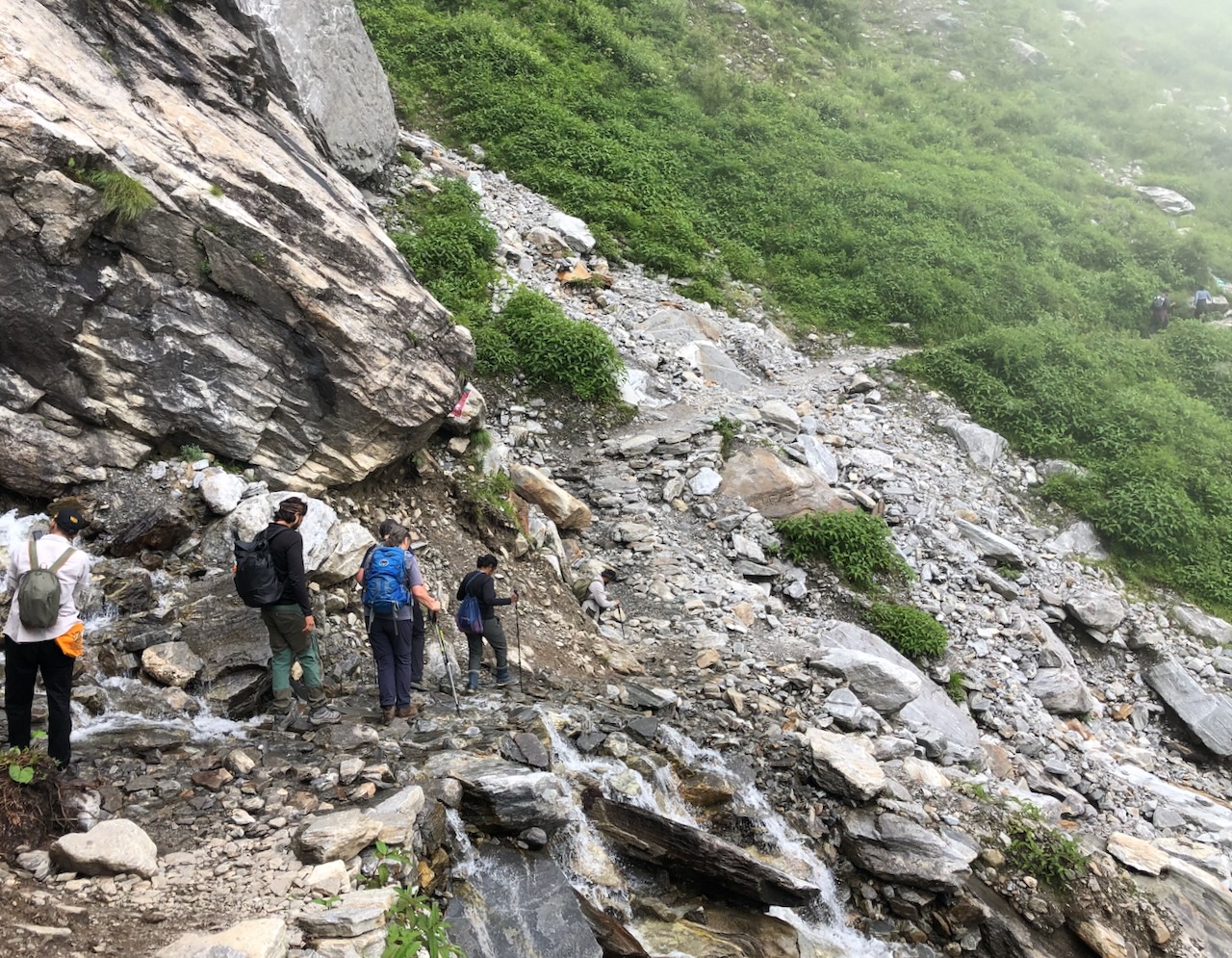
Then came a real climb, so steep she had to crawl part of the way. Even with ice axe and climbing boots, she couldn’t stay upright. The path clung to the side of a mountain which plummeted several hundred feet into the raging waters below, the ground crumbly and uncertain. But she pressed on. ‘One is so busy placing feet that one hasn’t time to think of possibilities.’ 

They slid down a precipice, hanging on to rhododendron bushes, crossed another snow field, then climbed again. Ganga Ram & Amba Dath – two of Joan’s three most loyal young guides – clearly thought she was too slow. ‘Each took a hand & ran me up paying no heed if I was on my feet or not. I had to beg for mercy twice as really they nearly finished me off,’ she wrote. And then they were there. The goal reached. The Valley of Flowers.

Tents were pitched exactly where mountaineer and author Frank Smythe had camped for several months in 1937. With three men managing the camp and plans to stay there until October, Joan was free to roam and explore the terrain of her new home in search of alpine flowers. The monsoon rains were gathering. Conditions would soon become unimaginably wet and the ground increasingly treacherous. But Joan was deeply happy.

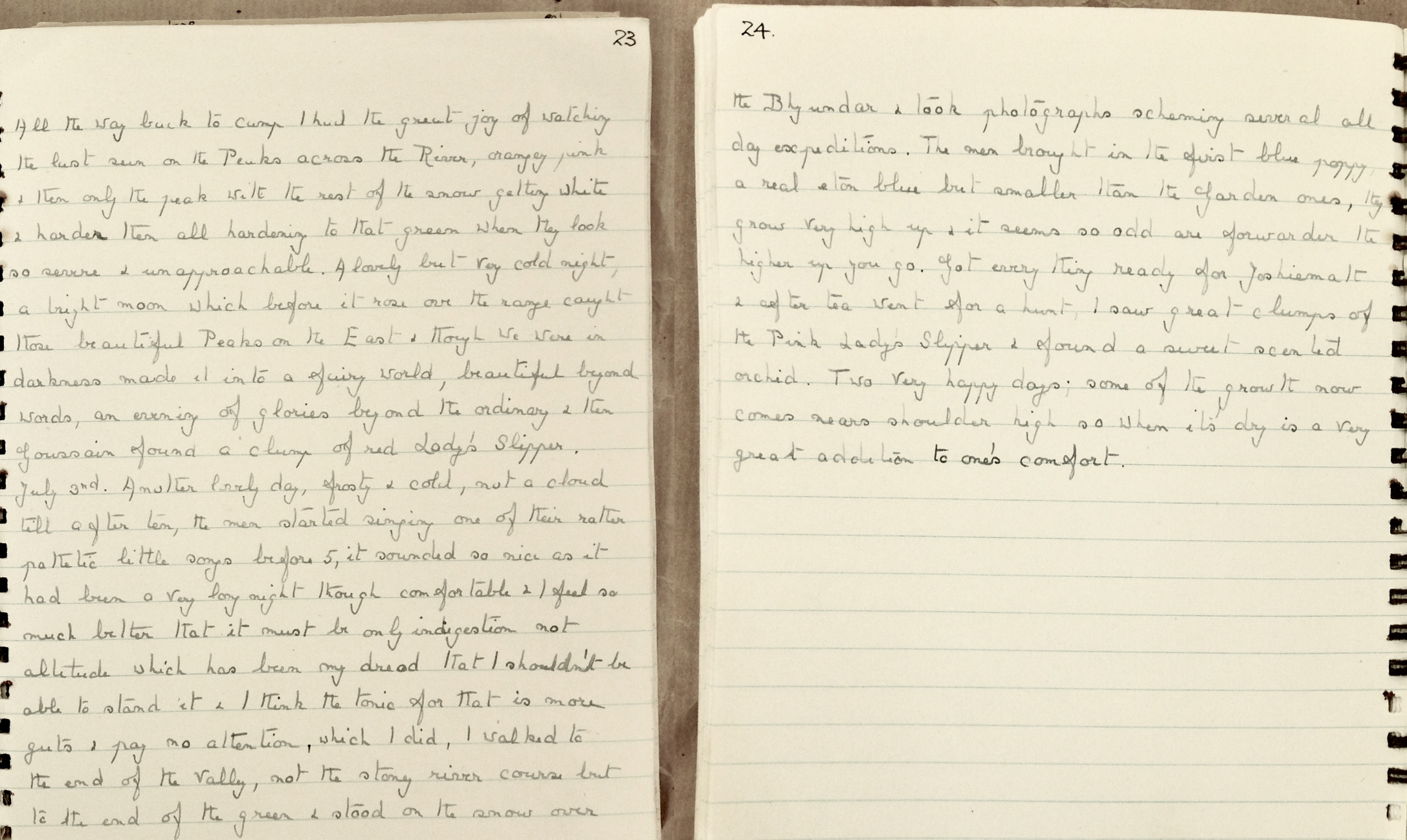
July 2nd. ‘It was the most glorious evening, every way you looked magnificent, through the gorge range upon range of perfect mountains…’ The descent from these dizzying heights, however, was less glorious. Rains had rotted much of the ground and the final stretch was so steep that she had no choice but to descend on her seat, using the ice axe as a brake. Yet Joan revelled in challenge and beauty alike, undaunted by danger, enchanted by flowers and alive to every shifting shadow. ‘All the way back to camp I had the great joy of watching the last sun on the peaks across the river, orangey pink… the rest of the snow getting white & harder, then that green when they look so severe & unapproachable.

That night was lovely but cold. A bright moon rose over the range, catching the snowy summits in the east. Though Joan’s camp lay in darkness, the moonlight made the mountains glow. ‘A fairy world,’ she wrote, ‘beautiful beyond words.’

July 3rd. ‘The men started singing before 5 o’clock this morning, it sounded so nice. The ground has all dried up & things are extremely lovely. If we get spells of two days fine, it will be a great help. Everything is growing very fast.

The following day, Joan was dead.

©Staffordshire History Centre

As abruptly as her life ended, her diary – so alive with wonder – skids to a halt.

Silence.

A telegram or letter from the sub-postmaster in Joshimath informed her family. Joan had slipped, fallen and died instantly. Due to the remote terrain, her body was carried back to camp and preserved in the snow until a magistrate could formally record the death. When her sister, Dossy, requested that Joan be buried in the valley, a small grave was made. A year later a headstone was erected, apparently delivered by Dossy herself.

Except that last bit has been deemed most unlikely by Dossy’s grandchildren who can find no record of their grandmother having made the long, arduous journey to India in the first year of the Second World War.

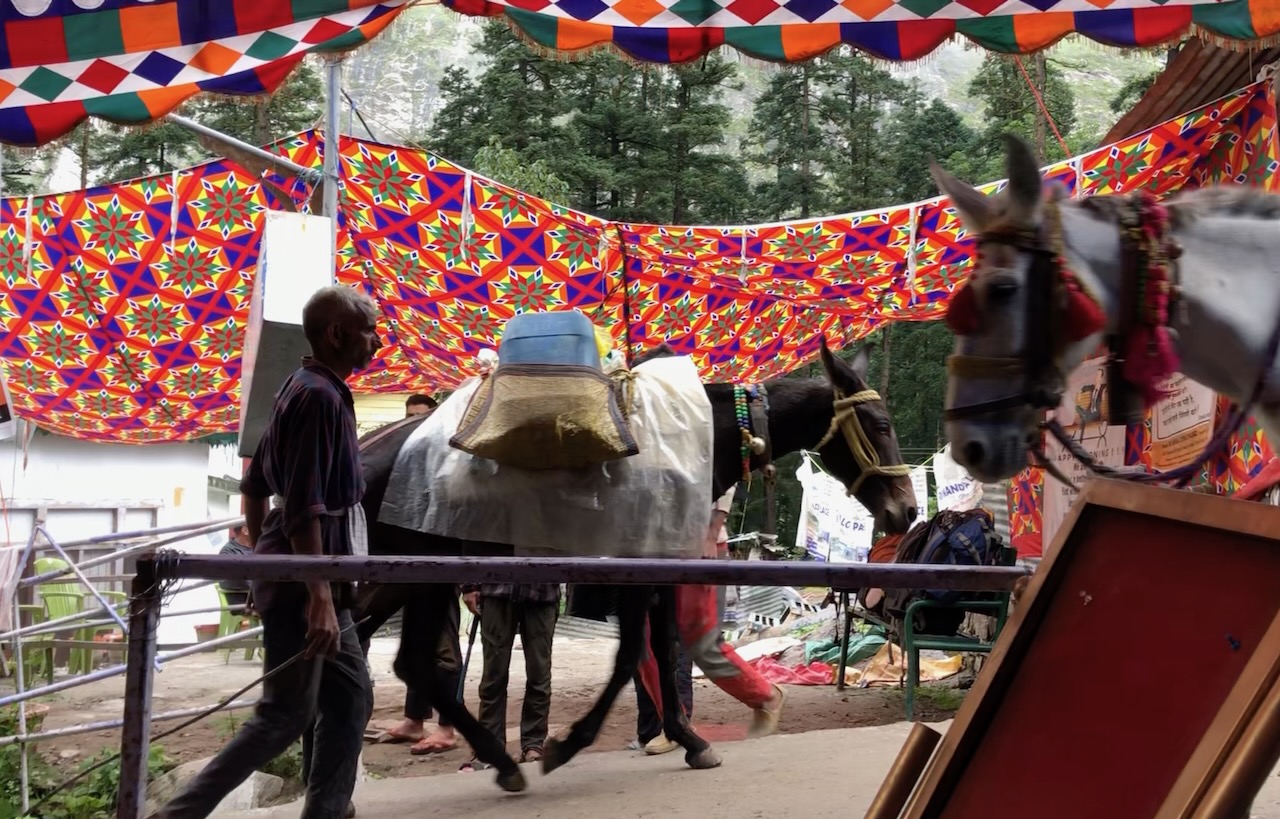
Without Joan’s detailed voice to explain what happened, conflicting accounts have taken root, a Chinese whisper of history… herstory. Was she reaching for a flower to add to her collection of specimens for Kew Gardens? Did she just slip, the edge of the cliff invisible in dense fog? For several years, I’ve tried to disentangle fact from error and in late July 2024, I and three of Joan’s descendants travelled to Ghanghariya, a colourful, bustling shanty town of damp hotels, pilgrims and donkeys, ready to make the long climb into the Valley of Flowers. The landscape might not reveal the past, but it could not lie.

Ghanghariya

We were warmly welcomed at the impressive Information Centre, honoured guests of the great-great-grandchildren of shepherds, villagers, and guides from Joan’s time each eager to share their version of what had happened to ‘Legge Ma’am’. Soon I had scribbled five different endings to Joan’s life in my little green notebook, the one that would mysteriously vanish a few days later as if to tell me: it didn’t really matter. The only truth that did, was that Joan had not been forgotten.

The next day we set off, once again retracing Joan’s footsteps, traversing the same raging river (via a slightly less terrifying bridge) and climbing the steep slopes into the valley.

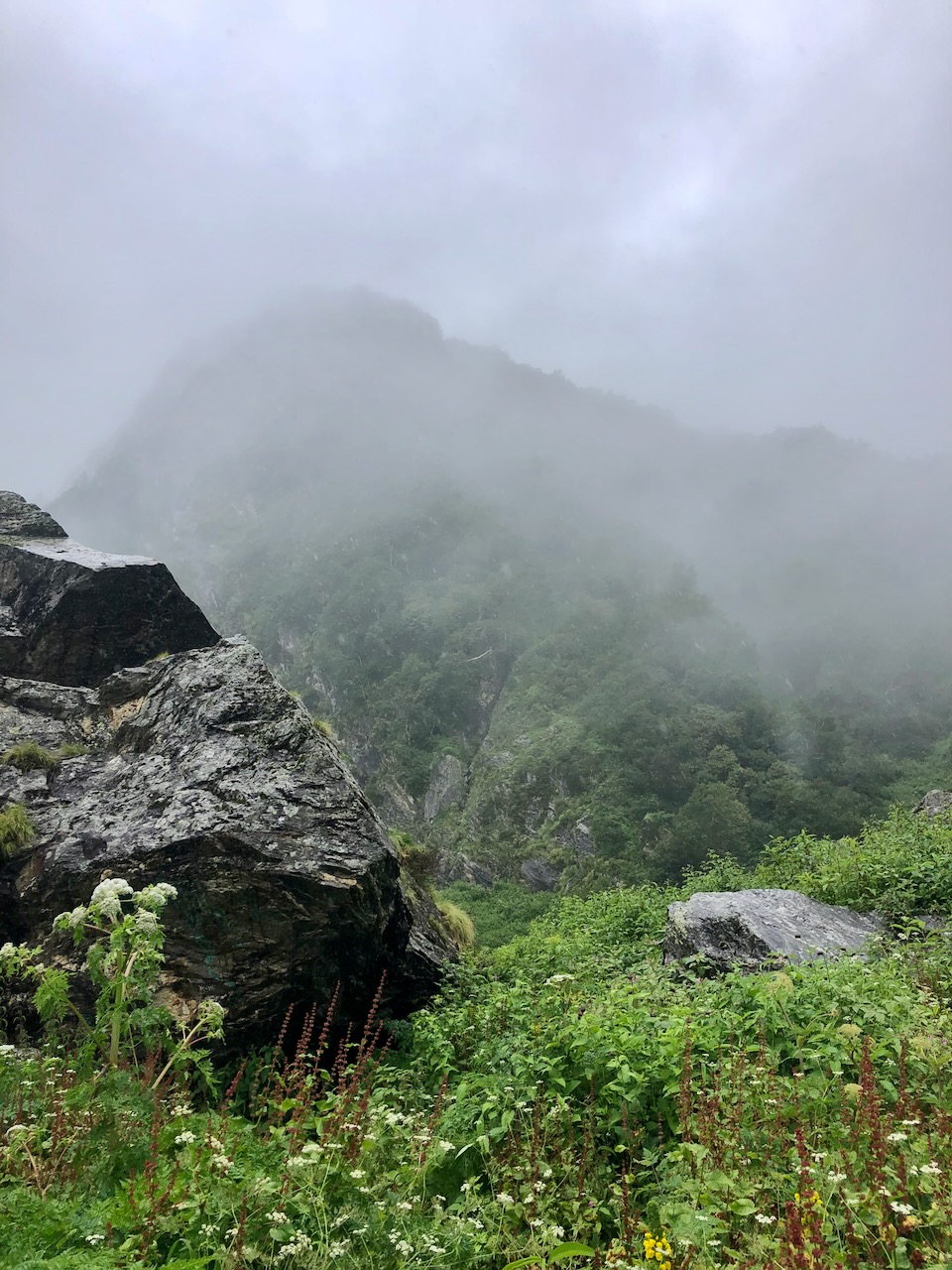
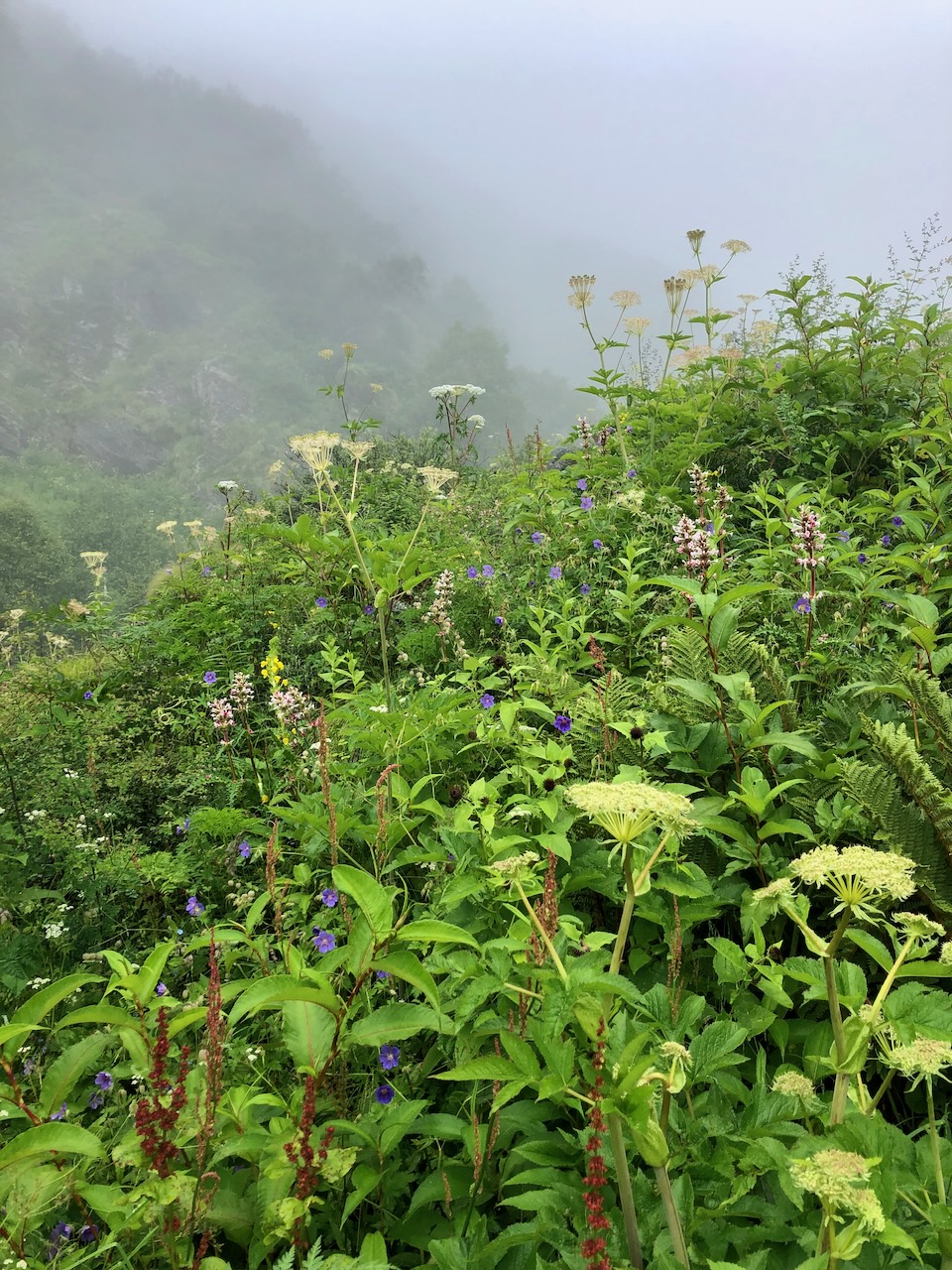
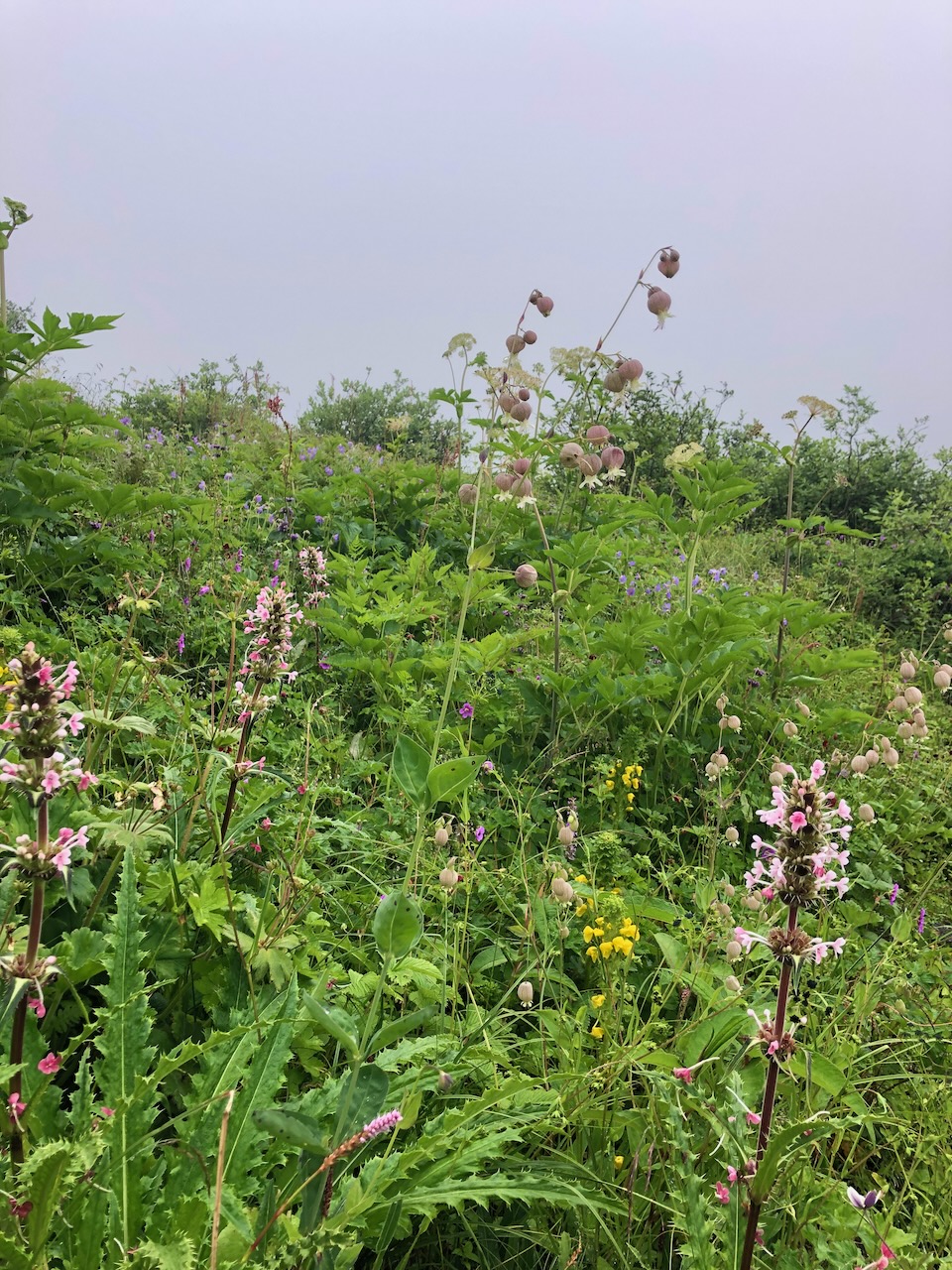
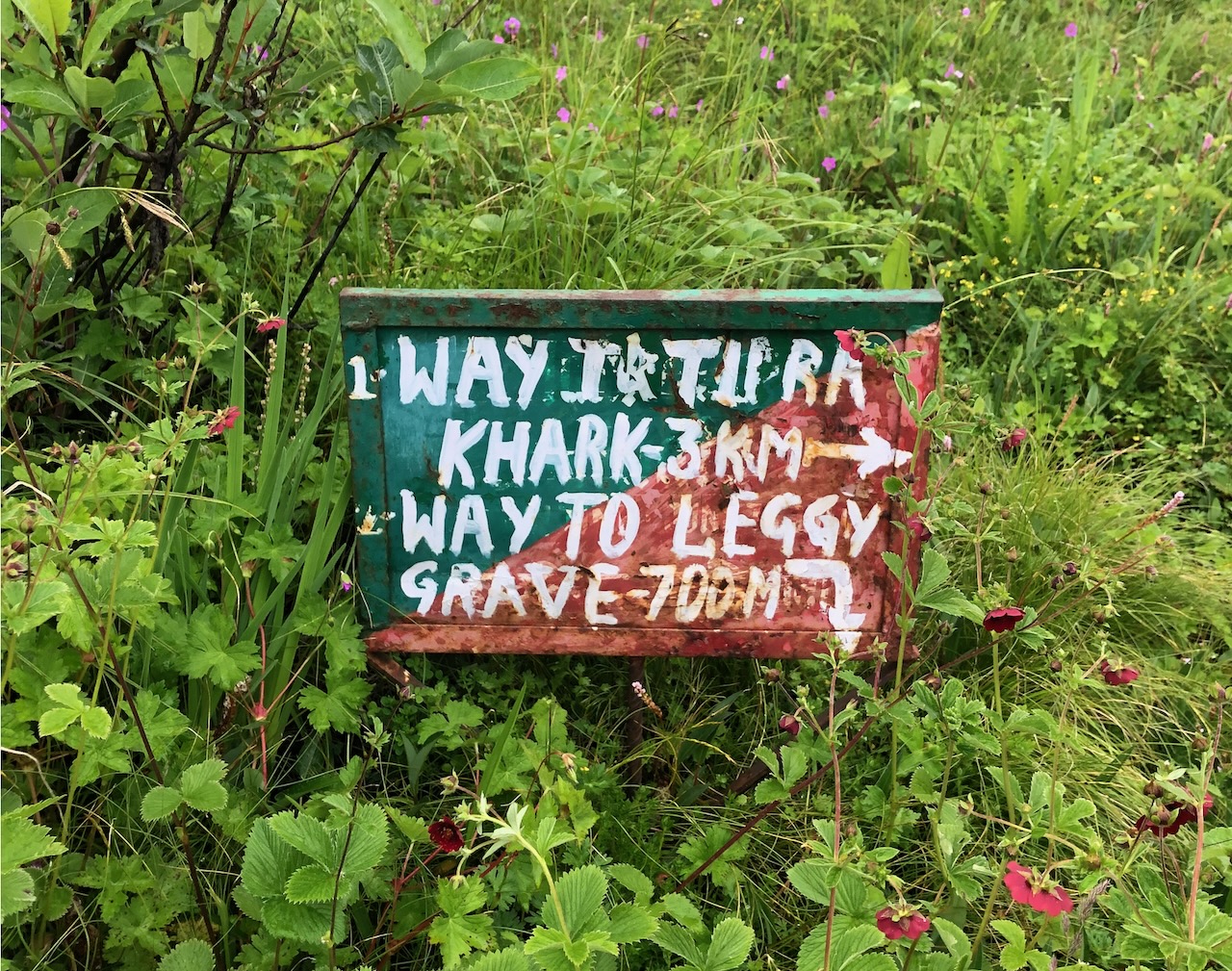
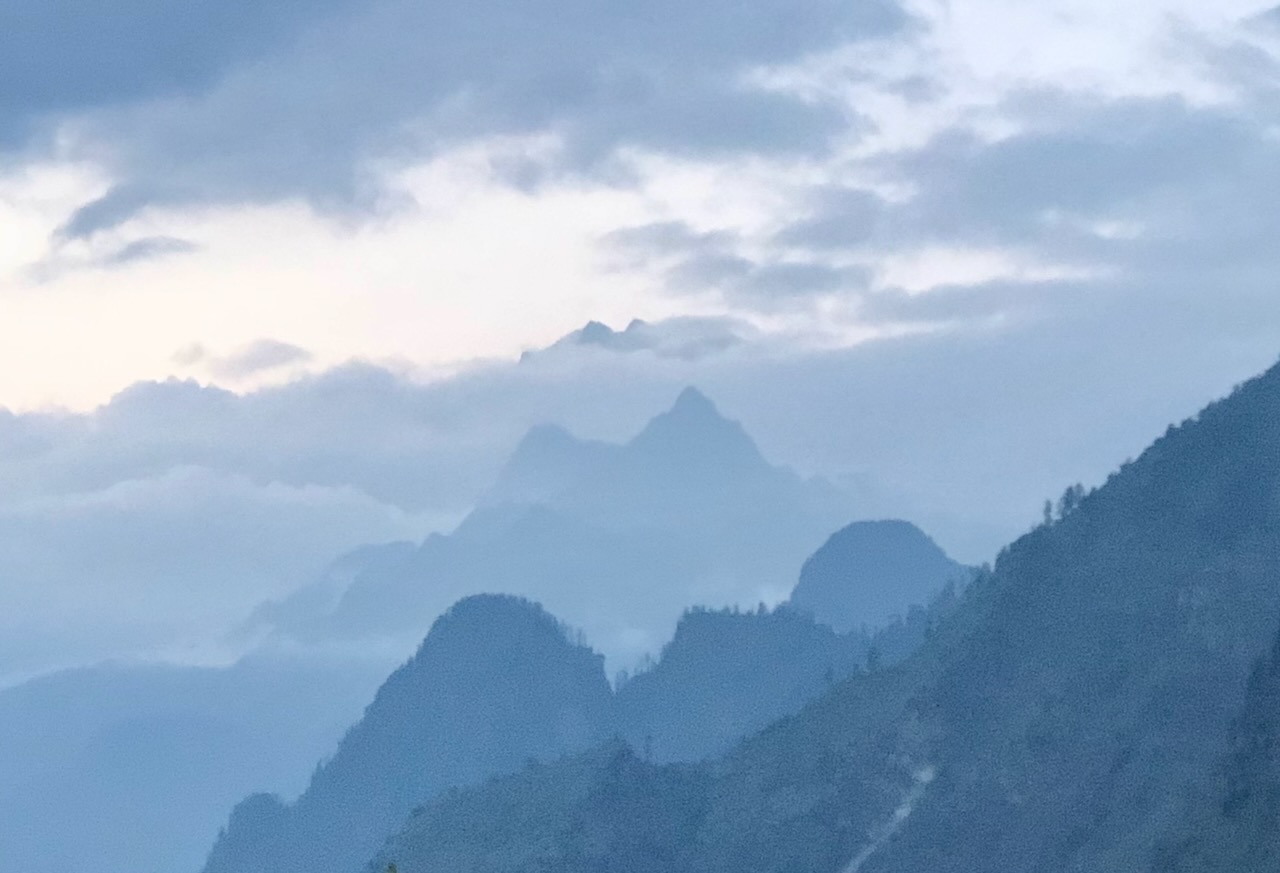
Low cloud concealed Joan’s snowy ‘majesties’ and even the valley itself. Flowers, shoulder high, lined the narrow trail until a small hand-painted sign forked it and directed us to the right.

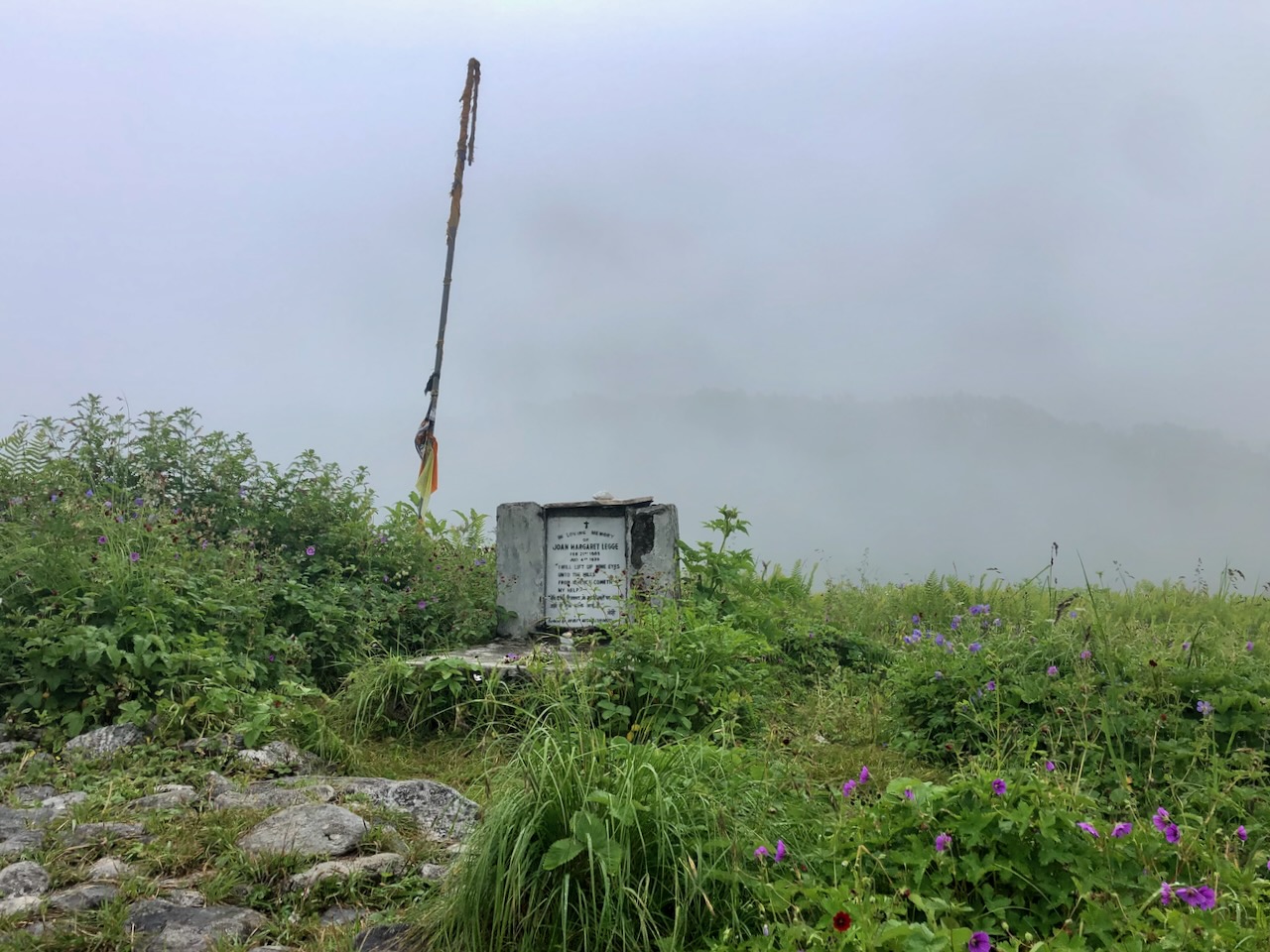
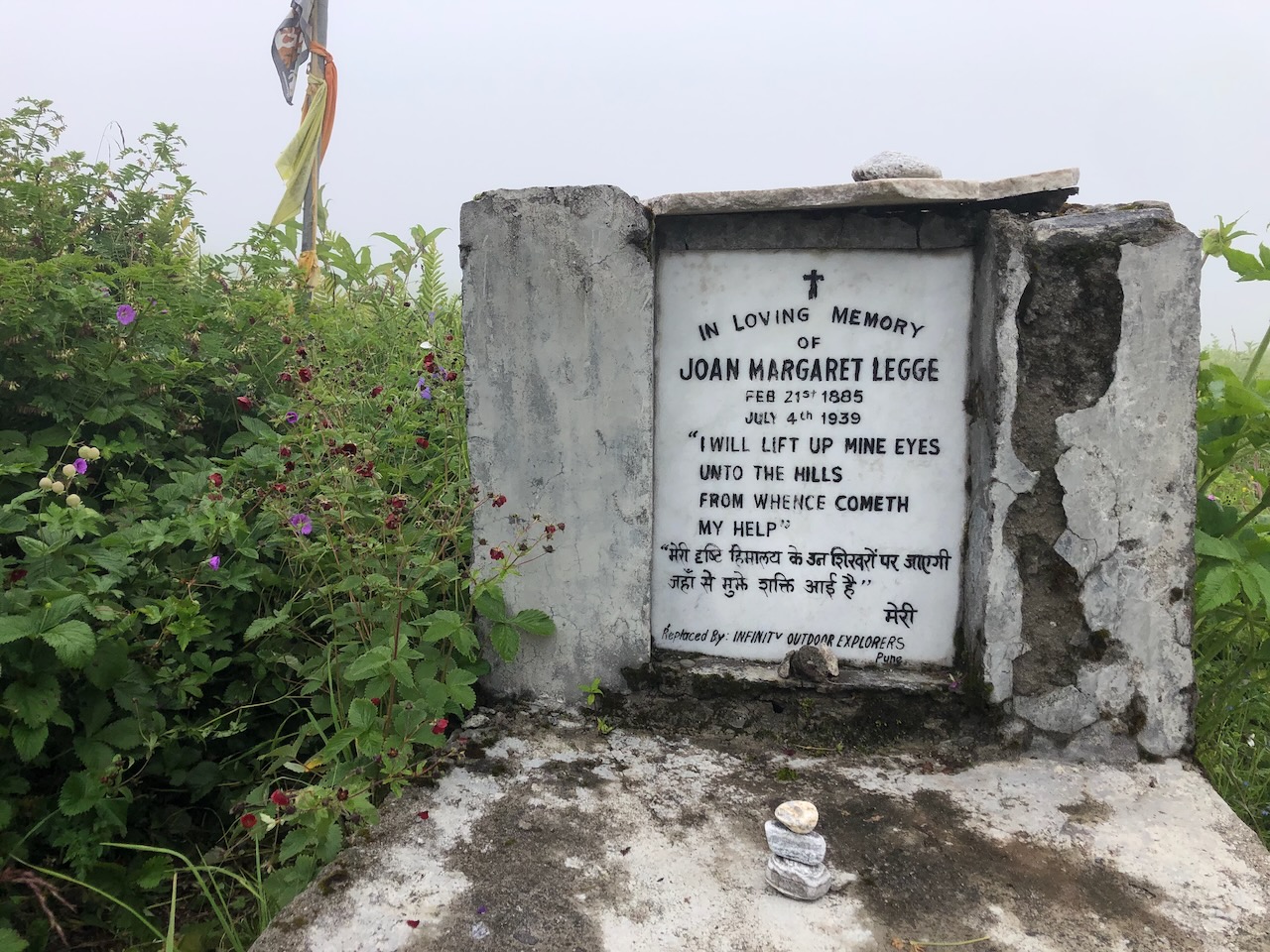
‘Leggy Grave’ could not have been more remote. With the original, broken headstone having been generously replaced by Infinity Outdoor Explorers and the area lovingly tended by villagers, Joan rested, Ophelia-like, among geraniums, potentillas and flowers whose names I don’t know. But she did.

Buried under snow for eight months of the year, this was where my intrepid great-great aunt found peace. A ‘lost daughter of the Himalayas’. And in the prophetic words of the sub-postmaster written over eight decades ago, ‘though death is inevitable, her death in a lonely forest under the tragic circumstances will always be mourned.’

While Joan lives on in the hearts and imaginations of people in northern India – many of whom have trekked miles to pay their respects – back in England, her name, her journey and her collection of flowers had all but vanished into the obscurity of family attics and forgotten archives. She entered my orbit in my twenties, a bright star that inspired independence, courage, a different way to be a woman in the world. I’ve followed her willingly, right to the edge. Imagined her fall… falling… falling… time stretching to infinity like a bungee… then snapping.

A tragic death, or an enviable end to a life well-lived? I’ll let Joan speak for herself.

‘… if we would only give up struggling after worldly things. They don’t count much when you come face to face with what the old Sardou calls the sublimity of the Himalayas whose magnificence, serenity and everlastingness grip one right to the core. You will probably think I am mad, but I don’t think so. There are things that stand and are I think increased, they are love and gratitude.’

Joan, June 1939

Forthcoming Event:

At the end of September, you are warmly invited to an exhibition/series of events showing research and art created in honour of Joan. Exact dates and details to be confirmed, but it will be in the beautiful Chapels of Rest in Stroud Cemetery.