A Pope, a Rabbi and an 80-year-old Victory 

April saw the death of the widely loved Pope Francis, the Jewish festival of Passover, and the gradual build-up to the 80th Anniversary of VE Day (Victory in Europe) in May. An unusual trio of events, yet radio coverage of all three wove threads of reflection into the tapestry of this blog. 

Compassion was central to Pope Francis’s papacy – particularly towards those who are rejected or marginalised. He often spoke about the importance of honouring and never abandoning our grandparents. “If you want to be a sign of hope, go and talk to your grandfather,” he was quoted as saying. They remind us that we share the same heritage, link us to “the beauty of being part of a much larger history… a loving plan [that] is greater than we are.” He also had the humility to say “I am a sinner,” which makes me wonder where that leaves the rest of us!

In a recent Radio 4 Thought for the Day  (at 1:47:45), Chief Rabbi Sir Ephraim Mirvis described Passover as the ‘Festival of Questions;’ a time to ask, to probe, to test assumptions, refine our understanding and uncover the truth. 

If we try to apply the guidance of both spiritual leaders to the forthcoming celebrations of VE Day on 8th May, we may find ourselves asking how the grandchildren of the ‘losers’ of WWII – many of whom had been perpetrators or complicit in Nazi atrocities – might ‘honour’ their grandfathers. How do you love – should you even try to love – someone who has acted immorally, abhorrently, even if those acts were sanctioned or ordered by a higher authority and deemed the right thing to do for Volk and country?

I’m all too aware how unfashionable, controversial and even provocative it is to suggest we spare a thought for the perpetrators. But in keeping with the spirit of my triangle, I am going to ask you to do just that. Many people, from all sides of the conflict, are quick to judge, blame and damn the Wehrmacht soldiers and SS as an indiscriminate mob of ‘monsters’, all morally inferior and wholly undeserving of being remembered. It’s completely understandable. But where does that leave their children and grandchildren? What happens when we continue to draw a line between the ‘good us’ and ‘bad them’, a distinction that may have served its time but no longer helps us move forward? Isn’t one of the most crucial lessons of this horrific chapter in history to recognise that most perpetrators were not monsters, but ordinary people… like you and me… who, through a slow drift of compromise, small decisions and ill judgements became capable of unimaginably heinous crimes? 
Eighty years on, with more than 88% of the German population having been born after the war’s end and a further 11% still children at the time, it’s difficult to place ‘guilt’ for the Holocaust on the Germans of today. After all, people cannot be guilty of things they themselves didn’t do. Yet, like many descendants of Holocaust victims and survivors, some non-Jewish Germans born in the decades after the war still wrestle, often unknowingly, with the unresolved trauma and guilt passed down from their parents or grandparents. They carry what Eva Hoffman aptly described as “the scars without the wound” – invisible wounds that silently shape their internal world and influence their actions in the external world. 

Without detracting anything from the horrors and suffering of the victims, can we imagine for a moment how it might be for post-war generations of Germans to live with legacies of silence, cover-ups, not-knowing, judgement, exclusion, blame or shame in relation to their roots? Mistrusting family stories. Wondering who knew and who did what. What impact does this have on individuals, families, societies, nations and ultimately, the wider world? How can one best deal with such a profound inheritance?

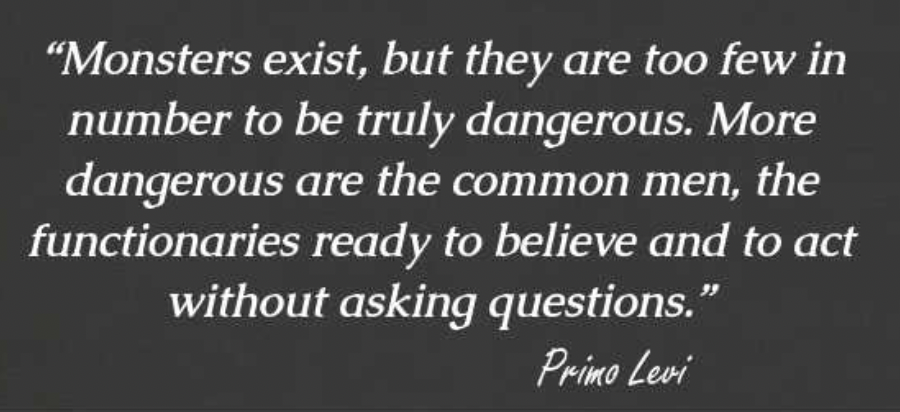
Primo Levi – who, as a Holocaust survivor had every right to think the opposite – declared that collective guilt does not exist. To think that it does is a relapse into Nazi ideology. Both he and Hannah Arendt made a powerful claim: “We are all to blame” for what happened. Collective responsibility is what matters. And that involves understanding how atrocities occur both in society and within the individual. How we become complicit. 

The roots of Nazism found fertile soil in the humiliation wrought by the terms of the Treaty of Versailles and the deeply resented ‘guilt clause’ that placed full blame for WW1 solely on Germany’s shoulders. Applying a similar dynamic to today, could there be a connection between this historical pattern and the rise of the AfD (Alternative für Deutschland), Germany’s nationalist far-right party — a movement fuelled in part by a desire to reassert national pride and, as encouraged by figures like Elon Musk, to move beyond what they perceive as an excessive “focus on Nazi guilt”?

The 2019 survey previously cited revealed that few Germans actually feel guilt and 70% (including 87% of AfD voters) believe their country has now sufficiently atoned for the actions of the Nazi regime. Another source revealed that 75% of young Germans (erroneously) believe they come from families of resistors, while 25% can’t name a single concentration camp or ghetto. As the number of living contemporary witnesses dwindles, disinformation, denial and delusions are spreading. With them, the sense of responsibility risks disappearing too – a deeply worrying and dangerous trend. Knowing firsthand the insidiously destructive effects of being shamed for a familial association with the Nazi era, I can understand how, eighty years on, rejecting any semblance of inherited guilt might feel like a healthy response. After all, who among us wants to feel terminally tainted by the wrongdoings of their forebears? Who wants to have to cut off their roots?

The marriage of my parents in March 1962

I feel fortunate that, while living in England with my German heritage was at times challenging, my parents and their families modelled true reconciliation throughout my life. My British father and German mother married just 17 years after the Second World War ended. Both their families had suffered and lost loved ones and/or homes under the others’ military objectives. Yet both found the courage to drop into their hearts and overcome division and enmity. And that, to me, is where the solution lies: in our hearts.

Patriotism is hollow if it is based only on pride and honour. Shame and conscience lead to a deeper bond. Seeing the world in binaries – in terms of ‘us’ and ‘them, good and bad, right and wrong – shuts down love. Reconciliation becomes impossible. As Britain celebrates its triumph over the evil forces, let us also remember we were not all good and they all bad. Among other short-comings, we too were guilty of antisemitism and of failing to help the Jews more. 
In another recent Thought for the Day, Rhidian Brook warned, “If you can’t see the other side’s humanity, you’ve lost.” 

My 80th Anniversary VE Day wish, therefore, as both a British and German citizen, is for us to follow the example set by the late Pope and Chief Rabbi: to think, to probe, to get uncomfortable, and to find compassion for individuals among the rejected and ostracised.

Eighty years on, might this be the moment to create new rituals of peacekeeping and unity? Without dampening the spirit of national joy, how can we include – and stand hand-in-hand with – our contemporary German friends in celebrations of peace, rather than reinforce historical divides?

Can we develop broader, more expansive narratives that encourage younger generations of Germans to face the difficult and painful truths of their families’ histories and to assume responsibility, not for what was done, but for what is still to be done? Can we remain vigilant against resting on any imagined moral high ground, against believing we would have undoubtedly been resistors and heroes under the Nazi regime? And can we instead recognise how thin the ice of democracy is becoming once again, and how difficult it is, even now, to change the course of history?

Events coming up:

Friday 2nd May, 12-1pm 
The Second World War 80 years on: Is Remembrance Working? 
Angela Findlay and Henry Montgomery In Conversation
National Army Museum, Royal Hospital Road, Chelsea, London SW3 4HT and ONLINE
80 years on from the German surrender to the Allies, Henry Montgomery, grandson of Field Marshal Bernard ‘Monty’ Montgomery and Angela Findlay, granddaughter of General Karl von Graffen of the German Wehrmacht will reflect on their grandfathers’ roles and actions in WW2 and discuss the differences in the histories, legacies and remembrance cultures of the victors and the losers and how Remembrance can remain meaningful and effective for younger generations. 
Info and tickets (free) here

Thursday 8th May, 18.00 – 19.30 
Im Schatten Meines Großvaters / In My Grandfather’s Shadow
Vortrag und Gespräch / Lecture and Conversation 
Marktkirche, Hanns-Lilje-Platz, 30159 Hannover, Germany

Thursday 15th May, 17.00 – 19.00 (UK time)   43. Gesprächslabor, PAKH: The Study Group on Intergenerational Consequences of the Holocaust (ONLINE)? Drawing on my own experiences outlined in my book, In My Grandfather’s Shadow, we will be discussing how such a destructive legacy can be transformed into constructive, reconciliatory approaches and positive actions. More info here: https://www.pakh.de/event/gespraechslabor-40/  

Buy or read reviews on my book, In My Grandfather’s Shadow, here
Looking at our present and future to find the lessons of the past

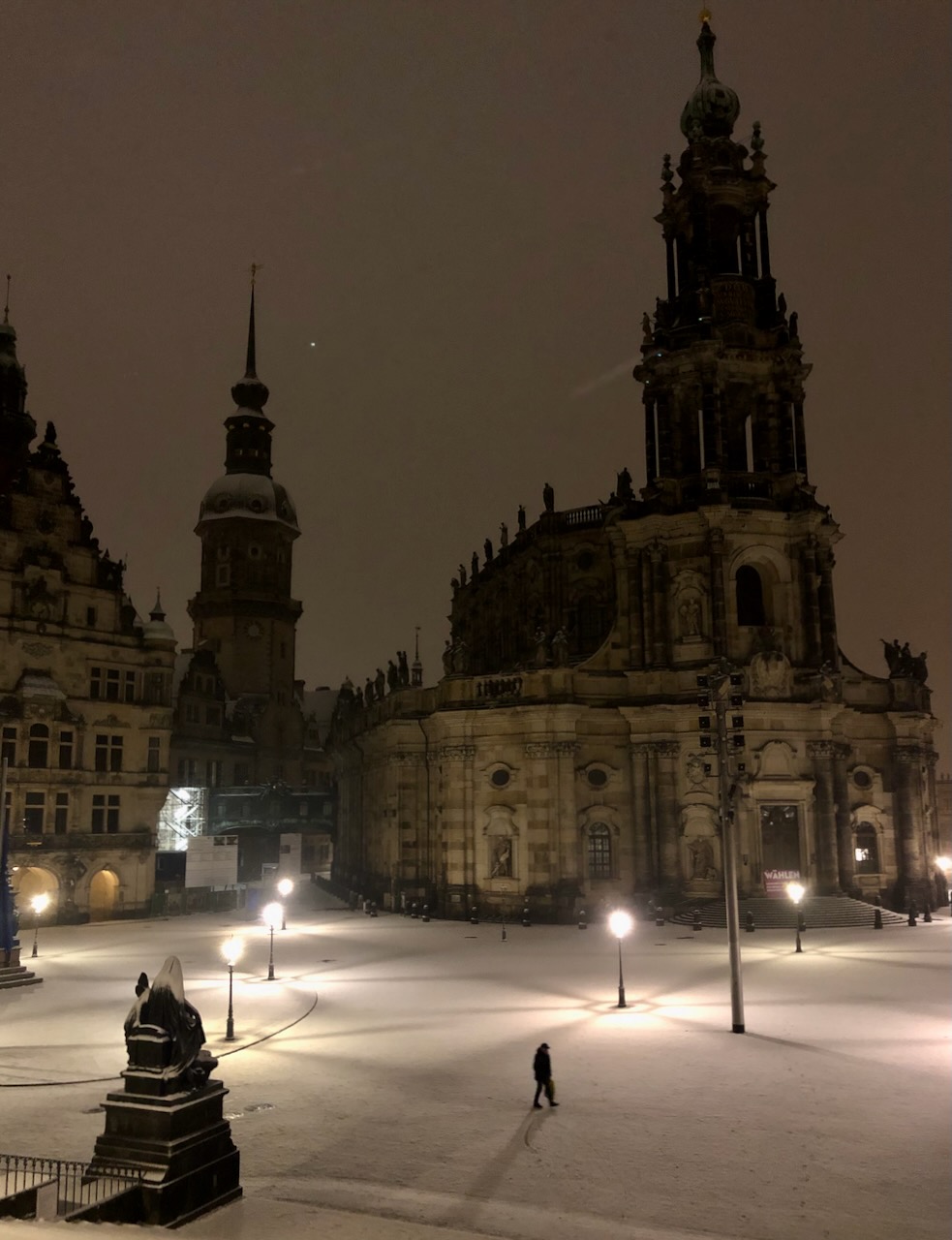
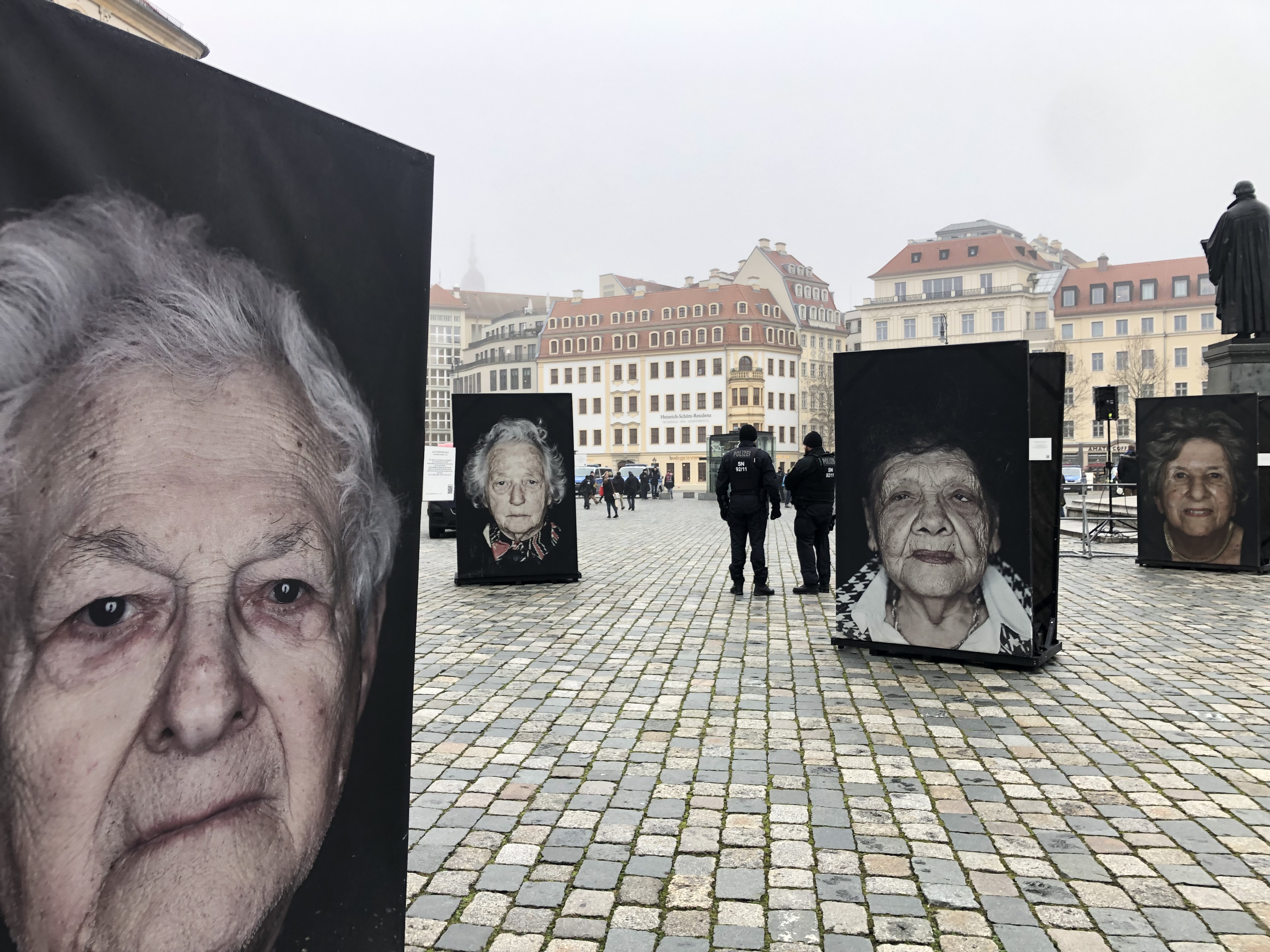
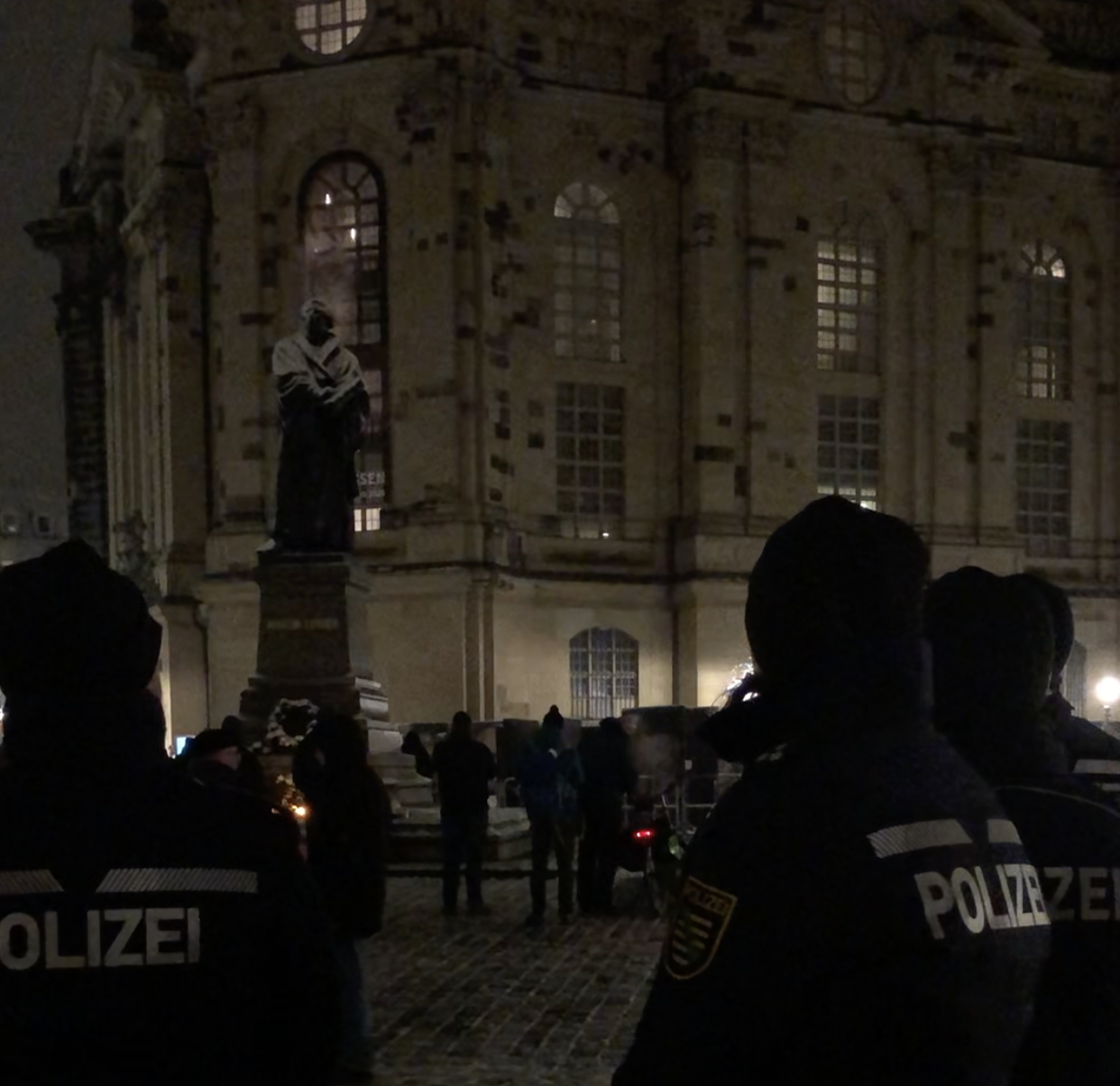
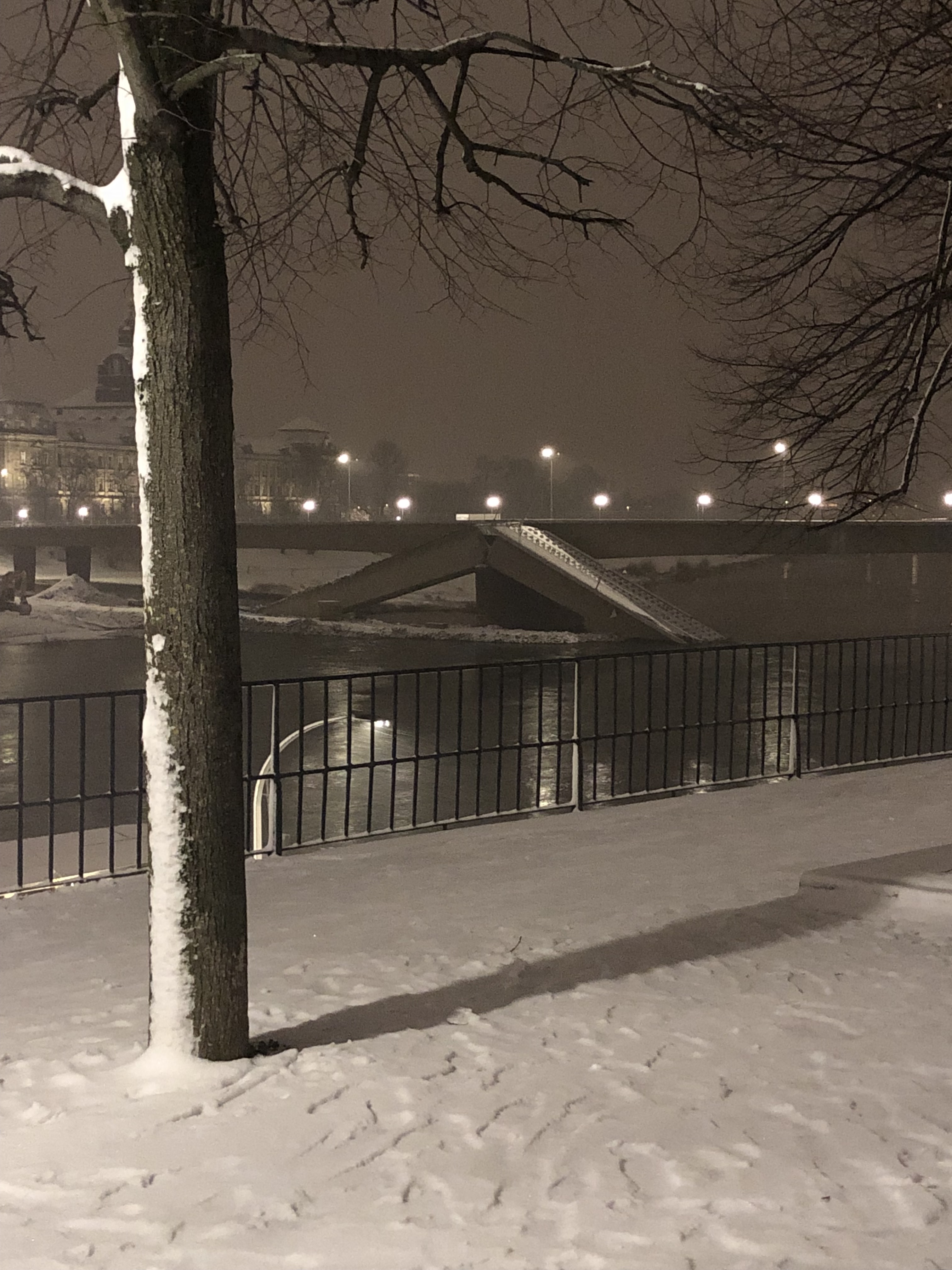
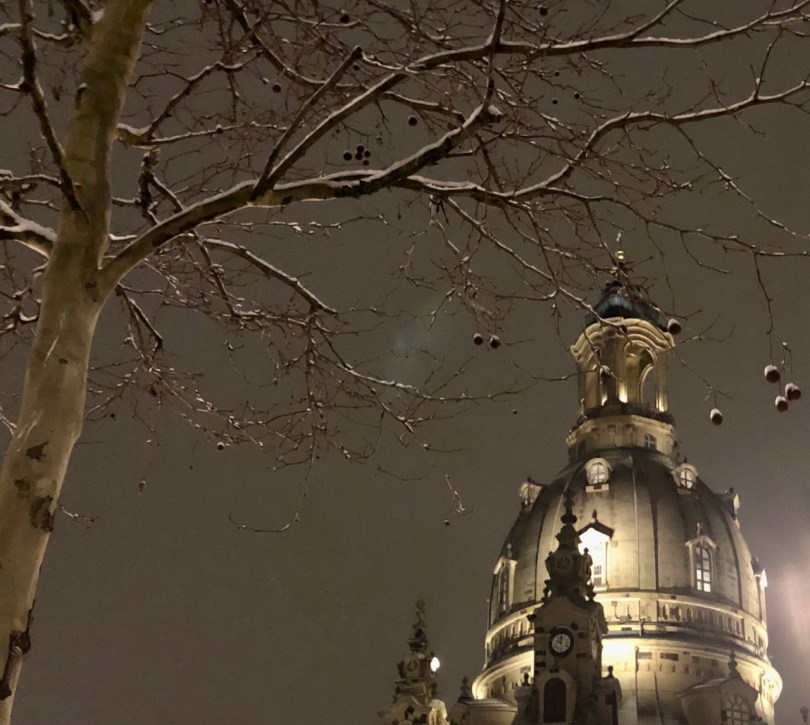
On February 13th at 9.45pm, the bells started; asymmetrical tones infusing the snow-sprinkled city. 

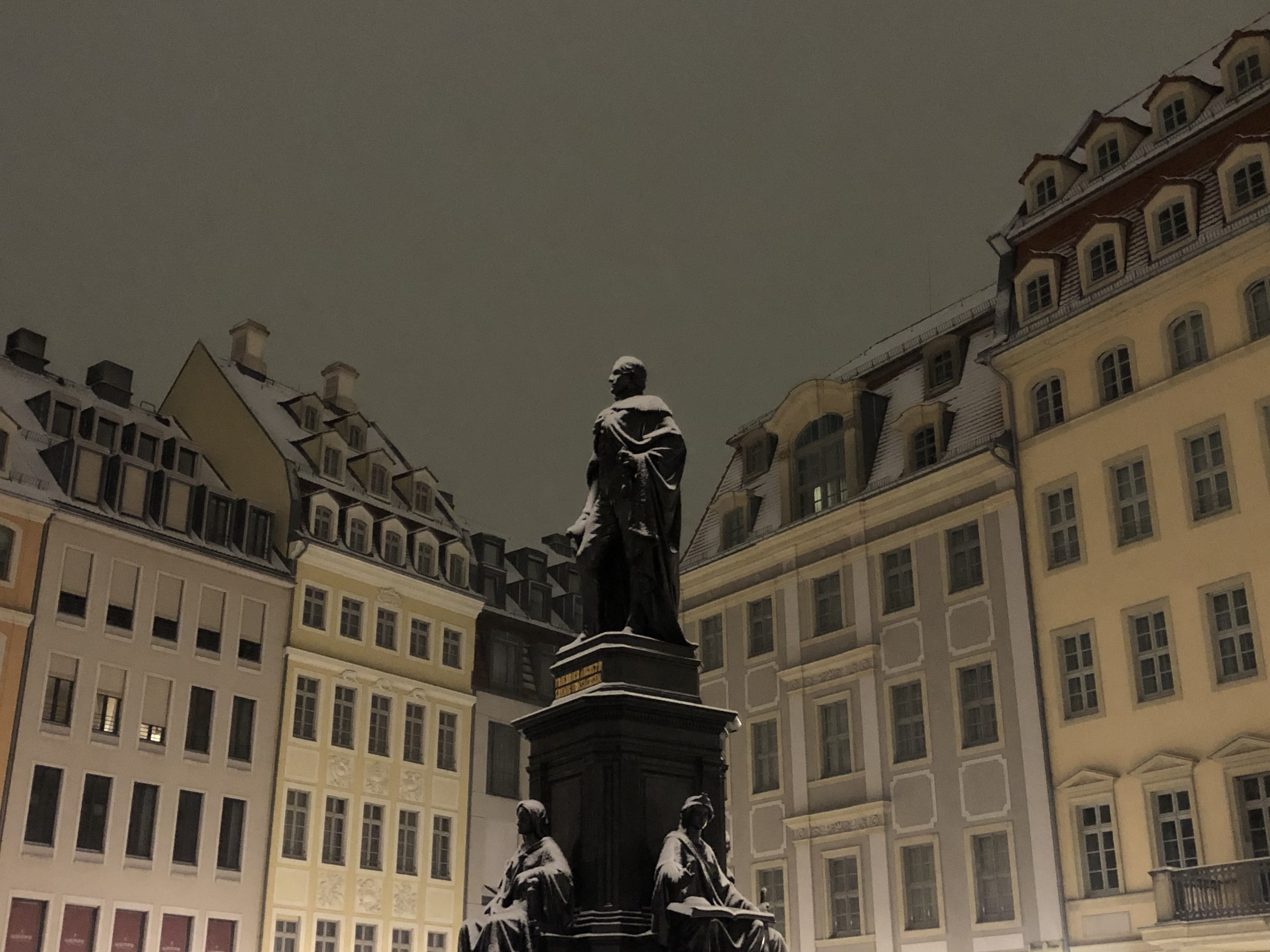
People wrapped in scarves and silence, stared at the dome of the Frauenkirche that 80 years before had been mangled by bombs into a pile of rubble that would scar the city for over fifty years.

Candles placed on the ground flickered benign flames as memories haunted the minds of those who had witnessed a firestorm that melted asphalt, roofs and neighbours alike.

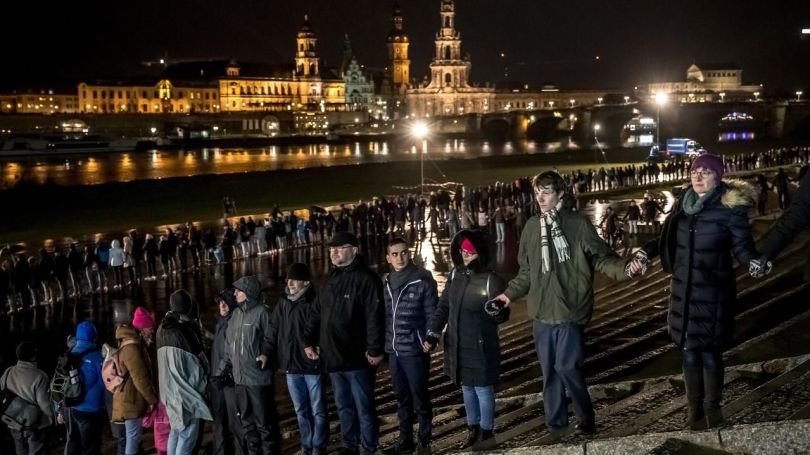
A human chain of hand-holding citizens wove through the resurrected buildings, knitted together both in remembrance and defiance of the re-emerging forces of lessons not learned.

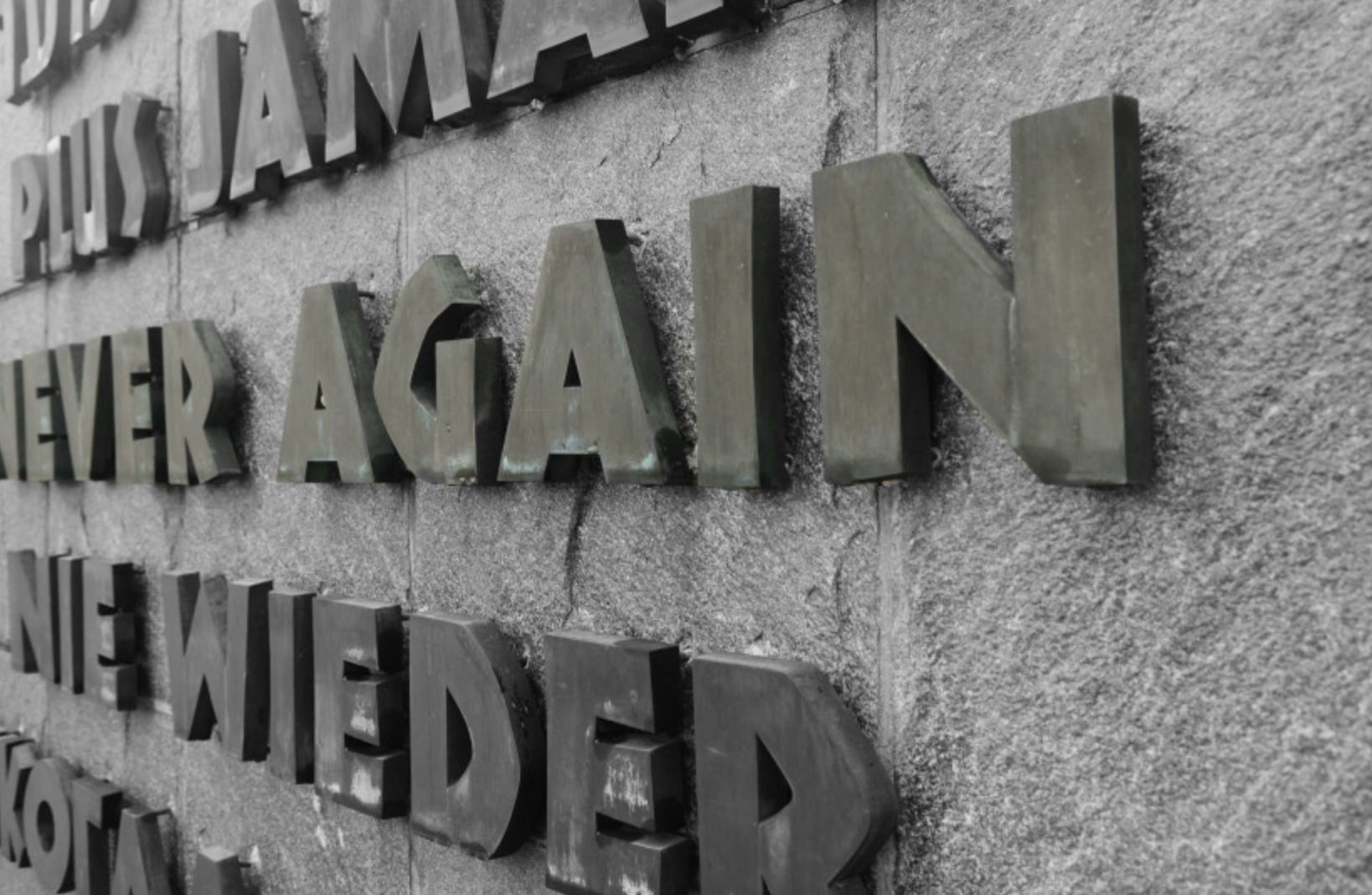
This year’s anniversary of the British and USA bombing of Dresden was determined not simply to look back and roll out familiar but increasingly empty tropes such as ‘Never Again’. Instead, ‘Future through Remembrance’ was the theme repeated through the activities I attended as a Trustee of the British Dresden Trust. Younger generations from Germany, Ukraine, Poland, UK occupied the foreground mingling the wisdom of elders with messages that gave genuine hope for our troubling times. 

Stay awake. Be aware and curious as a child about what is happening around you. Look at history from multiple angles. Step back to see it in perspective. Take responsibility. 

Benjamin Britten’s War Requiem followed by silence in place of applause gave the horror, tragedy and futility of any war the viscerality needed to galvanise us out of complacency into using Remembrance fiercely rather than sentimentally; to unite us as human beings, each with a heart and soul that thump with a longing for peace. 

It was the move from formality to informality, from grand gestures to tiny actions we are all capable of doing everyday, that left the most lasting impression. From pomp and ceremony to conversation; from people in suits or uniforms telling us the importance of remembrance of a time that is increasingly distant, both temporally and emotionally, to a lively exchange between young and old from different nations on the values of democracy and peace.

Peace that is all too easily taken for granted. 

Further Reading and Links

The Dresden Trust

History and politics collide as Dresden mourns its destruction in WWII by Katja Hoyer

DRESDEN: A Survivor’s Story by Victor Gregg

DRESDEN: The fire and the darkness by Sinclair McKay

AIR RAID by Alexander Kluge

The Duke of Kent marks the 80th anniversary of the bombing of Dresden

Commemoration: 80th Anniversary of the destruction of Dresden

l

Rage or Disengage…? A slightly expanded take on ‘Never Again’

This Remembrance weekend has been receiving more publicity than most years. As I write, at 11am on 11.11. hundreds of thousands of people are gathering in London, not to observe the traditional one-minute silence, though many I am sure will, but to march in support of Palestine. Not far from the Cenotaph, police are clashing with far-right protestors chanting “England ‘til I die”. 

I don’t want to get into the heated debates that have criticised or defended the timing and legitimacy of these marches. But, being a blogger about (among other things) the importance of remembering the past, I would like to take a step back from the specifics to soft-focus on the significance of Remembrance Day and in particular on the often heartfelt, sometimes platitudinous mantra of ‘Never Again.’

What do we mean when we say ‘Never Again’? The original ‘Nie Wieder’ slogan appeared in post-war Germany and the words are usually used in association with the Holocaust and other genocides. In Berlin on 9th November, to mark the 85th anniversary of the 1938 November pogroms widely known as Kristallnacht, the words ‘Nie Wieder ist jetzt’ – ‘Never again is now’ – were beamed onto Berlin’s Brandenburg Gates. An all too timely reminder as since the Hamas attacks on Israelis on 7th October, antisemitism has been on the rise. Not just in Germany, but globally. 

‘Never again’ is of course a passionate, urgent and vital reminder to never allow anything like the Holocaust to happen again. I end all my talks on Germany’s culture of apology and atonement with exactly that call. And for younger generations, I add Michael Rosen’s warning about fascism:

“I sometimes fear that people think that fascism arrives in fancy dress worn by grotesques and monsters as played out in endless re-runs of the Nazis. Fascism arrives as your friend. It will restore your honour, make you feel proud, protect your house, give you a job, clean up the neighbourhood, remind you of how great you once were, clear out the venal and the corrupt, remove anything you feel is unlike you…” 

Both are a call to each one of us to be awake and to take responsibility. But what meaning can Never Again have for those of us who like to think we are not particularly susceptible to or guilty of antisemitism or discrimination anyway? (A huge debate in itself, but not for right now)

Last month, after talking with a Jewish friend about the dilemma of not knowing what to think, feel or do in the wake of the desperate situation, she sent me a draft of an essay she was working on. In it she broadened out the Never Again message to include all humanity: “The ‘task’ of the Holocaust has come out of the shadows and into the foreground with blistering clarity in recent weeks – and if the foundation of this task is to honour the pledge ‘never again’, this pledge must apply to all humanity. It is not exclusive to the Jewish people; to transfer the trauma of one population on to another is no victory.” (The full version Beyond Binaries by Miranda Gold will be available soon.)

Much has been written about this. Indeed, I discuss it in In My Grandfather’s Shadow at the end of Chapter 22, ‘Lest we forget’. But recently I have discovered another level of instruction in those two words. It asks us not to other ‘others’ on any level. Because that is when the seeds of barbarity and atrocity are sown.

Most of my work is dedicated to trying to see and understand the ‘other side’ of a story. It is one of the things for which I am grateful to my dual-nationality. Scorsese’s latest film Killers of the Flower Moon, however, highlighted where I was failing. Starring Robert De Niro, Leonardo DiCaprio and Lily Gladstone, all brilliant in their roles, it depicts the deception and murderous treatment of the Osage Native Americans in the 1920s by white settlers after their oil rights.

Four Osage sisters (played by (L-R): JaNae Collins, Lily Gladstone, Cara Jade Myers and Jillian Dion

I hated the film. So much so that I fell asleep! I now see that I literally couldn’t take any more of what I would afterwards clumsily call ‘white man’ violence and cruelty. I basically dissociated – a common trauma response. Of course it is not only white men who are violent and cruel. Nor is it all men. But in that moment, on the back of an intense schedule of talks about prisoners (96% of which are men), Nazis, WW2, Britain’s colonial past etc. etc. and against the backdrop of Hamas’s heinous attacks, Israel’s deadly retaliation and the disturbing revelations of the Covid enquiry to name a few – I had identified with the victims of these historical male-dominated actions. The attitudes within the film scratched my own childhood wounds of being shamed and othered as ‘German’ (at the time completely synonymous with Nazi) and tipped me into complete overwhelm and overload. The dense darkness of psychic saturation had nowhere to go other than through what felt like a primeval roar. 

I have no doubt that many people, maybe you too, have at times felt something similar. 

A couple of uncomfortable encounters over the next few days in which one person raged and another decidedly disengaged made me realise that my response to some highly generalised image of ‘man’ was no way to proceed. I could feel myself slipping into a form of oppositional camp, taking a side, seeking the solidarity of a “team”, as Biden unhelpfully phrased it recently. For in that moment, I was doing exactly what I personally feel the call for ‘Never again’ is asking us not to do. I was creating a binary division between myself and those I saw as doing or being responsible for ‘wrong.’ I blamed ‘them’, while licking the wounds of a collective (female) ‘us’. Statistically and historically some of this ‘male’/’female’ categorisation has a degree of reality and validity, but it is not the way forward. 

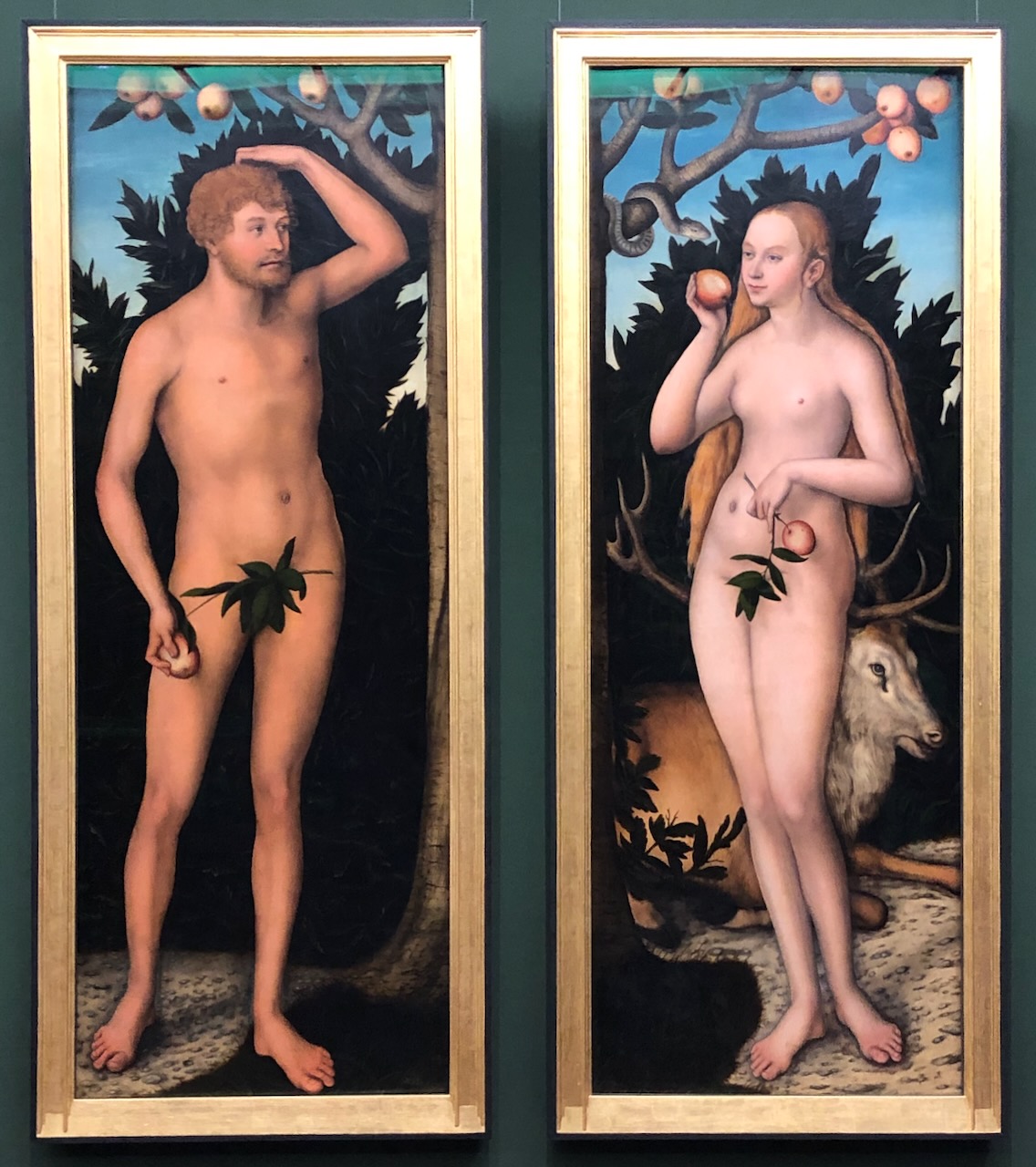
Adam and Eve – Lucas Cranach (around 1537)

It is in othering that we can justify discrimination and violence.

It is in othering that we can harm and be harmed.

It is in othering that we all become capable of failing to uphold humanity’s plea for ‘Never again’.

So, for me, this Remembrance Sunday is not only a day to honour the memories of our own fallen who served, defended and died, and to renew an annual pledge to peace in the world that clearly isn’t working. It is an occasion to also extend our thoughts way beyond our own shores to all people who have died and are dying in conflicts and wars. And to reach deep into our hearts to help heal the divisions that are leading to discrimination and violence in every land. By searching hard for the fellow human being in all perceived enemies and all those we vehemently disagree with, no matter how hard that is; by finding the place that lies somewhere between the external roar of internal rage and the deadening desire to turn away and disengage, we can remain in our hearts. We can keep sight of our innate oneness. That, to me, at least makes some sense in a world that increasingly doesn’t make any.

Further Reading

Never again is now’: 1938 Nazi pogrom anniversary marked in Germany by Kate Connolly

Hollywood doesn’t change overnight: Indigenous viewers on Killers of the Flower Moon

Should we be seeing the storming of the U.S. Capitol as Trump’s Kristallnacht?

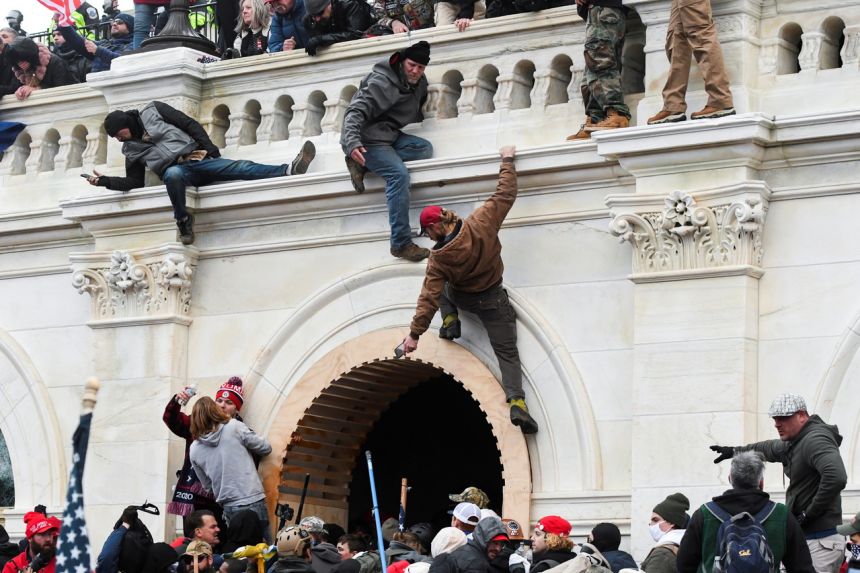
On Sunday 10thJanuary 2021, Arnold Schwarzenegger, the Terminator action hero turned former governor of California, posted a short video on Twitter that went viral. Staring straight into the camera against a backdrop of stars and stripes, the man once known for his body-built body flexed his moral muscles by comparing the mob that stormed the U.S. Capitol with the Nazis.

“Wednesday was the Night of Broken Glass right here in the United States,” he said, referring to the horrors of Kristallnacht, the night of 9th/10th November 1938 when Nazis in Germany and Austria smashed the windows of Jewish homes, schools and stores and set fire to the synagogues. “The broken glass was in the windows of the United States Capitol,” he continued. “But the mob did not just shatter the windows of the Capitol. They shattered the ideas we took for granted. They did not just break down the doors of the building that housed American democracy. They trampled the very principles on which our country was founded.”

Witnessing, in real time, Trump-incited protestors scale white walls and balconies and swarm into the home of the U.S. Congress was truly shocking. Individually most looked pretty ‘normal’ with their caps, hoodies, beards – or horns – in place of masks. But as a mass emboldened by a collective mission, they felt sinister. A mob stitched together by the blatant, you’d think unbelievable, lies of their leader. Trump’s temper tantrum had turned a corner and stamped on the accelerator to become a genuine threat to life. 

But, though I admire Schwarzenegger for speaking out unequivocally, can you really equate what happened on 6th January with Kristallnacht? Are Trump’s ‘mobsters’ a valid equivalent to the rioting members of the SA (Sturmabteilung) and Hitler Youth? Is Trump an accurate counterpart to Goebbels? And finally, has democracy been shattered in the way Nazis shattered Jewish lives and livelihoods that night? I don’t think so, but I ask genuinely because making such serious comparisons to such a vast audience, albeit diluted by a schmalzy soundtrack and other comforting dollops of Hollywood, carries responsibilities and consequences. If it was America’s Kristallnacht, what should we and the rest of the world be doing about it?

Accurate or exaggerated, Schwarzenegger is certainly more qualified than most to draw such parallels. Born in Austria in 1947, he grew up with and among people who had lived through the Third Reich and Second World War: active cogs in the Nazi killing machine; passive bystanders, looking away but “going along… step-by-step… down the road;” or any of the other shades of innocence or culpability in between. 

What is indisputable in both scenarios – and recent ones here – is the role lies play in leading to things spinning out of control. But it’s intolerance that ultimately fuels these lies. Of course, there’s a healthy form of intolerance, which makes us speak out in the face of ‘wrongness’. But on either side of that, lie two unhealthy extremes: intolerance of anything or anyone that is different to us, ‘other’; and over-tolerance of that which may be familiar, desirable or comfortable to us, but that harms others.

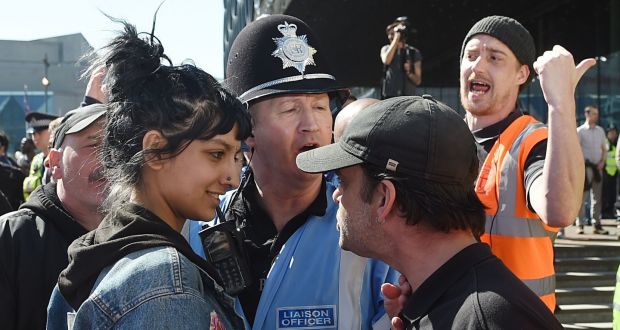
viral image of woman standing up to a far-right protestor

For me, a comparison to Nazi times is more helpful when applied to us… the ordinary people who, back in the 30s and 40s, inadvertently enabled their leaders to carry out murderous plans by doing nothing. Resisting was hard, for it could cost you, or your family, their lives. My mother’s best friend’s family vanished that way. Today, however, we can express a healthy intolerance of what we consider wrong, by resisting the temptation to see the mob as a collective ‘other’ made up of misguided cretins, uneducated loons, neo-fascists, Satan worshippers, conspiracy theorists… Some of them may well be any or all of those things, but they will also all be individuals – fathers, sons, mothers, neighbours – united in believing they are right and on the side of truth and goodness.

Maybe, to prevent re-enactments of Nazi times, we could (or should?) invest the time we spend judging, cursing and dismissing those we see as ‘other’, ‘bad’ or ‘wrong’ more wisely; by trying to listen to and understand them instead. That, after all, was what was neglected in the first instance. And people who feel unheard also feel they have to shout the loudest. And by having to shout, they become distorted versions of themselves. That is what we witnessed on Wednesday. It may sound fluffy or impossible and I am not in any way condoning or defending what happened in Washington. I am just trying to avoid becoming inadvertently complicit in deepening the division between ‘us’ and ‘them’. For we all know where that can lead. 

You can see some pictures here. Or read a bit more about what happened here.

How worried should we be about the rise of the far right?

I raise this question specifically in the wake of last week’s 75th anniversary of the Dresden bombing raid by the Allies, an occasion of remembrance that is known for bringing far-right protestors out in droves. Each year, in what they call their ‘Trauermarsch’ (funeral march), several hundred neo-Nazis, xenophobic Pegida and anti-immigrant Alternative for Germany (AfD) protestors set off from the city’s central station to commemorate the dead. The blatantly neo-Nazi flags, tattoos and slogans, however, betray their true agenda. 

While part of me is swift to unreservedly dismiss all forms of far-right nationalism and extremism, another part is keen to understand: What are their grievances? What are their goals? And how should we, as individuals, meet this growing trend around the world? 

I am at the very beginning of my research into these questions, but in relation to the Dresden bombings of 13th and 14th February 1945, it seems that the far-right scene have several axes to grind. For them, Dresden has become a symbol of how the Allies rewrote the history of the Second World War. Drawing on the language and inflated figures first propagated by Goebbels and the Nazi propaganda ministry, Dresden was a “terror attack,” an indisputable war crime in which up to 300,000 people – primarily women, children and refugees fleeing from the east – were horrendously murdered over three nights. (This claim is in spite of the 2010 historical investigation commissioned by the city and largely accepted by historians that conclude figures would be closer to 25,000.) By shifting the focus onto atrocities committed by the victors, they can call for a stop to Germany’s culture of atonement and guilt.

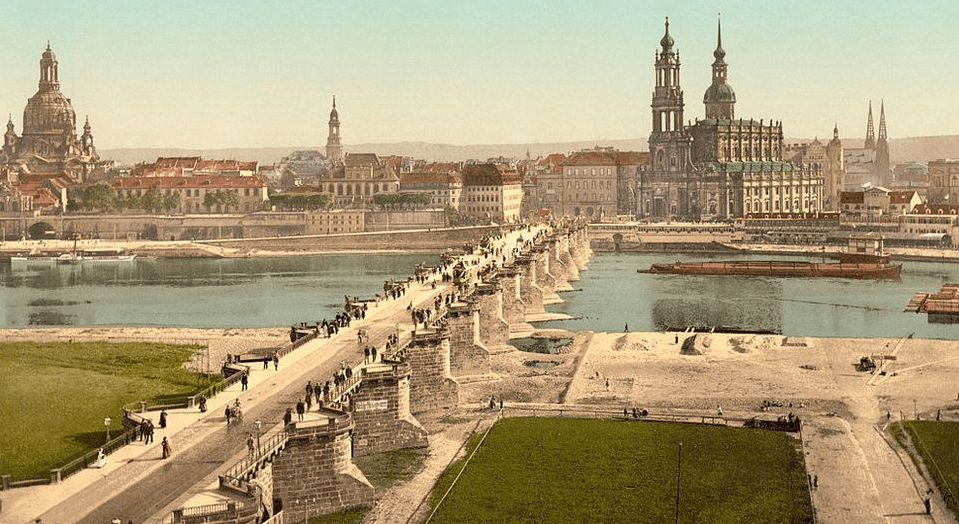
Dresden, the “Florence on the Elbe”
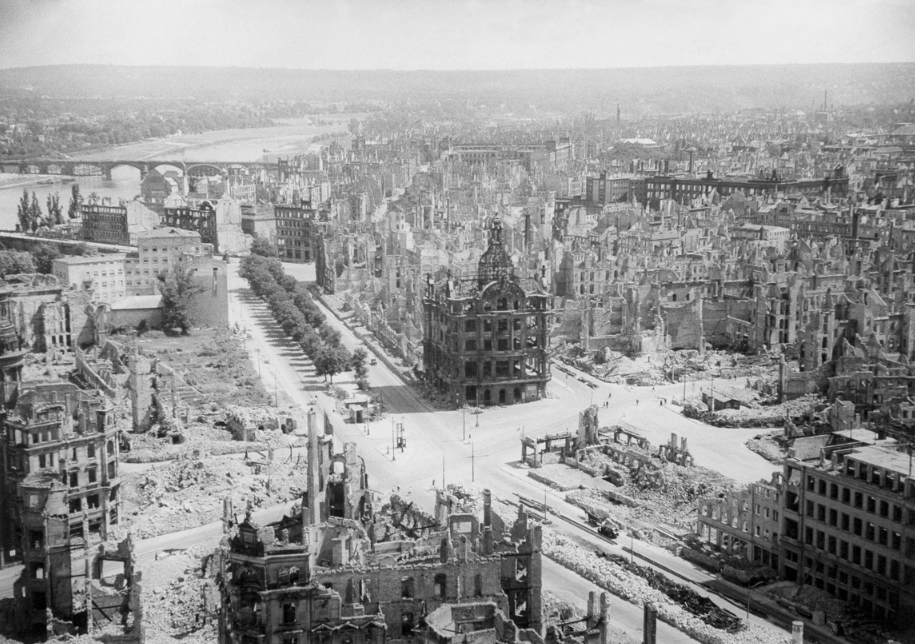
Dresden after the bombing in 1945

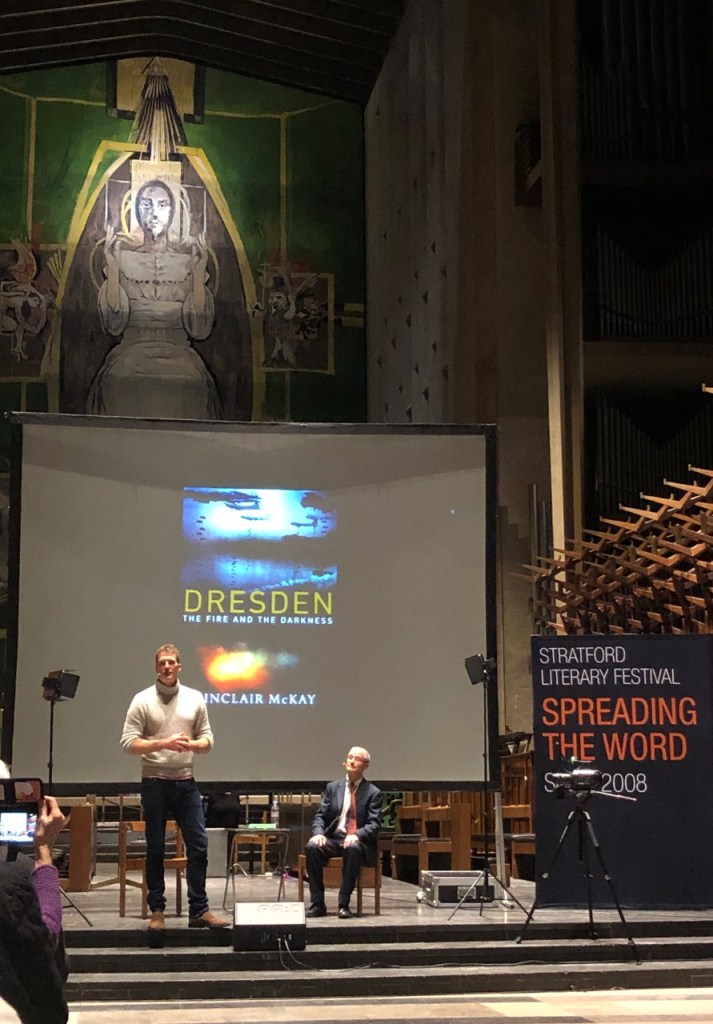
This year, the emphasis of their message was not so much on the numbers as on what they call “the truth” about the bombings. They want to make a stand against the way the bombing of Dresden, once known as the “Florence on the Elbe” for its Baroque beauty, is relativised and compared with what happens in wars all around the world. They want to preserve Dresden’s uniqueness, the myth of martyrdom and its status as a ‘city of innocence.’ In some of this they do have a point. The debate about whether Dresden was a war crime or not still divides international historians and the public alike. Just a few weeks ago, I travelled to Coventry Cathedral to hear historian Dan Snow explore the legitimacy of Dresden as a target with Sinclair McKay, whose book Dresden, The Fire and The Darkness has recently been published. 

In the official ceremonies two days before the far right took to the streets, the man who has become a bit of a hero in my eyes, President Frank-Walter Steinmeier, addressed the dangers of this way of thinking. Unlike the 75th anniversary of the Liberation of Auschwitz at which he had spoken a few weeks before (see my January blog), the victimhood of Germans had to be placed centre-stage here. For whether perceived as deserved retribution or a tactical military operation, the bombing raids were calculatedly horrendous creating infernos of such intense heat that people literally melted. It’s an event that does indeed deserve much self-reflection and on-going soul-searching by the Allies as well as a continuation of the already considerable efforts of reconciliation by the British. 

Speaking with his hallmark combination of deep sensitivity and resolute strength, Steinmeier remembered the victims but, even here, he was quick to remind Germans of their role as perpetrators. He warned against the “political forces” that seek to “manipulate history and abuse it like a weapon.” He reached out to all present to “work together for a commemoration that focuses on the suffering of the victims and the bereaved, but also asks about the reasons for this suffering.” And, seemingly referring to the far right directly, he said, “Whoever pits the dead of Dresden against the dead of Auschwitz, whoever seeks to talk down German wrongs, whoever falsifies improved knowledge and historical facts, we as democrats must loudly and clearly contradict them. We must defy them.”

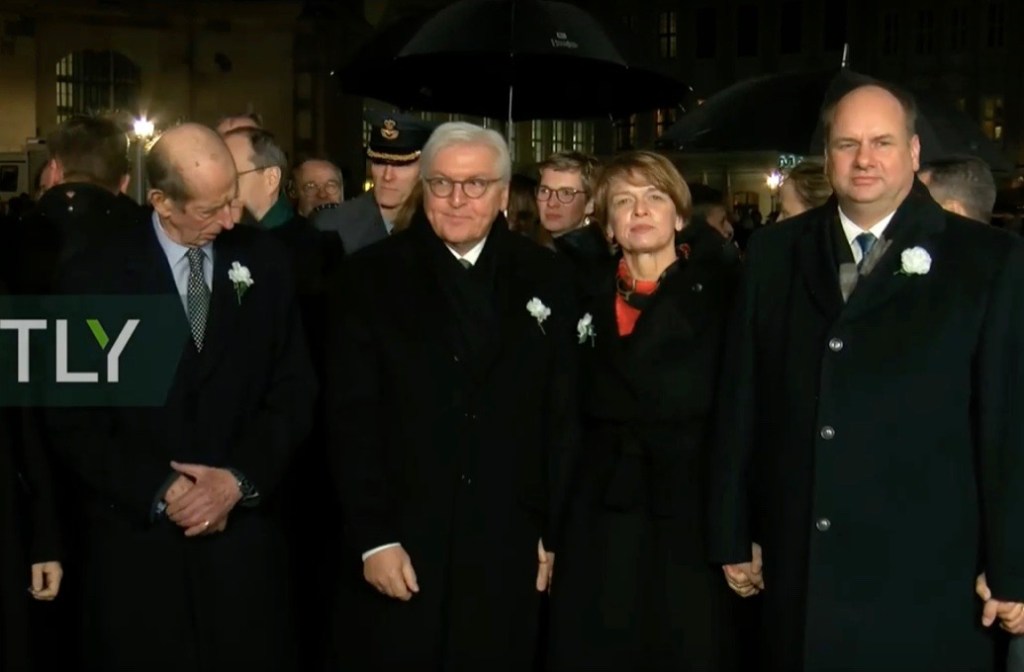
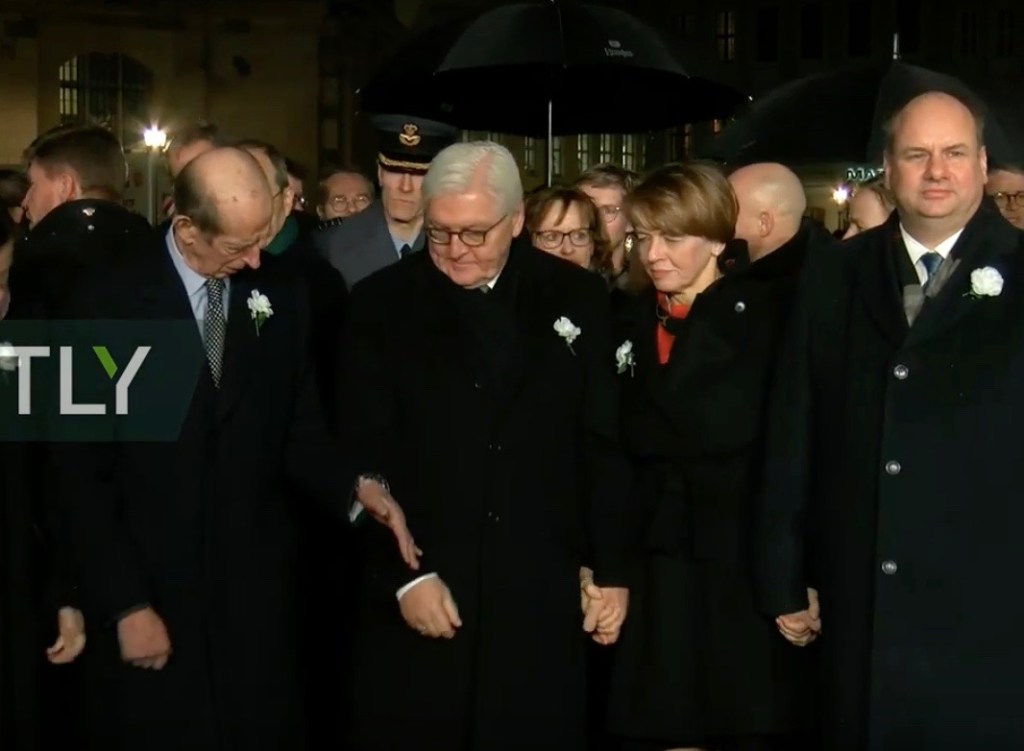
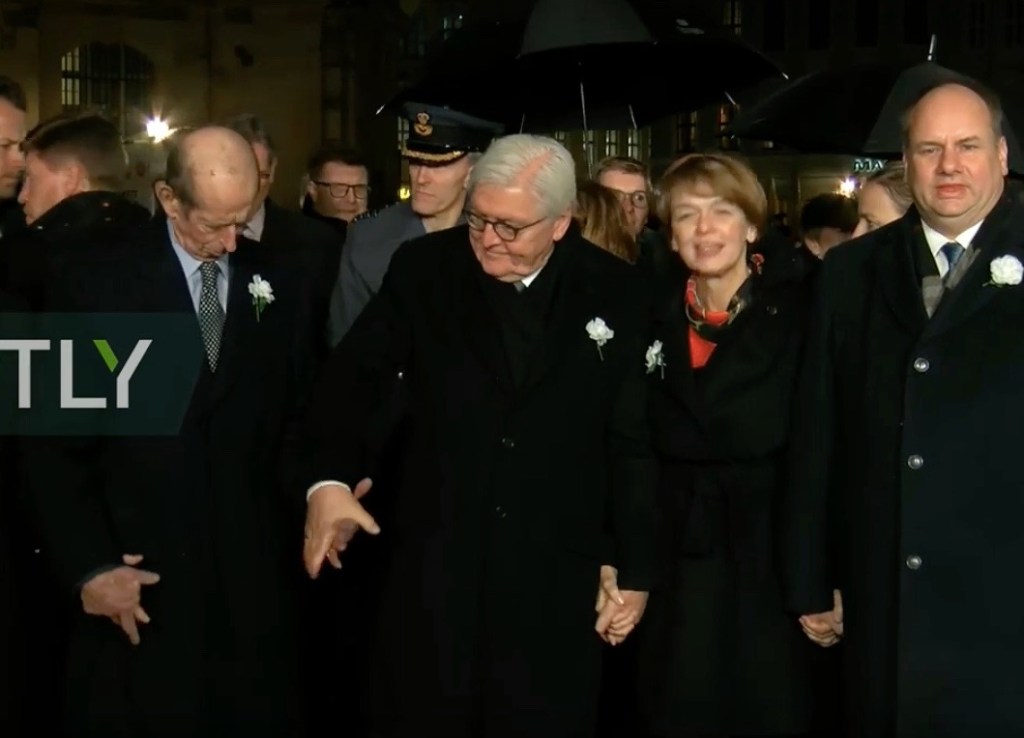
Steinmeier later joined thousands of residents in holding hands to form the annual human chain of “peace and tolerance.” Standing quietly beside him in icy rain and wind was the Duke of Kent, a long-standing contributor to British reconciliation efforts and Patron of The Dresden Trust (of which I am now honoured to be a Trustee). I don’t think Steinmeier dared initiate what happened next, but to his credit, the Duke did. Over a delightful few seconds, the nearly eighty-five-year-old royal looked down and, seeing the empty right hand of the German President, reached out and took it in his. And there they stood for a considerable time, hand in hand bearing witness to their respective nations’ capacities for the wholesale destruction of innocents.

The Duke of Kent (left) holding hands with German President, Frank-Walter Steinmeier

So far, my answer to my own questions is that there are way too many of us prepared to make a stand against the dark desires of the far right for them to gain significant power. In Dresden, two days after Steinmeier’s call to protect democracy, thousands of anti-fascist counter-demonstrators took to the streets forcing the comparatively low numbers of neo-Nazis to change their route. As one said, “On a day like this, you can’t just stand idly by. We are here to say that this is not our Dresden. There is no room for Nazis in this city — not now, not ever.”

Learn more:

Dresden marks WWII bombing in far-right stronghold.

Dresden: The World War Two bombing 75 years on – BBC News

History Extra Podcast: The bombing of Dresden