In Search of Nothing… Part 3. ‘Listen… ‘

One of the things that struck me most on my recent trip to Australia was how far the country has come in the 37 years since my first visit. Above all, in acknowledging the darkest aspects of its colonial past: the dispossession, dispersal, and inhumane treatment of First Nations peoples.

It is far from a given that a country admits, let alone apologises and atones for past wrongdoings. One could also question if it is even possible or right for a subsequent generation to apologise for the errors of a previous one. But that is what I found in today’s Australia where few locations or tourist sites, art galleries or museums, brochures or signage do not have a written acknowledgement of a specific Aboriginal people as the rightful custodians of the land. In addition, there are frequently pledges committing to respect these Traditional Owners going forward. 
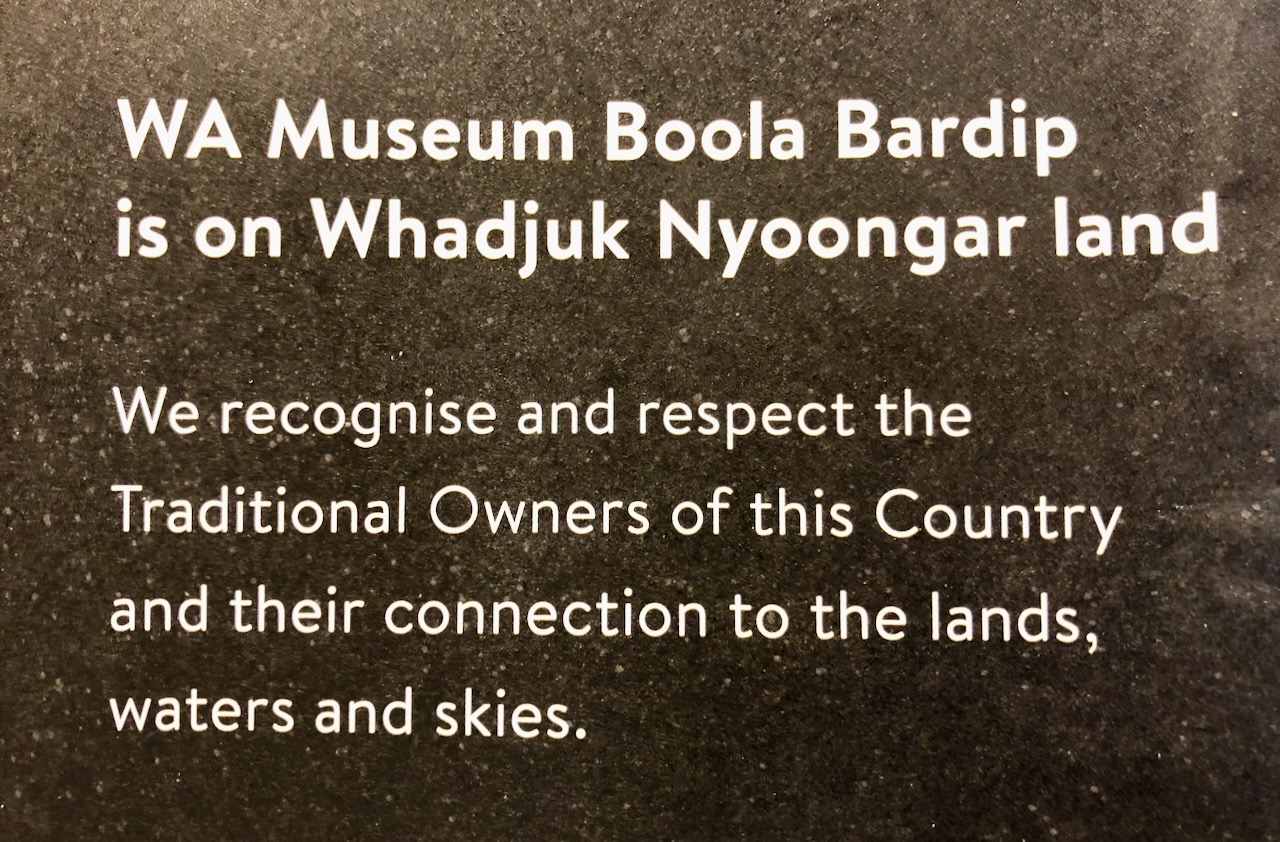
This is a welcome overturning of the 1835 legal principle of terra nullius – land belonging to no-one – that was implemented throughout Australia as the basis for British settlement and the negation of Aboriginal people as being civilised enough to be capable of land ownership. Even personal email signatures are now used to underline an individual’s support and respect.

I acknowledge the Whadjuk People of the Noongar Nation as the custodians of the land I live and work on.

I respect their enduring culture, their contribution to this city’s life, and their Elders, past and present.

Back in 1986 when I lived in Sydney, I encountered small groups of activists who fought for Aboriginal rights. But attitudes outside the cities, despite the successful 1967 referendum, remained far from close to recognising Australia’s indigenous people as equal citizens in their own land. Even decades after the extreme discriminations of Nazi Germany’s anti-Semitic laws and actions had horrified the world, Aboriginal people were regarded as ‘wards of the state’. They were unable to own property or control their own money; they were not allowed to marry or travel without permission. If they lived in or around white communities they were segregated and prevented from using community swimming pools or sitting where they chose in a cinema.
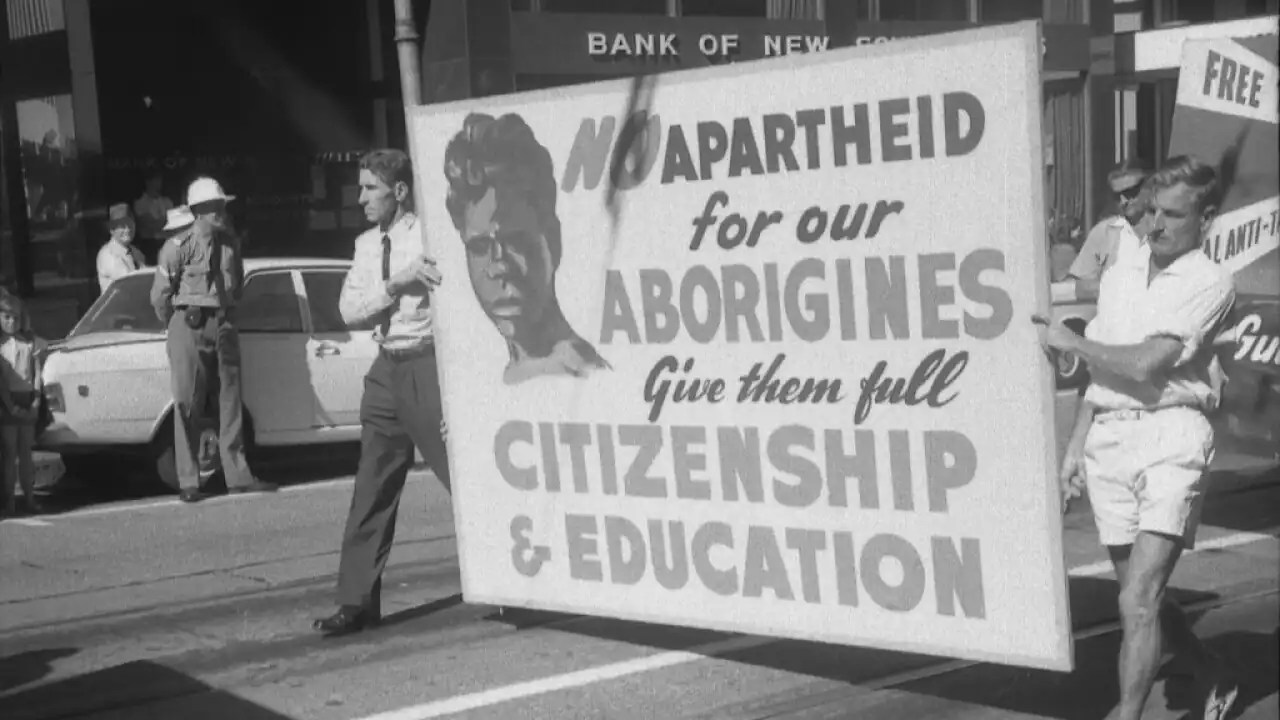
Photo from the 1966 May Day march in Brisbane. Source: Victorian Aboriginal Health Service

I have clear memories of my naive but adventurous, just-turned 22-year-old self bouncing across the north-eastern outback in chunky 4WDs driven by wild ockers. I remember a shoot-out at a nightclub… apparently some Aboriginals were shot at… and us fleeing the scene with extinguished headlights. The police showed up the next morning at our temporary camp on the banks of a (crocodile-infested?) river. They were not interested in the array of guns propped up against the trees, even though these could have been (but thankfully weren’t) the weapons turned against the Aboriginals. Nor did they question the men who would have used them. With apparent nods of approval to the young men’s armoury, the officers demanded to see my passport instead and carted off my terrified, less-ockery dope-head boyfriend for owning a pair of hash scales so tiny they couldn’t possibly have belonged to a dealer warranting incarceration.
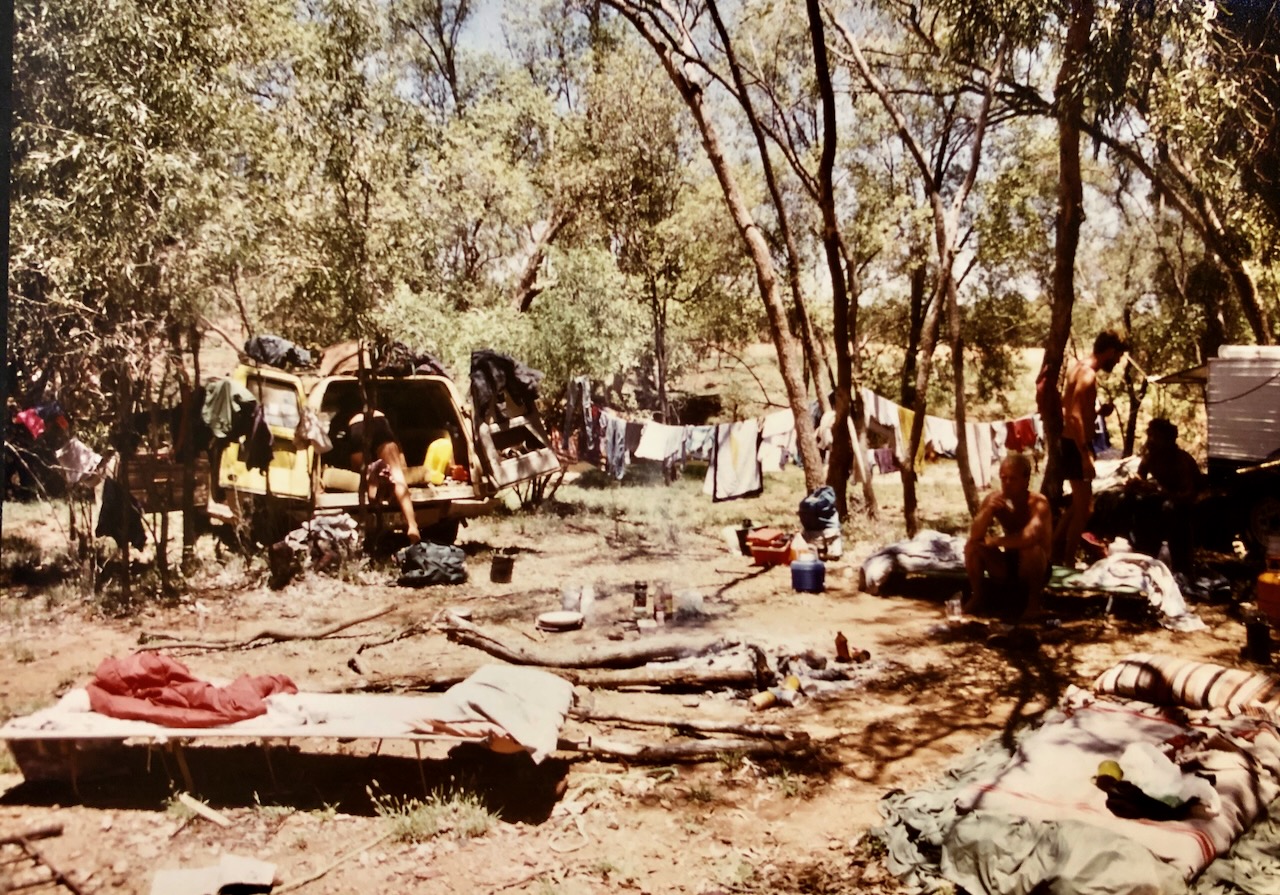
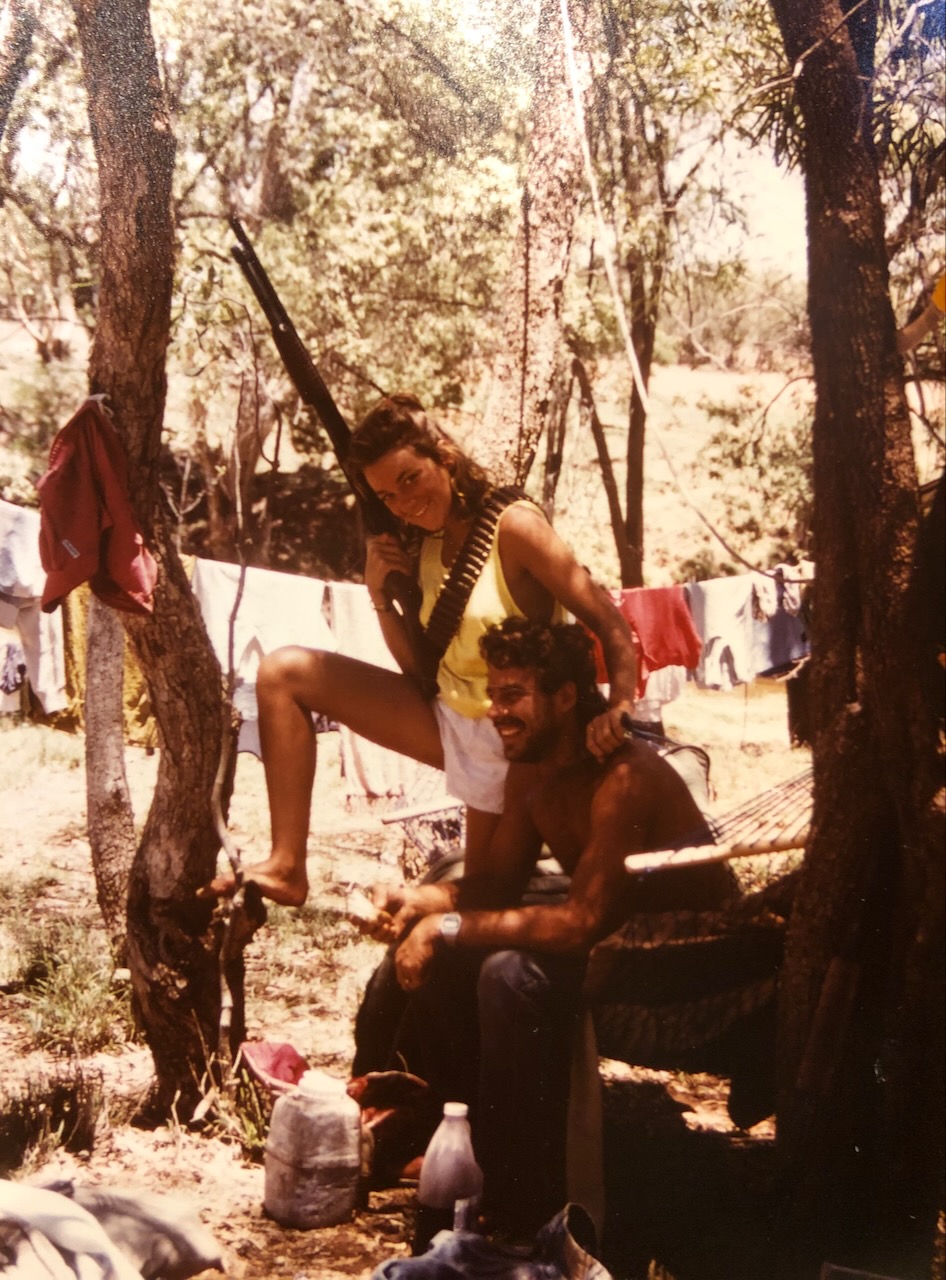
This was ‘normal’, I was told back then in response to my instinctive horror at the lack of concern for the welfare of Aboriginal people. Apart from the obvious abhorrence of such a ‘normality’, my natural tendency to root for the underdog was just one reason it all felt so wrong. Another was an inexplicable appreciation of Aboriginal culture with its ephemeral, ceremonial nature and absence of material evidence in the usual forms of temples and artefacts. I loved the simple power of their ancient handprints. The completeness of reality captured in the collections of dot paintings that began to emerge from the deserts in the seventies. I painted with earth pigments in the colours of their art. White, simply put, is the colour of spirit, black is the night, red is the land or blood, and yellow is the sun and the sacred.
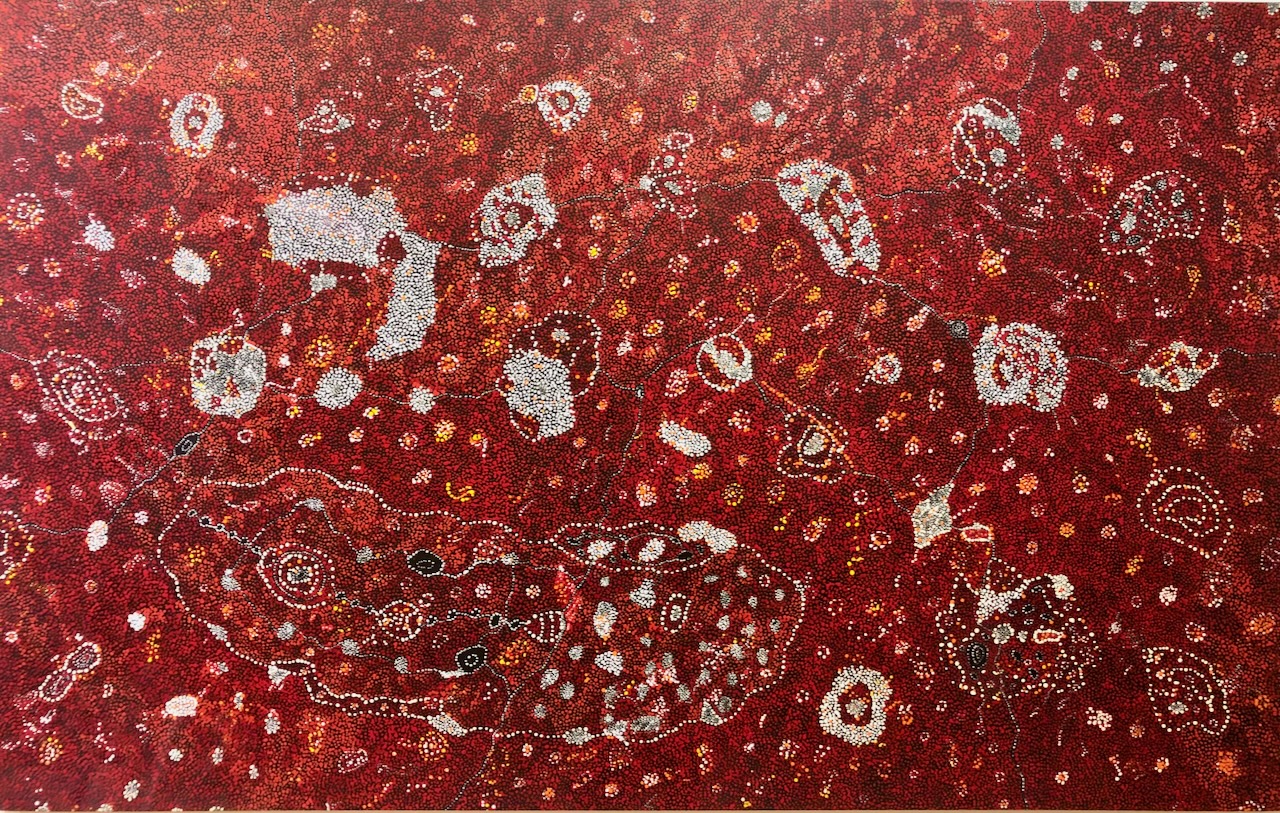
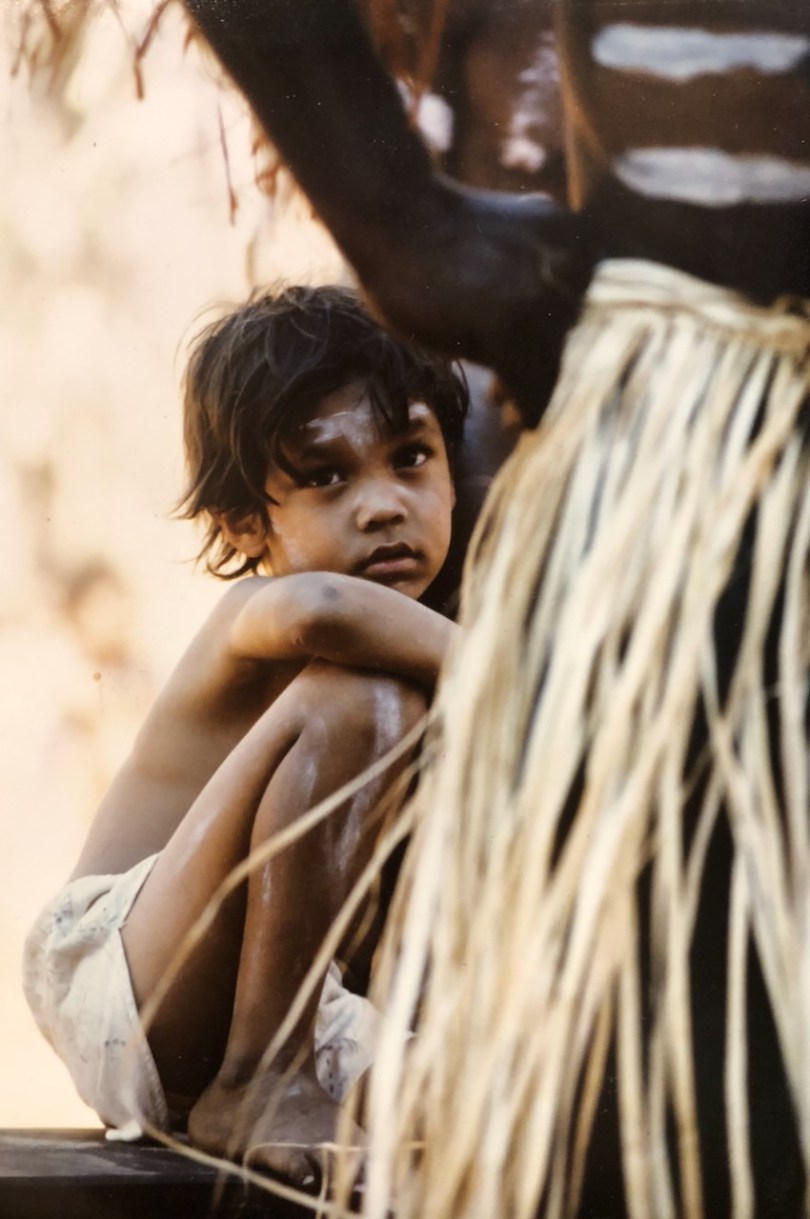
by Lance Peck, b. 1975 in Carnarvon WA

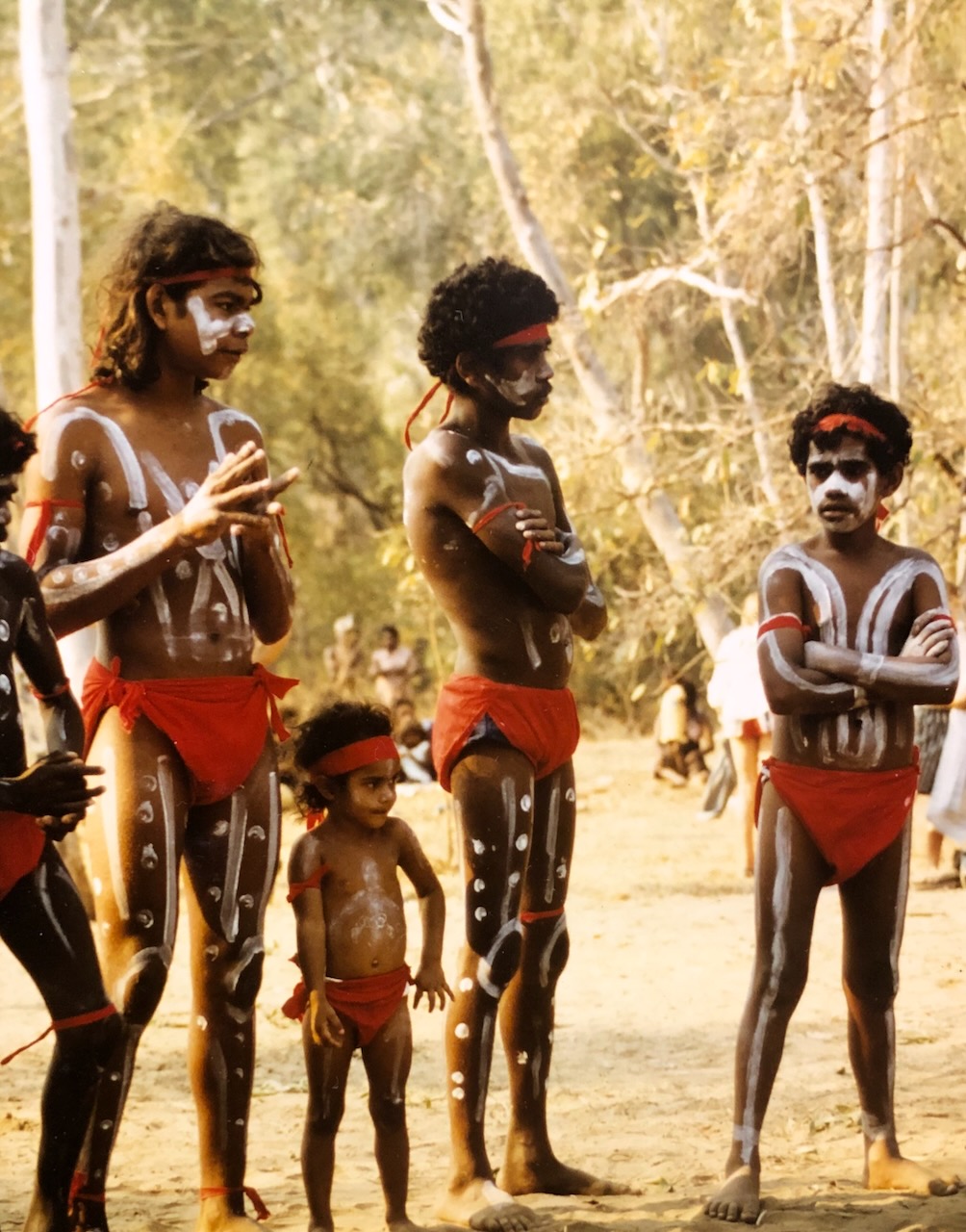
I also attended what must have been one of the first Laura Dance Festivals, a 3-day gathering of dance troupes from across Cape York and the Torres Straits held on a sacred site about 4 hours’ drive north of Cairns.
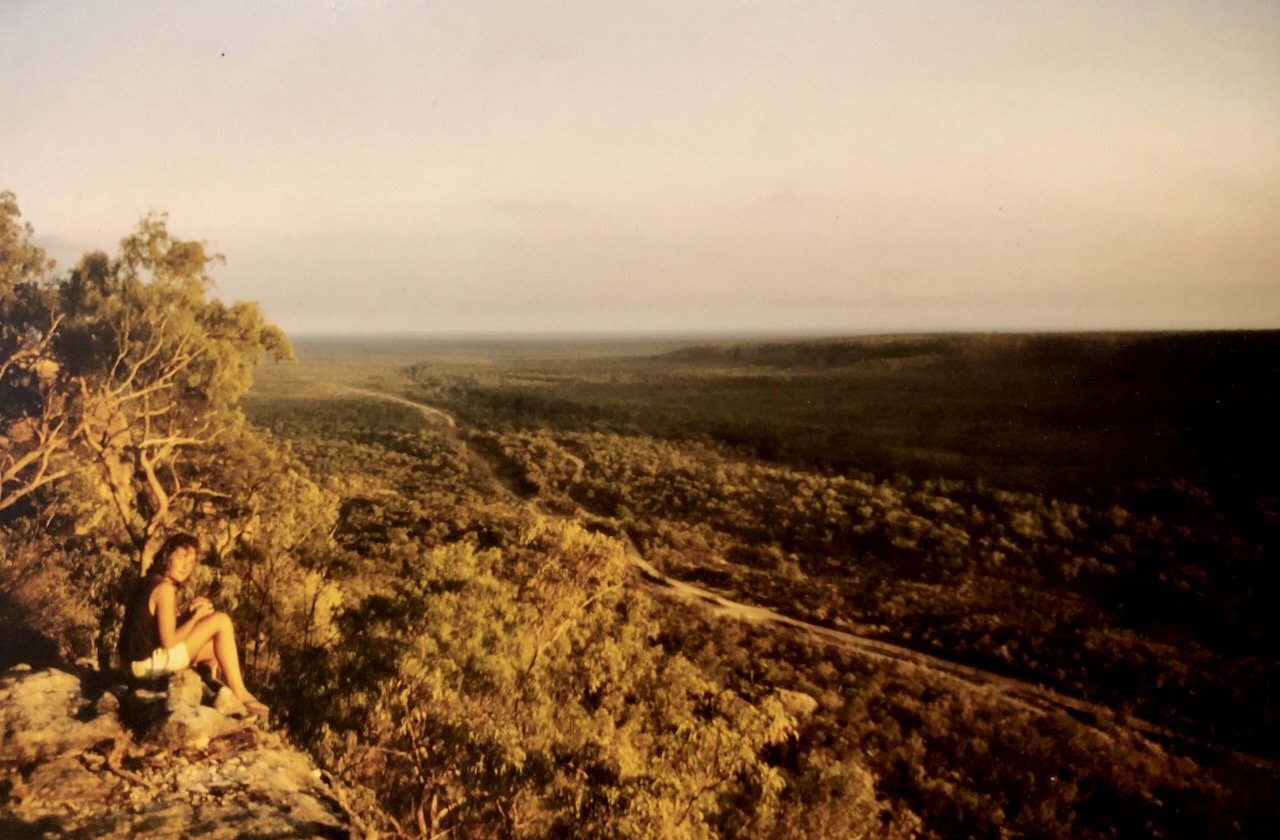
Sunrise at Laura, 1986

My photo album recalls how the Chairman of the festival arrived 2 hours late and, clad in a grass skirt and white and ochre stripes that adorned a generous belly, promptly forgot the name of the woman he was tasked with thanking. Unamused she took over and sternly instructed the dancers not to get drunk but to follow the example of their ancestors and drink wild honey.

I think Fanta was the happy compromise. 

Disappointingly for many Australians, the Voice referendum last October saw 60% of votes pitched against further constitutional recognition of First Nations people. The slogan ‘If you don’t know, vote No’ was eerily reminiscent of some of the Brexit referendum tactics (ahem…lies) that particularly appealed to ignorance or those who felt left behind. 

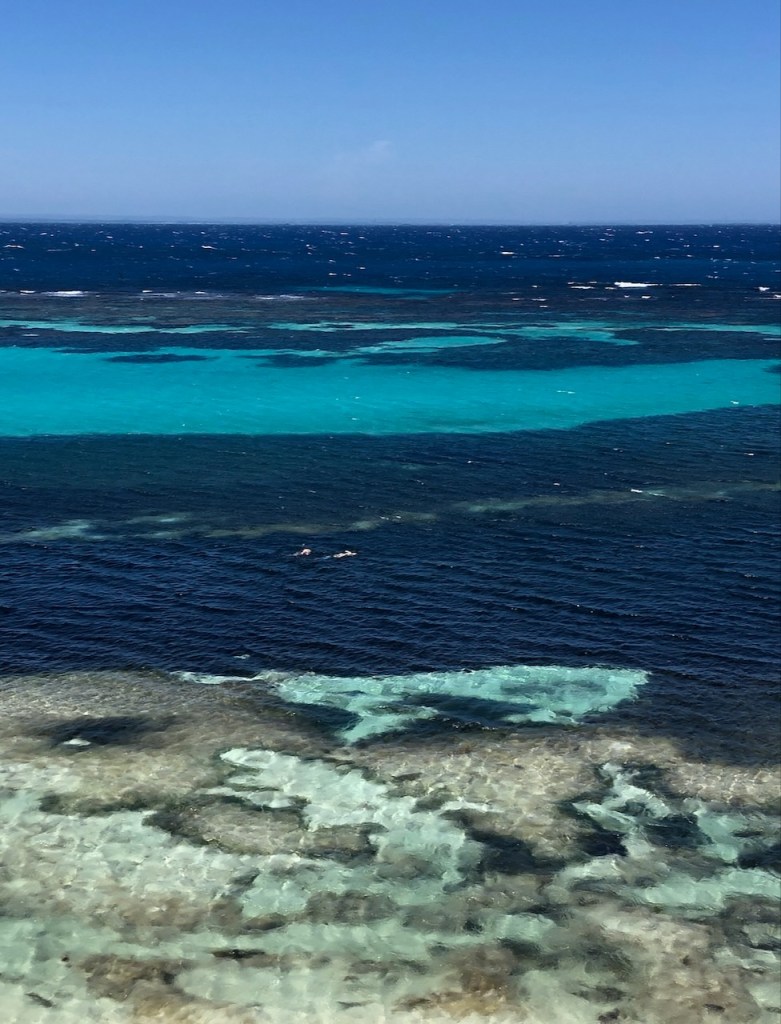
Nonetheless, in certain places in WA and no doubt all over the continent, I found sincere apologies for Australia’s past treatment of its first people. An Island off the coast of Fremantle, just south of Perth in WA, is one such place. 
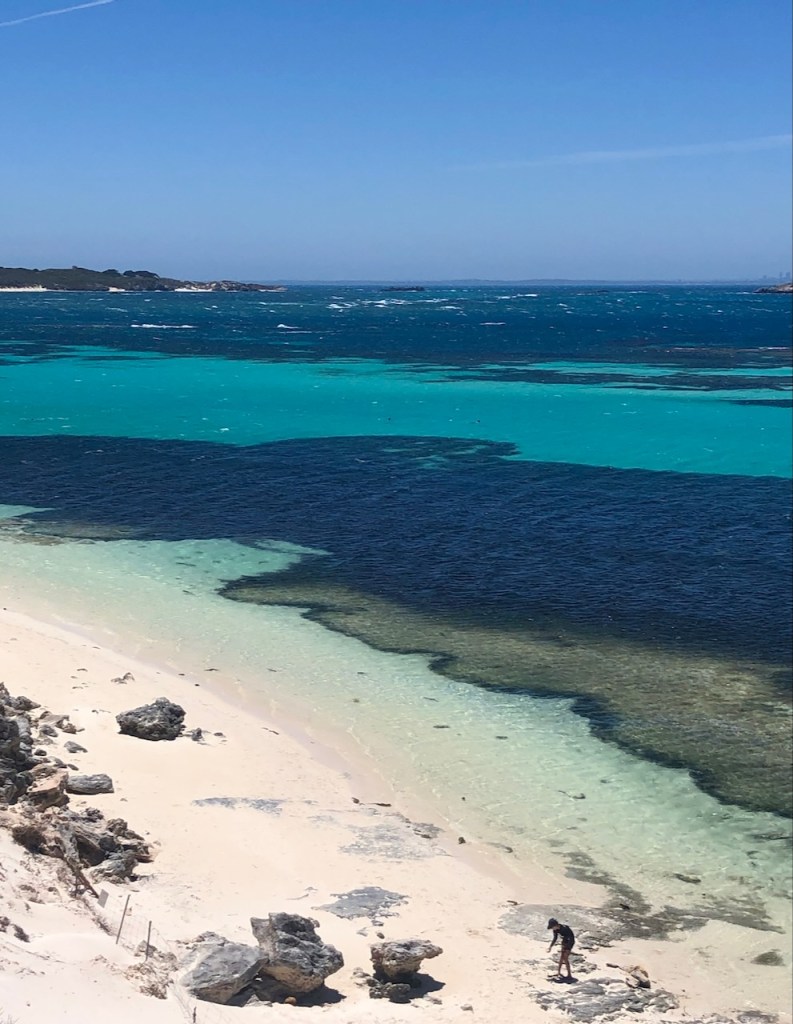
Between 1838 and 1931 the beautiful island of Wadjemup, also known as Rottnest Island, served as a prison for approximately 4000 Aboriginal men and boys from Western Australia. At least 373 of these prisoners died in custody and were buried in an area currently referred to as the Wadjemup Aboriginal Burial Ground. Many of them were leaders, law men and warriors, the guardians and carriers of a nation’s knowledge and stories. Their absence created turmoil in their communities and a sense of loss still felt today. 

For decades, insensitivity towards the plight of those prisoners and their families manifested in the decision to transform the Island from an Aboriginal penal settlement to a recreation and holiday destination. As part of this transformation, the area where the burial ground is located was repurposed as a camping ground known as Tentland, and the Quod (main prison building) was converted into a hostel. As in so many countries the world over, the painful history of the Island as a place of incarceration was concealed.
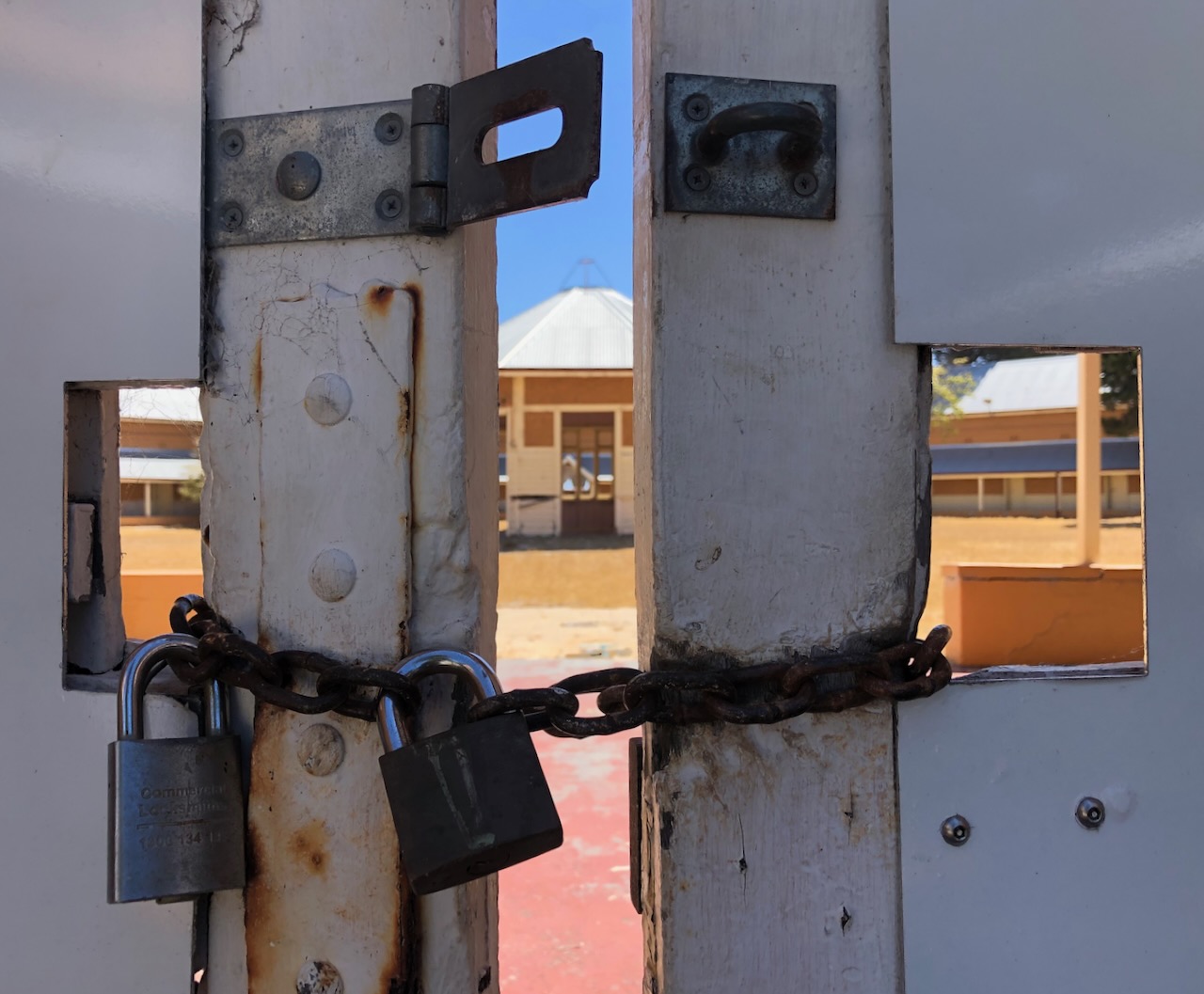
Tentland was only closed in 2007. The Quod hostel now lies behind locked padlocks.

On November 6th, 2021, the Rottnest Island Authority (RIA) Board delivered an official apology to the Aboriginal people of Western Australia for their role in ‘the obfuscation’ of the prison history and the disrespect of past practices:

“We recognise that this has caused great pain and anguish within Aboriginal communities. For this we apologise…. We will continue to work in collaboration with the Whadjuk Noongar people and the wider Aboriginal communities of Western Australia to promote reconciliation and acknowledge the past.”

I can imagine this has been welcomed by most, though it was distressing to visit the excellent little museum only to find the banging music and loud voices of a surfing film drowning out the important and deeply moving – when you could hear them – testimonies of descendants of the those imprisoned here. And while the little port hummed with ice-cream-licking tourists on bicycles, I found myself completely alone walking the periphery of the nearby burial ground, following the instructions of intermittent signs reminding you that the spirits of those who died remain here among the trees, part of the island. 
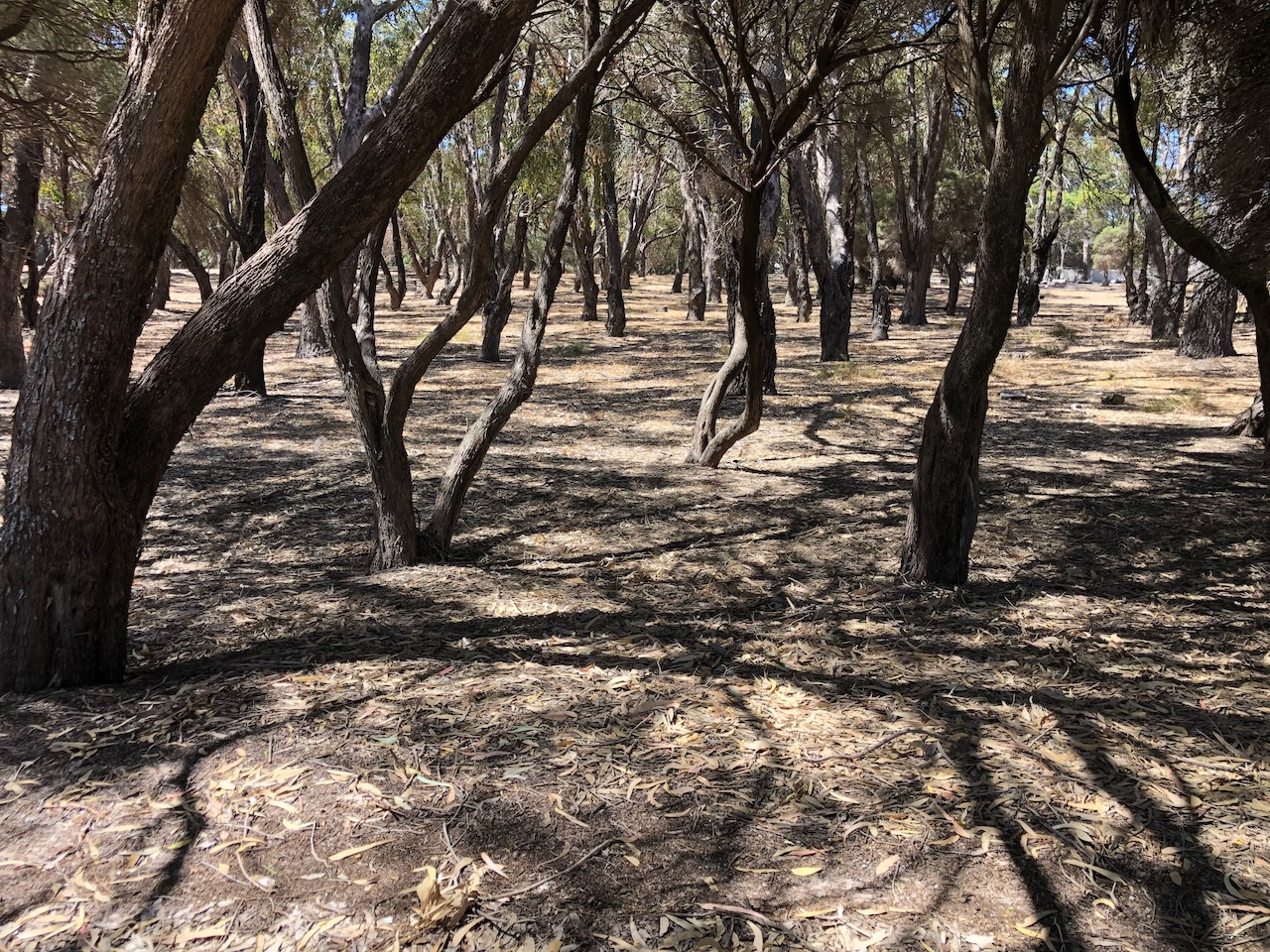
Listen for a moment.

See and understand.

The spirits of the land

are speaking. Listen…

Kwidja baalap yey – The past is still present. 

Our world is full of conflicts based on collective blame, attributions of guilt and/or a need to redress a national humiliation or wrongdoing. Such a binary dynamic is eternal, cyclical and as old as the world. Admissions of guilt accompanied by apologies are rare and largely avoided for multiple reasons, from not wanting to lose face or moral high ground to fearing being landed with restitution and reparation costs. Retrospective apologies are frequently considered hollow or politically motivated. So what options does that leave?

Australia’s example will be considered by many as flawed and insufficient; too little too late. But the country’s efforts to recognise the pain inflicted is surely better than ignoring its lasting impact. The visionary Ngarinyin lawman David Banggal Mowaljarlai offers us a way forward. Born in 1925 on the Kimberley coast, he lived a traditional life but became adept in both cultures becoming, among other things, a Presbyterian lay minister, a painter, a social justice advocate and a land rights activist who then travelled the world as storyteller, thinker and educator. “We are really sorry for you people,” he said in one of his many broadcasts to ‘whitefellas.’ “We cry for you because you haven’t got meaning of culture in this country. We have a gift we want to give you… it’s the gift of pattern thinking.”
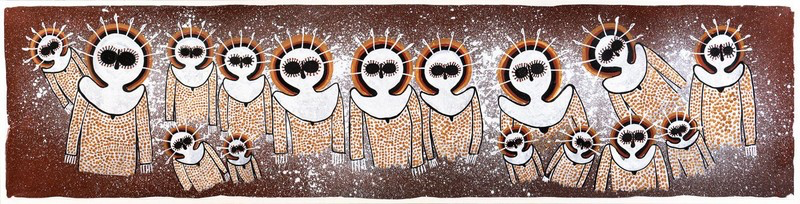
Gallery of Wandjinas (1994) © David Banggal Mowaljarlai or assignee

When I read this is Tim Winton’s ‘Island Home,’ (p.231-3) it clarified to me what I have always loved about Aboriginal art: the innate interconnectivity between human beings, nature and the universe that run far deeper than any divisions of nationality, colour, language, religion etc. Mowaljarlai’s ‘Two Way Thinking’ is a philosophy of mutual respect, mutual curiosity and cultural reciprocity. The uniting principle of ‘mutual obligation’ that became a catchphrase loved by politicians, of course extends to the natural world. To me it offers a genuine way forward that transcends any hopelessness and helplessness we might feel towards the huge problems we all, as a human race, are, or will be facing.
To apologise, or not to apologise (for slavery), that is the question.

I am already anticipating a deeply divided and critical response to the recent announcement that Charlie Gladstone and five members of his family, all descendants of the Victorian-era prime minister William Gladstone, are travelling to Guyana to apologise for the significant role one of their ancestors played in the slave trade. But I’d like to ask those who are cynical of such a trip to consider what the alternatives might be.

John Gladstone, William’s father, was one of the largest slave owners in the British West Indies. You can read all about him in the links at the end, but basically he made a fortune as a Demerara sugar planter enslaving hundreds of Africans to work in his plantations until slavery was abolished in 1833. He then became the fifth-largest beneficiary of the £20m fund (about £16 billion today) set aside by the British government in 1837 to compensate planters for loss of income. The final instalments of this compensation were paid out in 2015.

Charlie Gladstone is roughly the same age as me and, though the ‘crimes against humanity’ perpetrated by his family member were nearly 200 years ago whereas those my German grandfather was involved in were a mere eighty, the burden of shame may well weigh as heavily. As I describe in detail in my book, In My Grandfather’s Shadow, the unresolved deeds of our forefathers remain in a family blood line, in our roots. Whether you are ignorant of or choose to engage with them, there will be an impact that needs resolution of some sort. 

Apology is one of many steps that can be taken to try to repair wrongdoing, and personally I think it is good that people such as those in the group Heirs of Slavery, including David Lascelles 8th Earl of Harewood, are finally beginning to address not only the sources of their family’s wealth, but also our collective colonial history and the traumatic consequences that can still be witnessed all too clearly in racism, inequalities in health, wealth, education and opportunity. In their cases it is about apology and accountability, with some of them making financial contributions towards charitable institutions and – in the Gladstone’s case – further research into the impact of the slave trade.

Harewood House, built between 1759-71 with the profits made from plantations and slavery

Others are at it too. Back in July, the Dutch King, Willem-Alexander, apologised on behalf of his country for the Netherland’s historical involvement in slavery and asked for forgiveness. It’s of course a flawed gesture in its incompleteness, but isn’t a heartfelt apology, whether possible or not so long after the event, at least a gesture of recognition of wrongdoing that can lead to a willingness to redress the former total loss of humanity? So many victim groups would attest to the immense value of a genuine ‘I’m sorry’.

King Willem-Alexander apologising on 160th anniversary of the abolition of slavery in the Netherlands

Our prime minister doesn’t think so. Back in April, Rishi Sunak refused to apologise for UK’s role in slavery saying that ‘trying to unpick our history is not the right way forward’ and that the focus, ‘while of course understanding our history in all its parts and not running away from it, is making sure that we have a society that is inclusive and tolerant of people from all backgrounds.’

Fair point about looking forwards. But how can you truly ‘understand’ such a horrific history, underpinned by past government policy, without being moved to demonstrate some direct expression of remorse to those it continues to affect? Or is that precisely what we are scared of? That an apology equates to an admission of culpability and therefore an obligation to compensate?

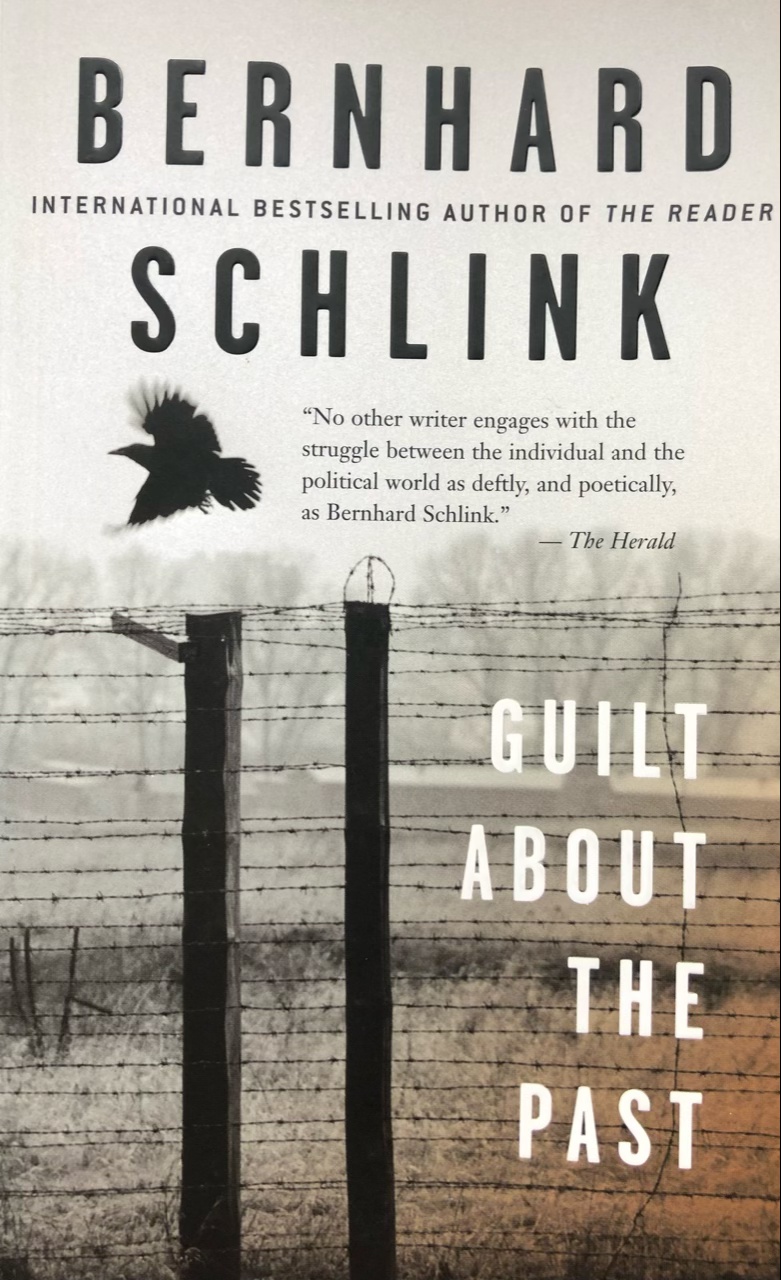
In his series of essays based on lectures delivered at Oxford University and bound into the 2009 book Guilt about the Past, Bernard Schlink, German author of the 1997 bestseller The Reader and various other literature, tackles not only German guilt about the past, but other long shadows of collective and global past guilt. (I am well aware we can’t actually be guilty of something we didn’t do, but we can still feel guilt.)

In the essay entitled ‘The Presence of the Past’, he addresses the issue of remembering or forgetting a traumatic past. “A collective past, like that of an individual, is traumatic when it is not allowed to be remembered and is just as much so if it has to be remembered… Detraumatisation is the process of becoming able to both remember and forget; it is leaving the past in the past, in a way that embraces remembrance as well as forgetting. This applies in the same way to the victims and their descendants as to the perpetrators and their descendants.” (p.36)

We need to find that balance.

One of Schlink’s claims that struck me most while exploring my own sense of guilt for my German family’s past was in the chapter on ‘Forgiveness and Reconciliation.’ He says that if someone seeks forgiveness for their own guilt it has weight, but “to ask for forgiveness for someone else’s guilt is cheap.” (p.73) 

Cheap… So where does that leave those of us living today and the question of apology for things that happened decades or even centuries ago? 

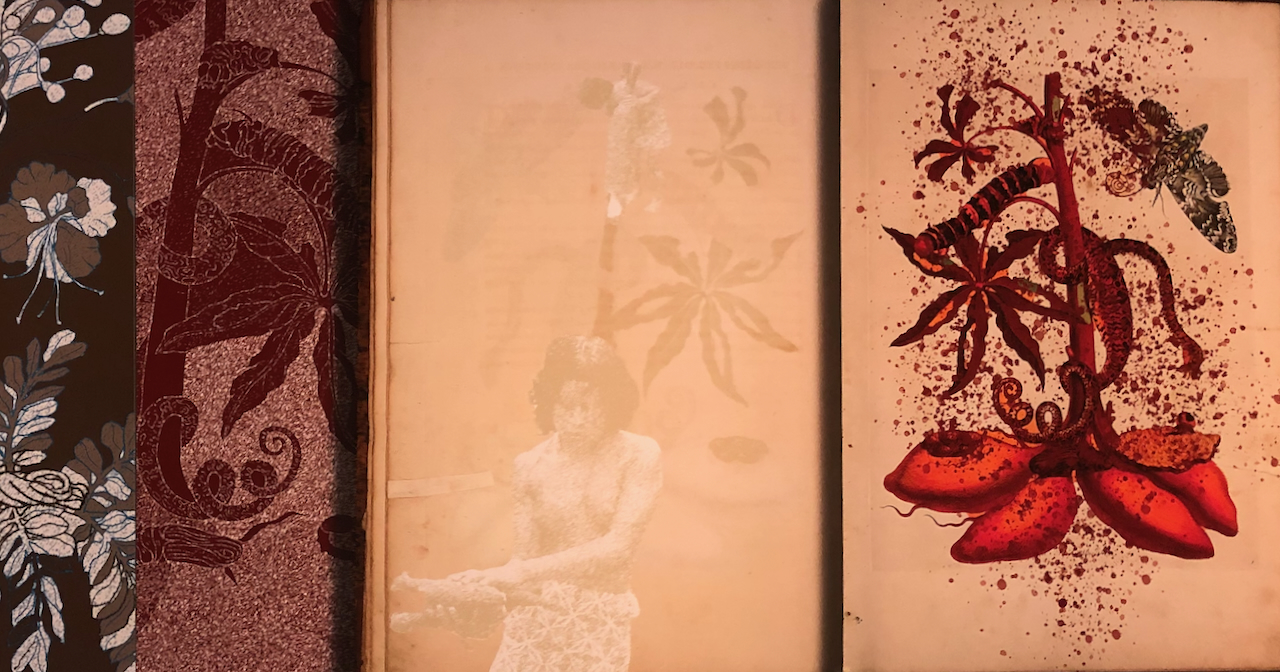
Detail from Patricia Kaersenhout’s ‘Of Palimpsests and Erasure’ (2021) (https://www.pkaersenhout.com)

Schlink and I come to a similar conclusion. It’s about understanding. He says, any kind of reconciliation requires “a truth that can be understood.” And “true understanding is more than searching for and finding causes. It includes putting yourself in someone else’s place, putting yourself in someone else’s thoughts and someone else’s feelings and seeing the world through that person’s eyes.” Doing this, he says, establishes equality. “We make [the other person] equal to us and us to them; we build up society when we understand.” (p.82)

This form of ‘understanding’ goes way beyond the slightly glib understanding the current leader of our country suggests. It requires engaging in the truth of what happened and feeling it. Feeling how appalling it was and being moved to act to heal and make good the wrongs that still poison our national veins and those of the human beings living today whose forefathers were harmed.

Further reading, as always not all links reflect my own opinions:

William Gladstone: family of former British PM to apologise for links to slavery 
William Gladstone’s family to apologise for historic links to slavery

‘I felt absolutely sick’: John Gladstone’s heir on his family’s role in slavery

Rishi Sunak rejects calls for slavery reparations from UK

When will Britain face up to its crimes against humanity?

Dutch king apologises for country’s historical involvement in slavery

Campaigners urge king to do more to acknowledge UK’s slavery role

The British aristocratic families reckoning with their slave owning past

The German translation of In My Grandfather’s Shadow will be published in Germany in September. Please contact me for details of forthcoming events relating to in Germany.

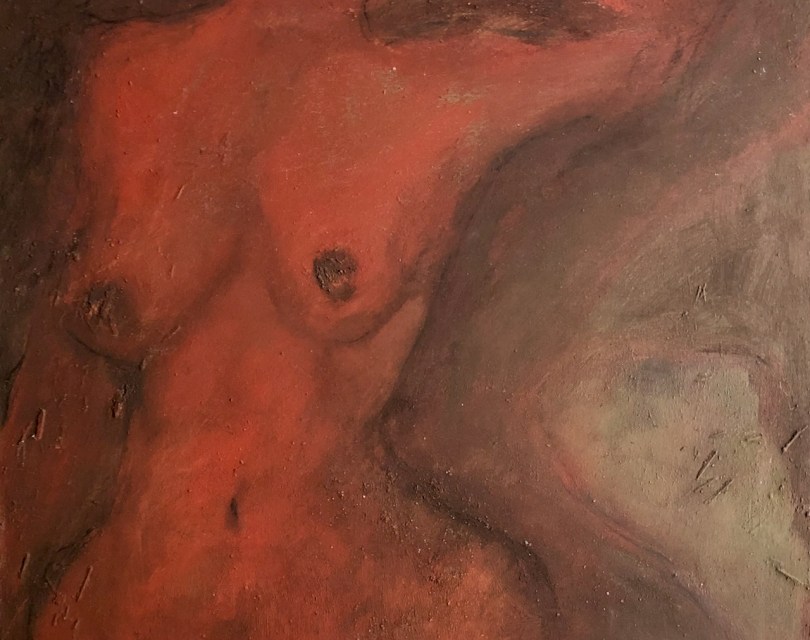
Title painting: ‘Salt of the African earth‘ by Angela Findlay, 1994

What does ‘British’ mean to you? And are certain ideas of ‘Britishness’ holding us back?

I’m really interested in the question of what ‘British’ means to people now. I am curious which images of Britishness are conjured up by Brexiteers. What British means to Black Lives Matter (BLM) protestors, NHS workers, army officers, staunch Conservatives and practicing artists alike. And what British means to you, whether you are British or not.

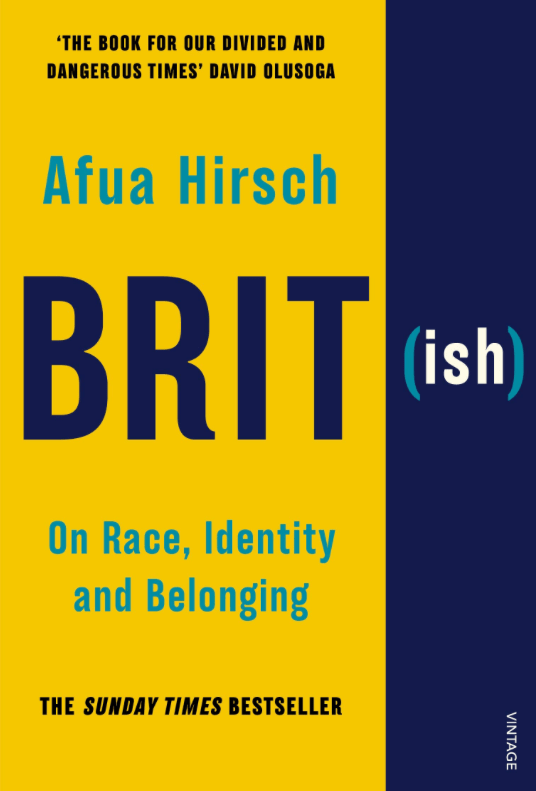
The reason for my interest comes partly from reading Afua Hirsch’s excellent book, BRIT(ish). Born to British and African parents and raised in middle-class Wimbledon, she explores questions of identity on personal, collective and political levels and reveals the on-going challenges and prejudices faced by many black British. It’s shocking, moving and humbling. And it offers potent insights into Britain’s evident desire to be ‘post-racial’ before it has properly confronted the deeply embedded racism derived from old but intractable beliefs in the superiority of whiteness. 

As a person born to parents of differing nationalities, I have often occupied myself with questions of national identity. Now I am fascinated by the concept of ‘British’ more than ever because, from where I’m standing, Britain and Britishness are hurtling towards a potentially exciting cusp of change. I don’t mean the very tangible changes we, along with much of the world, are making as a result of the Covid pandemic. I also don’t mean the changes that will inevitably come about as a result of Brexit and our divorce from the EU. I’m not even referring to the changes the prime minister and government are plotting in order to make Britain ‘the greatest place on earth’. No, all those proposed changes, a bit like HS2 in a post-Covid world, feel slightly old and out of date already. Most have a reactive feel to them, like sticking plasters, firefighting or making-it-up-as-you go-along.  

Change is rarely comfortable. And fundamental change even less so. Many people fear it and tend to hold tightly to the status quo in preference of disruption. But I am keen to understand precisely what qualities of ‘British’ people are wanting to hold on to. Because it seems to me, and I am far from alone in this, that Britain – whatever that means – is holding onto something, or at least desperately trying to hold onto something. Critical words that have been around for decades in smaller circles are suddenly trending in new publications, articles and programmes. Where Britishness may once have conjured up images of fish and chips, rainy queues, Mr Bean and the Royal Family; or diplomacy, reserve, wit and multi-culturalism, the main things now being cited both here and abroad – and not without considerable sadness and dismay by countries that have deeply admired and loved the UK – seem to be largely scathing criticisms. Above all, of prevailing attitudes: British self-importance; self-congratulation; delusions of grandeur; flag-waving patriotism; exceptionalism; self-entitlement; immaturity, isolationism, archaism… it is not a flattering list.

What has happened? It’s long been clear that Britain has never got over winning the war and, though it’s less verbalised, losing its empire. Boris Johnson is busy channelling Churchill and the language used by many of our leaders merely reveals how stuck they are in ruts of victor/loser rhetoric on the one hand, and nostalgia on the other. Both are ossified and now misplaced attitudes that infuse national thinking and hinder their ability to respond to the very specific demands of these unbelievably challenging times with the appropriateness some countries with lower death rates have displayed. And of course, our pride in our victories and apparently benign empire is only partially justified anyway. There are far broader perspectives to explore and embrace that will not only bring honest nuance to our favoured narratives, but also acknowledge the lingering dark shadows we have cast over whole areas and peoples in our past. As Afua Hirsch says, ‘Britain definitely has secrets. They lurk in the language and the brickwork and the patterns of society.’

Why is it important to look at them?  

Why do we need to look behind us before moving ahead? 

Because until we do, many options and possibilities for the future will remain closed to us, not least in relation to the biggest challenge facing the world, climate change. Like a person riddled with festering wounds, Britain cannot move forward with the light optimism it so desires. It can only limp making the wounds more livid. But once we have tended to the hurt, trauma and ethical redress needed to heal our past, we will be able to move forward less hindered. We can then start the process of integrating the fragmented aspects of British society into a healthier, synchronised whole. This more inclusive version of ‘British’ with its stronger, more contemporary identity will restore us to the position of respect and admiration we long for and will then rightly deserve. 

It won’t be comfortable… but it will be deeply healing and liberating in the long run.

In the meantime, while I am aware that English, Welsh and Scottish also have individual identities, please send me the words and qualities that ‘British’ conjures up for you.

A few related links:

Afua Hirsch on BRIT(ish) – a short video

BRIT(ish) Review – what does it mean to be black and British now?

National Geographic: Why Britishness, as an identity, is in crisis