Back to Jail, this time with a book not a paintbrush… 

There was something deeply familiar about the process of entering HMP Wandsworth last week. The first time I was there was in 2003 in my role as Arts Coordinator for the London-based Koestler Arts. I had founded the Learning to Learn through the Arts scheme a year earlier and was co-facilitating a 4-week dance and art project called Beyond Words.
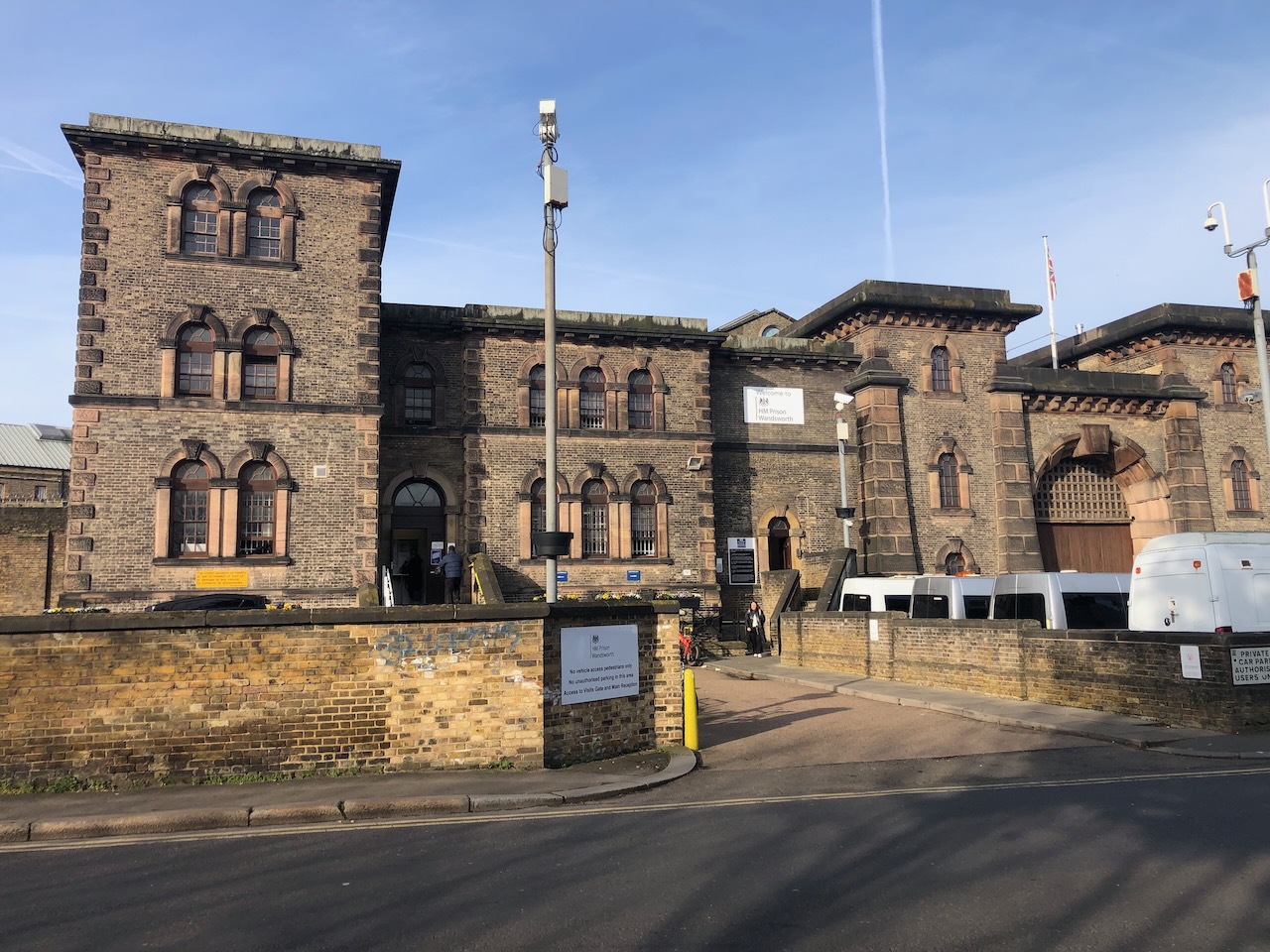
HMP Wandsworth, London

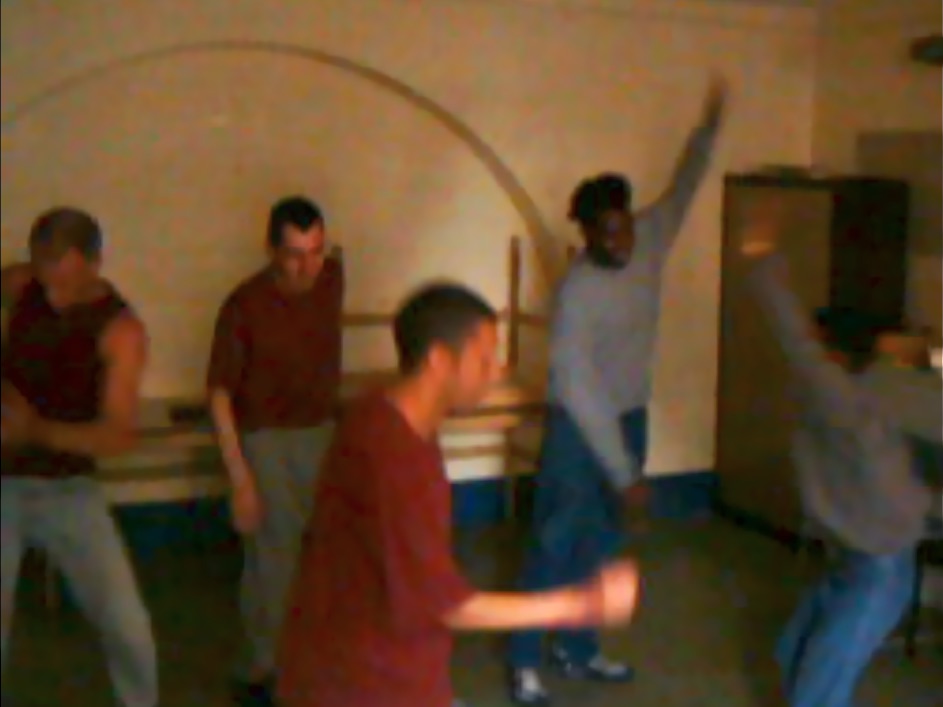
The aim was to bring dance and painting together to create a non-verbal language through which prisoners could express themselves. Each day was a mixture of individual and group exercises that saw the men clambering over tables and chairs to dissolve the formalities of a traditional classroom or splattering paint on paper with Expressionist vigour. Both approaches eventually led to solo multi-media performances and the development of communication skills, camaraderie, trust and sensitivity within the group.

Now, twenty years later, I was re-entering HMP Wandsworth, but this time in the wholly verbal capacity as author of In My Grandfather’s Shadow.

For people who haven’t experienced it, entering a prison can seem synonymous with entering hell. And for many, it probably is. This blog therefore feels unintentionally apposite to Good Friday, the day in the Christian calendar that signifies the crucifixion of Jesus Christ and his descension into hell. We have grounds for this picture of infernal misery from exposure to BBC programmes such as Prisoner,   Time,  Disclosure: Prisons on the brink.  Or five series of Prison Break. But my visit couldn’t have felt further from those dark scenes. 

The beautifully organised event was the result of a brilliant collaboration between the Wandsworth Prison Library team and the charities Give a Book and Prison Reading Group (PRG). Generous book donations came from Penguin Transworld and Radio Wano, the prison’s in-house radio station, took care of publicity. I knew from experience how difficult arranging such events can be. Months of dialogue and organisation can be kiboshed by any number of unforeseen occurrences, or simply by time-poor officers’ inability to deliver the prisoners to the room.  
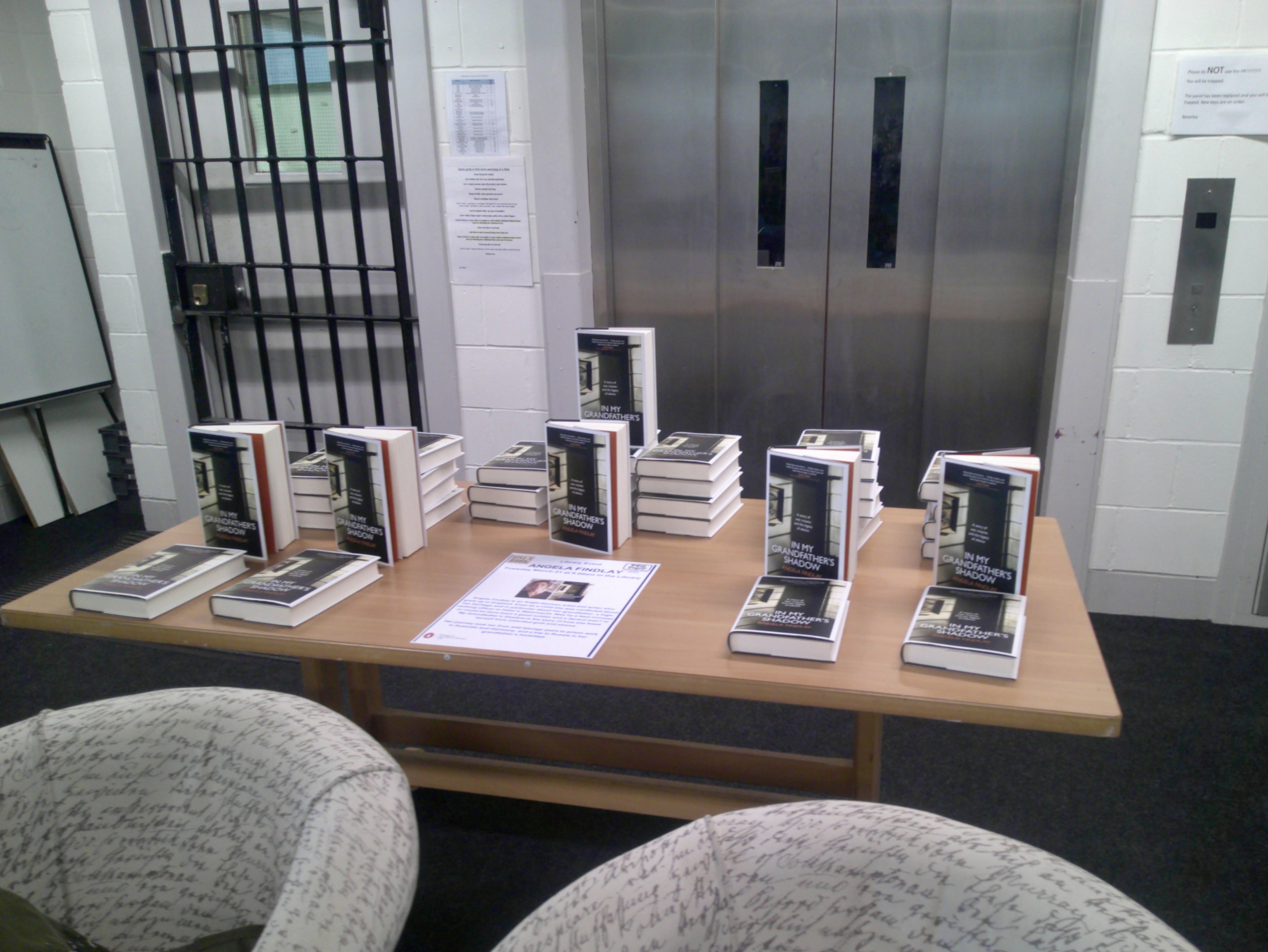
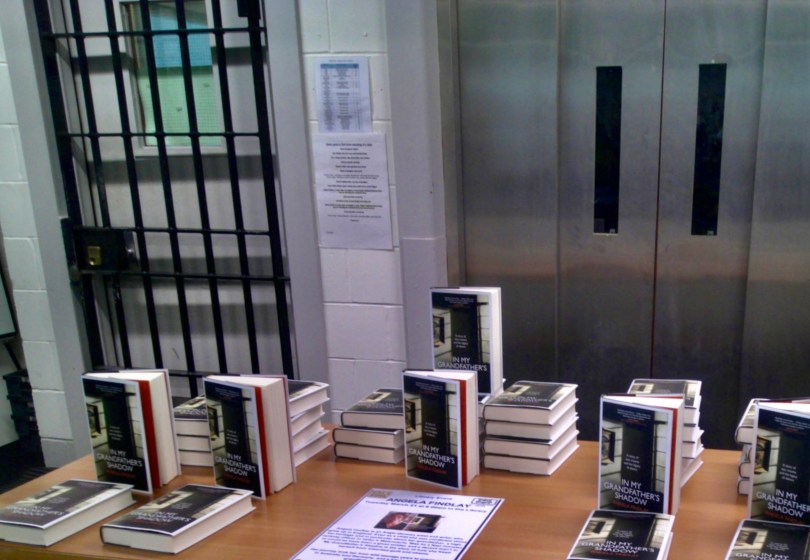
Not on this occasion though. Thirty-five men, mostly already seated, some with copies of my book on their laps, awaited us as we took our seats in front of a display of hardback copies that rivalled any book festival’s. Unlike my regular illustrated talks in which a series of images ties me to a certain chronology of thought, I was able to speak freely, engaging the antennae grown over years working ‘inside’ to gauge the interests and sensitivities of my audience. As I spoke into the men’s intense attention, I sensed cogs turning in brains as they connected my words to their personal situations. So many of my book’s themes speak to their experiences of trauma, addiction, conflict, violence, guilt, shame, depression, intergenerational family legacies… 

Like a muscle memory, my heart opened as they began to engage verbally, asking questions and contributing informed opinions and philosophies of their own to mine. One of the librarians said to me afterwards, ‘They are so deep.’ And yes, their questions dived in at the deep end, not dissimilar to audiences in Germany. Intelligent. Philosophical. They know darkness. And they recognise how you get there. What I, as always, hoped to show was a way out.
At one point, as I related how I had felt ‘at home’ in prison as a young woman, a prisoner suggested that it may have been because they are at the bottom. ‘We are the bottom of society.’ He was right. That is the perception of many. Shame is the ultimate bottom dweller of emotions. And in feeling shamed as a teenager for being half-German, I would have related well to those who resided at ‘the bottom’.
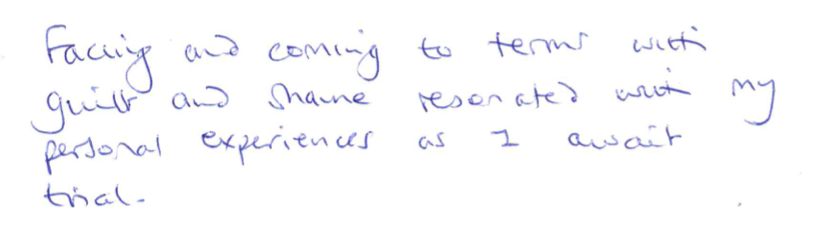
Comment from a prisoner at HMP Wandsworth

I cannot, however, see these men – and I say men as a generalisation because 95% of the prison population is made up of men – as genuinely being at the bottom of the human pile. It is wrong of society to simply clump them together into one unnuanced band of criminal brothers. There are of course some horrendous crimes. But each person is both individual and potentially so much more. Each has a story, a journey of how they got here. And dreams for something different.

One man revealed he had thought about writing his story but felt nobody would be interested. ‘What makes you think that?’ I enquired. ‘Because it would be too dark,’ he replied only to be refuted and encouraged by others with claims that the crime thriller is one of the most popular genres. 

Listening to and briefly meeting the prisoners at this library event didn’t appear to correspond to the prison statistics I regularly quote in my Art behind Bars talks.
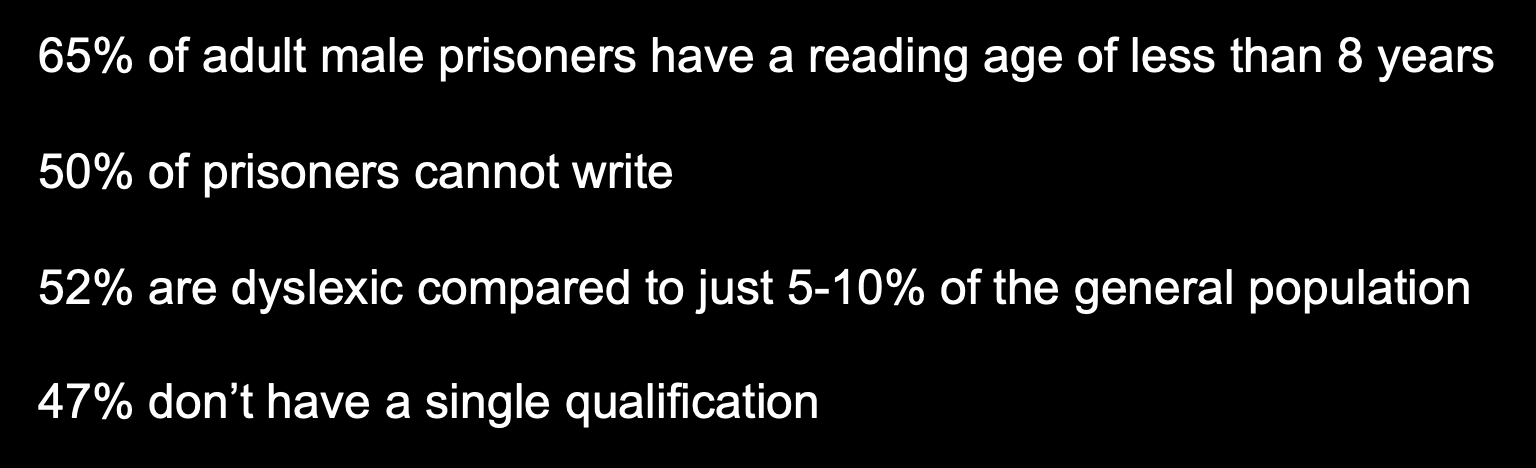
A 2022 government review of reading reported: “The most recent data published by the Ministry of Justice shows that 57% of adult prisoners taking initial assessments had literacy levels below those expected of an 11-year-old.” There is nothing new here, but they remain shocking statistics. And yet my experiences tell me that in spite of high rates of ADHD, illiteracy, dyslexia, prisoners are far from ‘thick’ or even uneducated. They may have failed in or been excluded from mainstream education, but all too often that is because they have not received an education appropriate to their learning styles or needs. It’s an education that doesn’t recognise or value what their experiences have taught them about life.

Once the discussions were over, a long queue lined up for signed copies dedicated to names that revealed the audience’s colourful cultural mix. Many imparted tantalising snippets that hinted at reasons for their interest in my subjects… they were from Poland; they were fascinated by alternative perspectives on WW2; they now recognised how their actions might impact their children; they longed for intellectual stimulus. 

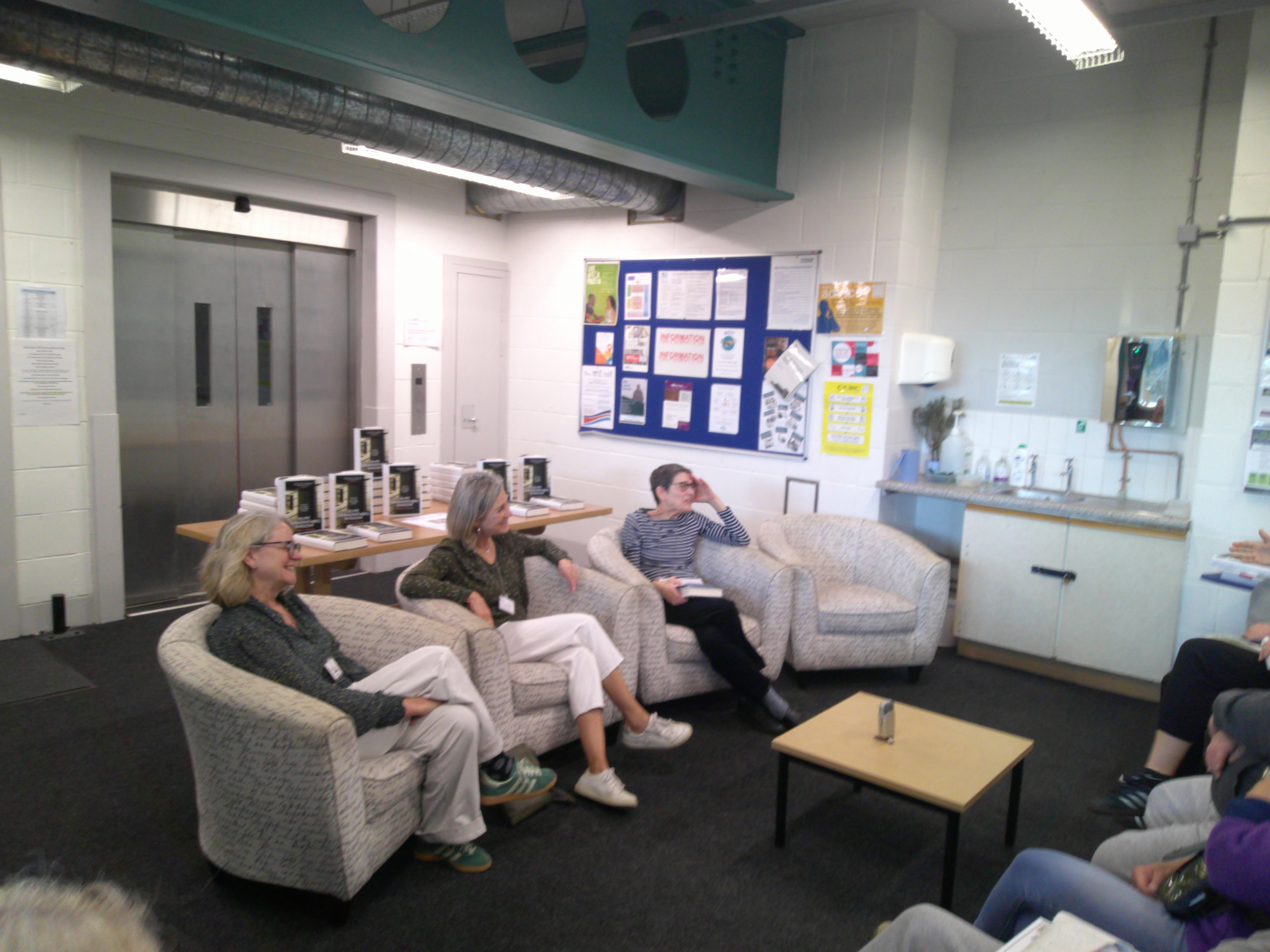
L-R: Standing: Sarah Turvey (Founder of PRG) and Mima Edye-Lindner (Director of Projects, PRG) Seated: Me, Paul Eden (Volunteer for an HMP Wandsworth Reading Group), Susanna Wadeson (Penguin Transworld)

The importance of the work of HMP Wandsworth’s Library – headed by Beverley Davies and her Senior Assistant, Hannah Pickering (who was taking the photographs) – and the work of Give a Book, PRG and their reading group volunteers plus all the Arts Projects taking place in prisons around the country cannot be underestimated. I am so grateful for and heartened by it. Traditional classroom settings are not always the way to educate people. There are other ways to inspire minds. As Antoine de Saint-Exupéry wrote in Citadelle:

If you want to build a ship, don’t drum up the men to gather wood, don’t divide the work and give orders.

Instead, teach them to yearn for the vast and endless sea.

Last week’s Library Event seemed to do just that as both the below comments from the Library and Prisoner Nr. XXX reveal:

“The guys were really buzzing afterwards, and it was great that other people noticed what was going on and wanted to get involved. All the books were taken which is a real positive.”

Prison Reading Group was founded in 1999 by Jenny Hartley and Sarah Turvey. Together with the team from Give a Book and Director of Projects Mima Edye-Lindner, they delivered 5000+ books to 84 groups in 64 prisons.

If you would like to support them, please go to their websites: https://prisonreadinggroups.org.uk

Madness, Art, Dreams and Aperol Spritz converge in Venice for the 59. Biennale…

I have just returned from Venice, my soul filled to the brim with images, beauty, thoughts and inspiration. I was invited to speak at a one-day symposium on ‘the magic of madness’ that coincided with the opening of the 59th Venice Biennale titled ‘The Milk of Dreams.’ For a person deeply interested in all those words – magic, madness, dreams… even milk when it’s in a cappuccino or gelato – this was my idea of heaven. 

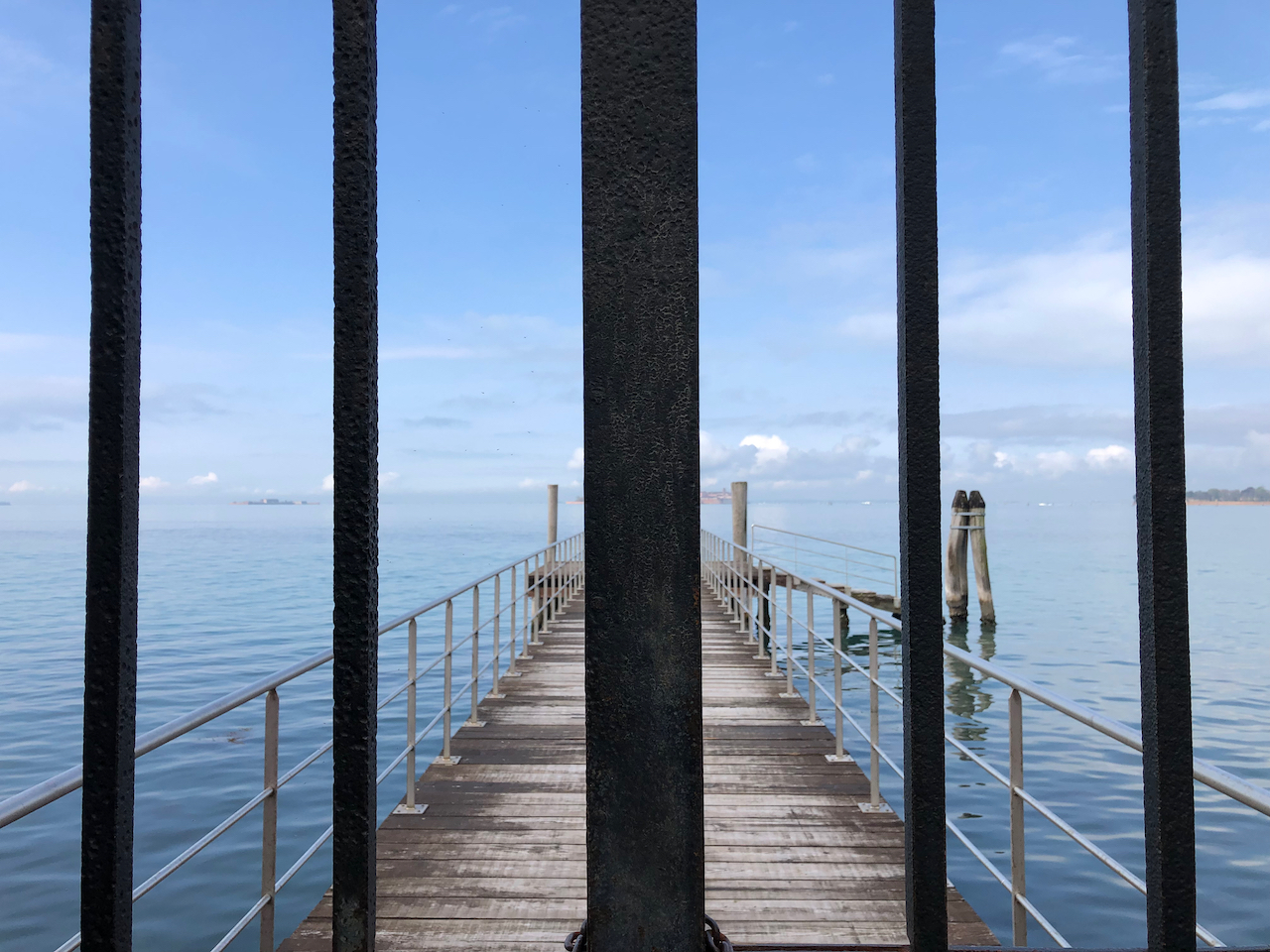
The jetty from which boatloads of tourists used to arrive from Venice to gape at the patients of the former ‘lunatic asylum’ on the island of San Servolo

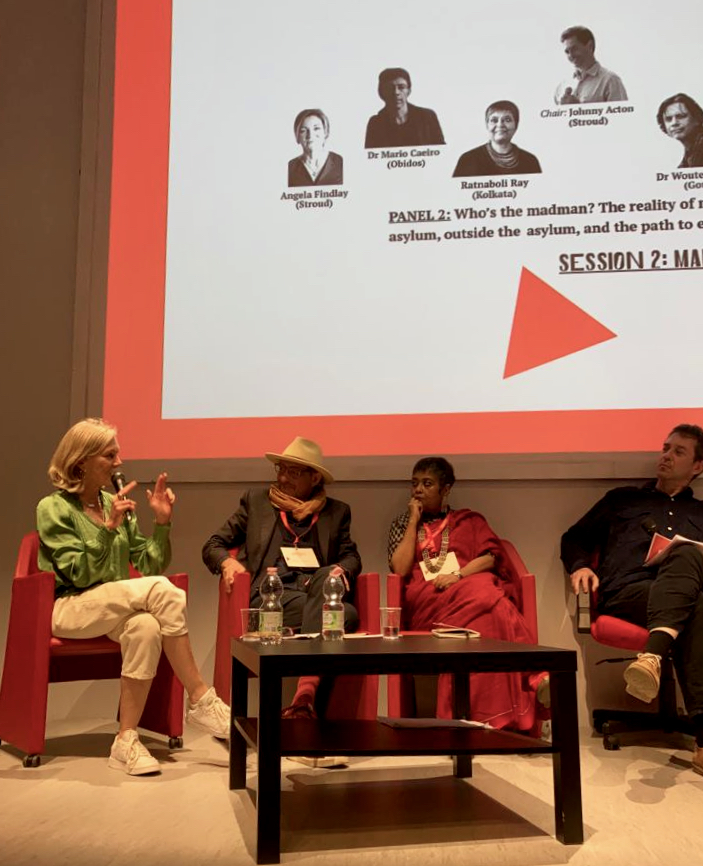
The MADNICITY Pavilion, where the symposium took place, is situated on the site of a former insane asylum on the island of San Servolo. Three panels of leading voices in psychiatry, psychology, philosophy, critical theory and the arts discussed topics ranging from ‘the place of madness in society’ to the expansion of traditional concepts of ‘normality’ and ‘mental disorder’ to a more inclusive embrace of ‘mental diversity’. There was also some very academic philosophical stuff debated by an all-male panel of professors, but I wasn’t entirely able to follow that. I personally chose to stay on more familiar ground and talked about the madness of institutions, specifically prisons. (You can listen to the whole day of presentations here or just my talk starting at 3:52.50)

At one point, the Chair of our panel – Johnny Acton – asked us what we find most mad about society. For me, it is the fact that the ‘feminine’ in life – and before I get hauled up for being sexist or in some way discriminatory, can I make it clear that I am not talking about biological ‘men’ and ‘women’, nor even ‘male’ and ‘female’ genders. I am talking about archetypes, the feminine principle that is in each and every one of us to a greater or lesser degree. Coarsely, and therefore inevitably inaccurately put, we are talking the feminine/masculine dualisms of moon/sun, inner/outer, art/science, feelings/concepts… you get the picture hopefully. Ok, so where was I? Let me start that sentence again. In fact, let’s have a new paragraph too. 

To me, what’s most mad in society is that the ‘feminine’ is still ignored, dismissed, ridiculed or considered invalid in the face of the more tangible ‘masculine’. The left-brain, rigid logic of science with its need for proof, as I have frequently both observed and said, too often totters behind the more right-brain, unpredictable logic of intuition, dreaming, playing – all the stuff that can lead to creative genius or apparent ‘madness’. Women who lived by these rules used to be burned at the stake, locked up, or simply forced into subservience to men and masters. The island of San Servolo and the amazing installations under the title ‘LUNATICS’ bear witness to the some of the horrific past approaches both to madness and women. The thinking behind most of our systems – education, prison, medicine – are dominated by this ‘masculine’ thinking. And yet, common sense, vision, wisdom and truth are frequently born from the supposedly unprovable, inaccurate, fantastical, unreal phenomena of dreams, gut feelings, instinct. The world has paid a heavy price for playing down their innate value.

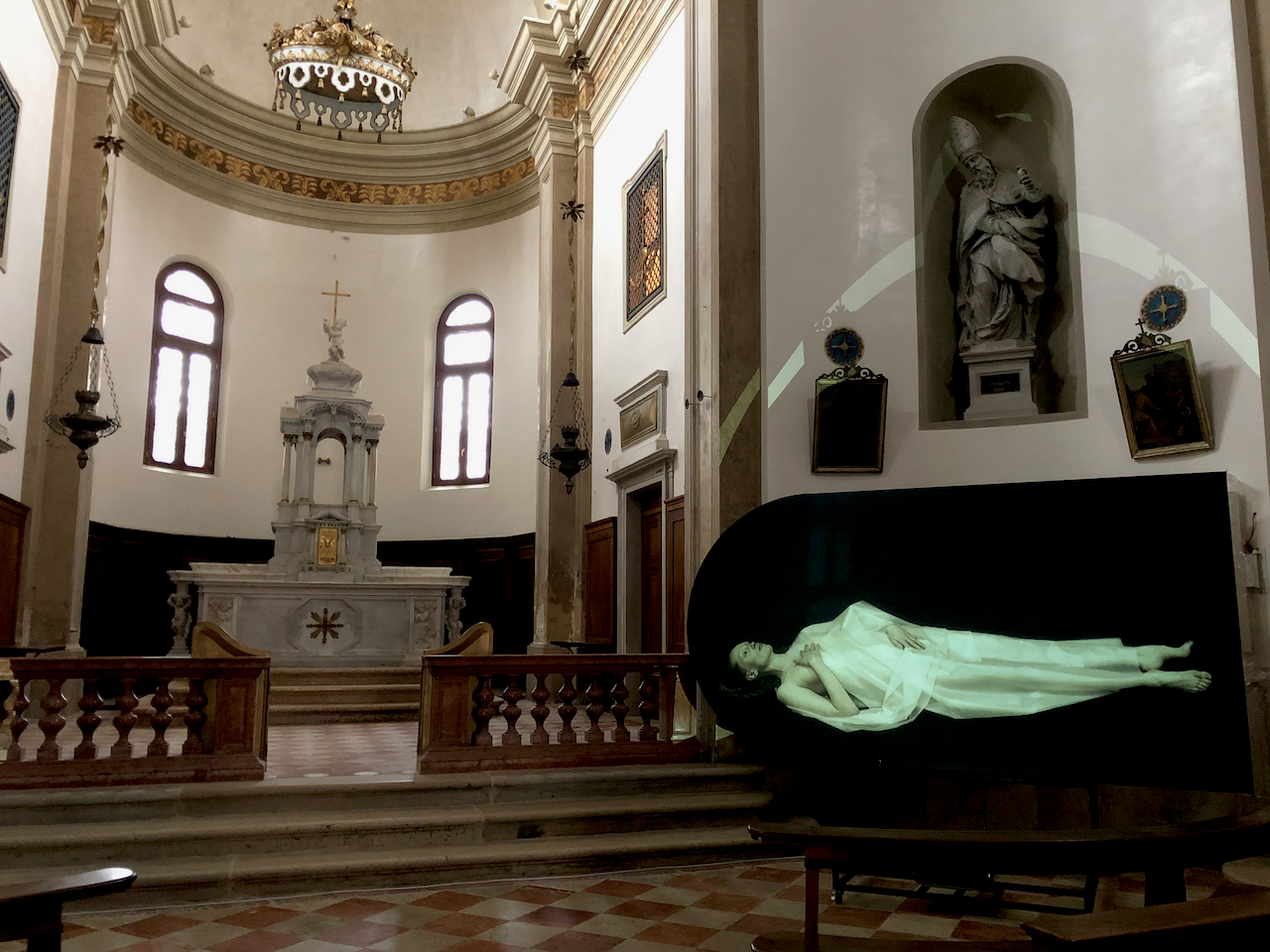
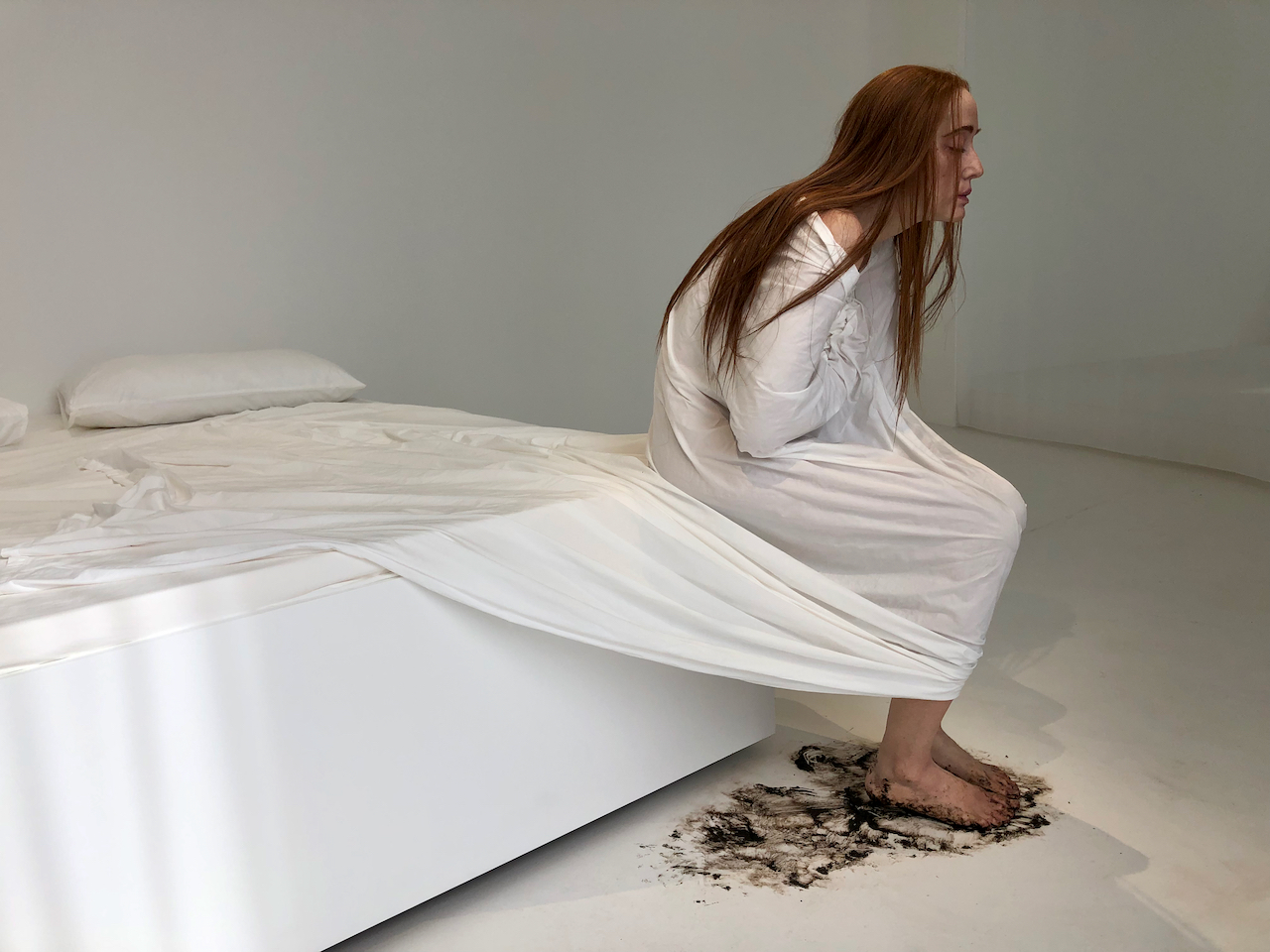
‘LUNATIC’ – one of ten collaborative installations by Dominik Lejman and Bianca O’Brien on San Servolo

But something is finally shifting. The world is becoming more fluid, less polarised. Boundaries are blurring. Humans are becoming less certain of themselves and bowing to the greater forces of nature and the big unknowns. This was all reflected both in the panel conversations and the art, the latter not least because Cecilia Alemani, unbelievably the first Italian woman to curate the Venice Biennale, ensured that 80% of artists featured were women or gender non-conforming. And the theme itself – The Milk of Dreams – appealed to symbolism, surrealism, fantasy and spirituality rather than the conceptualism of past years. Many of the big male names were there – Kiefer, Baselitz, Kapoor – but on the periphery, looking rather bombastic, egotistical… ‘out’.

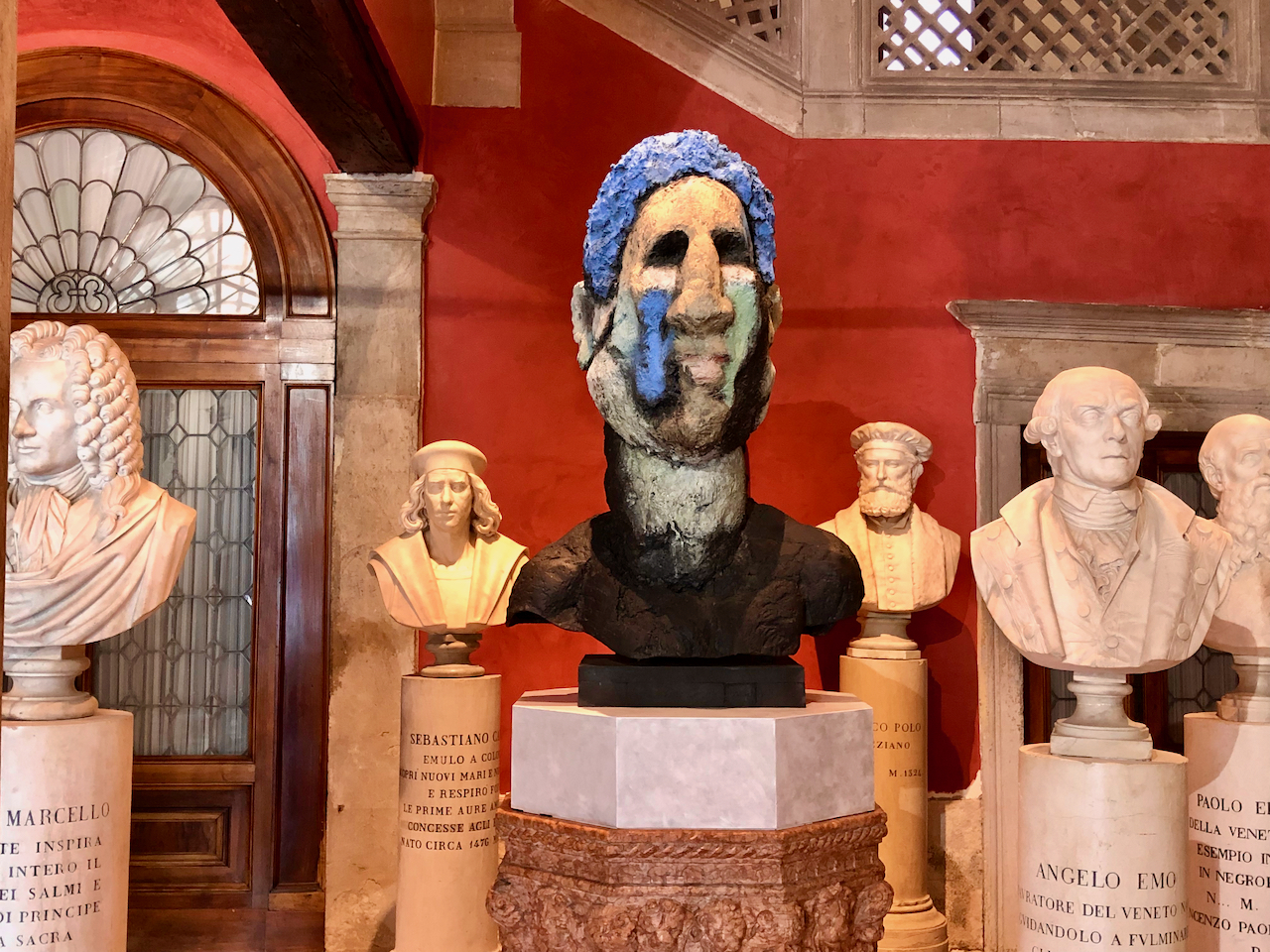
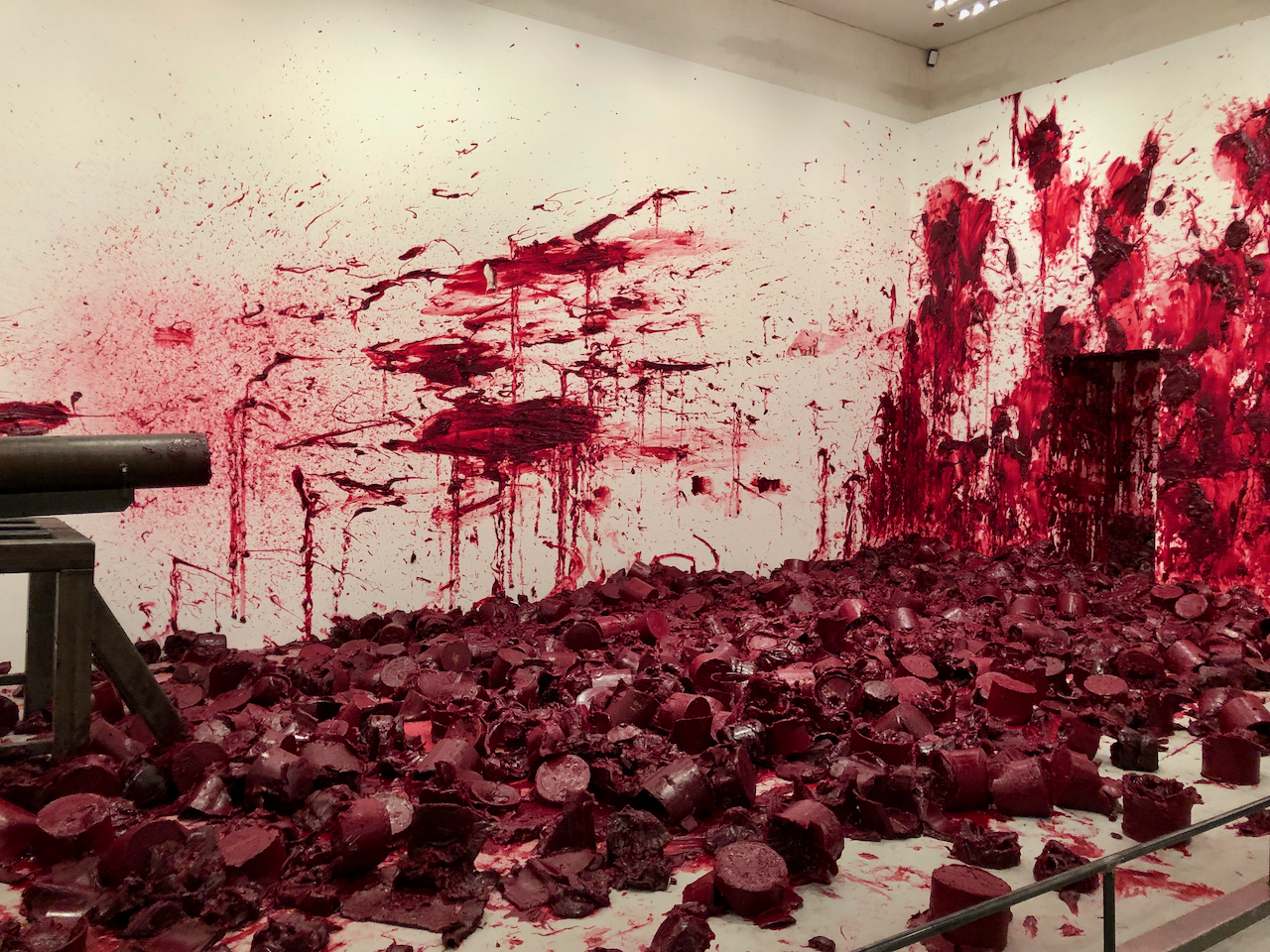
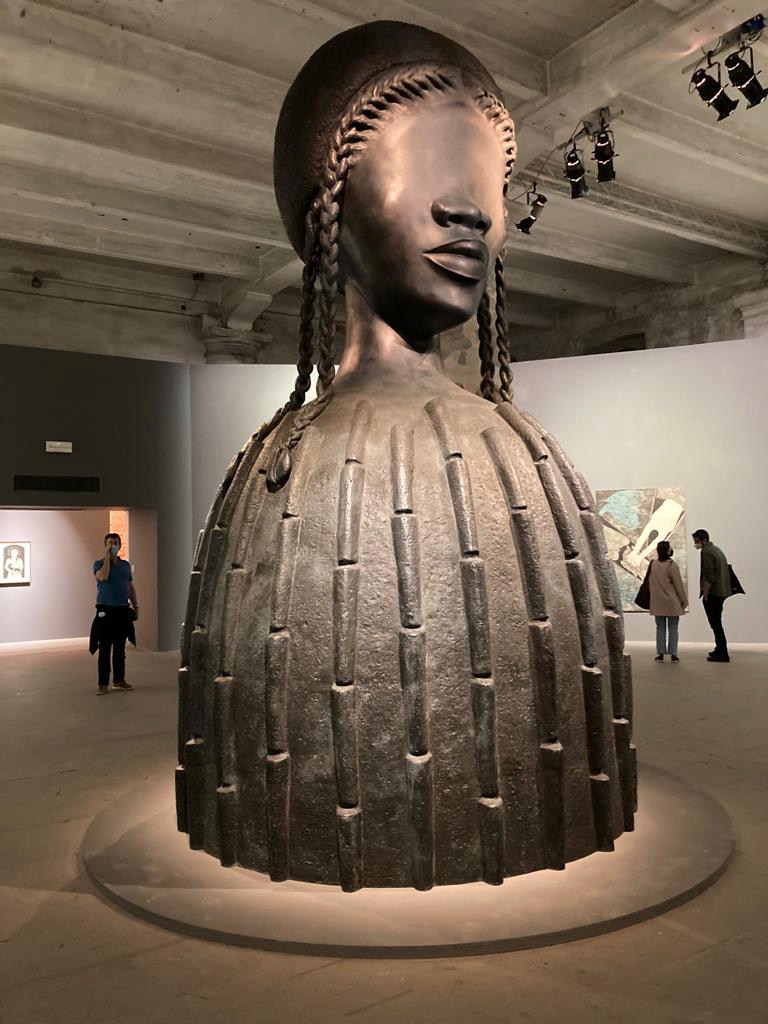
Let’s see if I can make this clearer through a selection of pictures I took, unaware at the time that this was what I was seeing. Some are from the official Biennale pavilions of the Giardini and the Arsenale, others at collateral events and exhibitions around town.

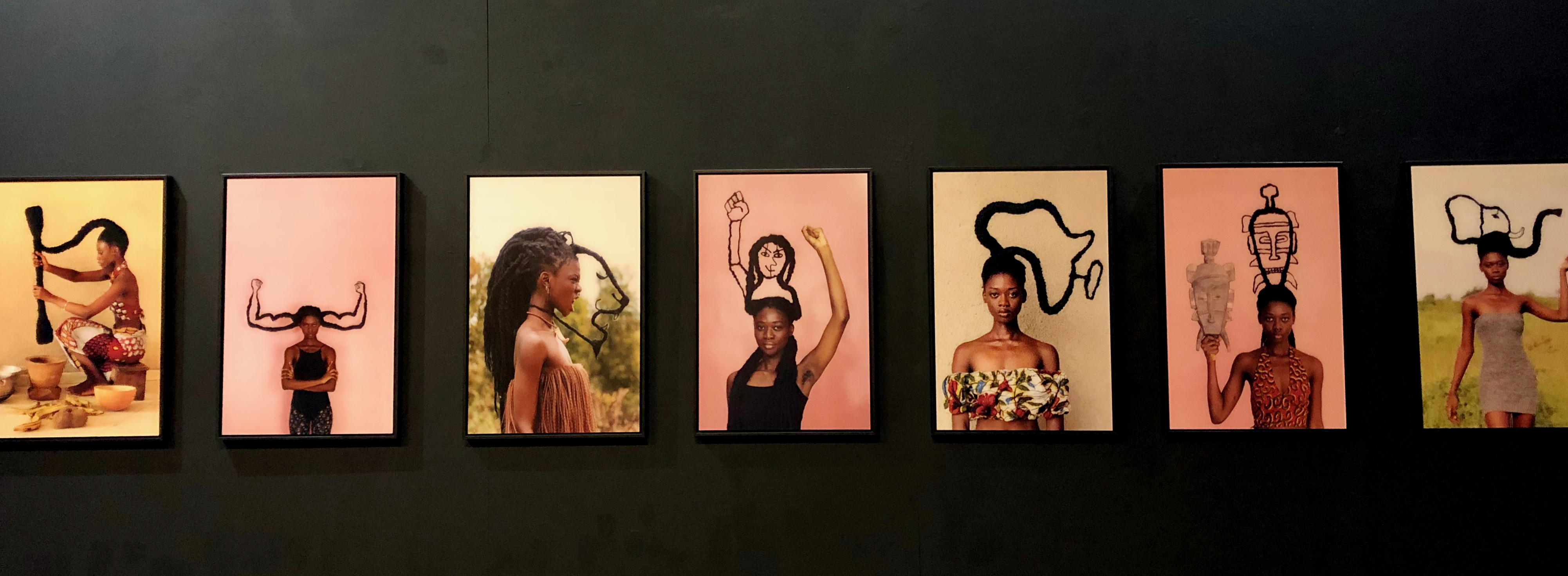
Laetitia KY, Hair sculptures, Pavillon de la C^ote d’Ivoire. Interview here.
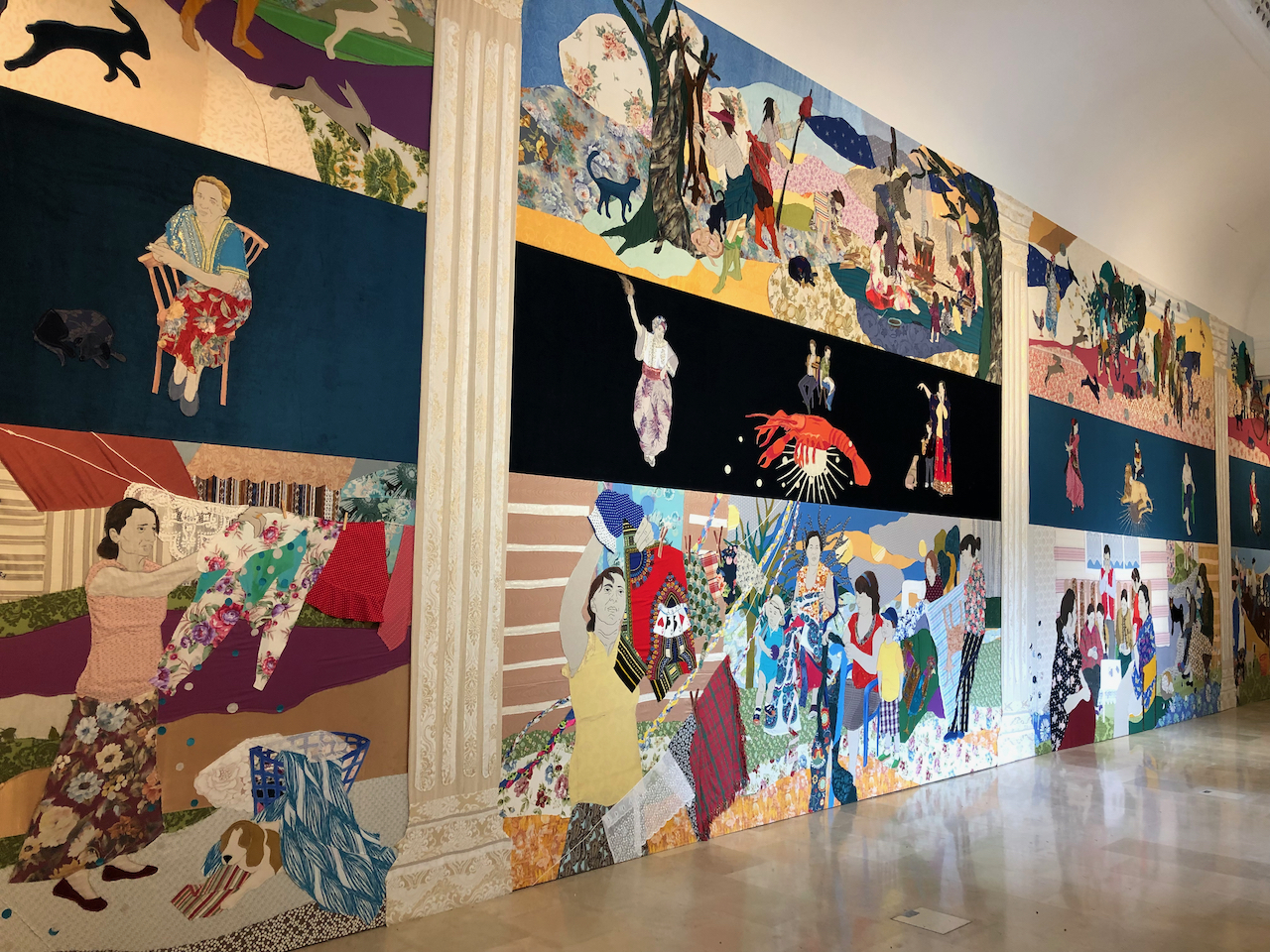
Malgorzata Mirga-Tas: Re-enchanting the world, Poland Pavilion
Can’t remember… one of the pavilions in the Giardini
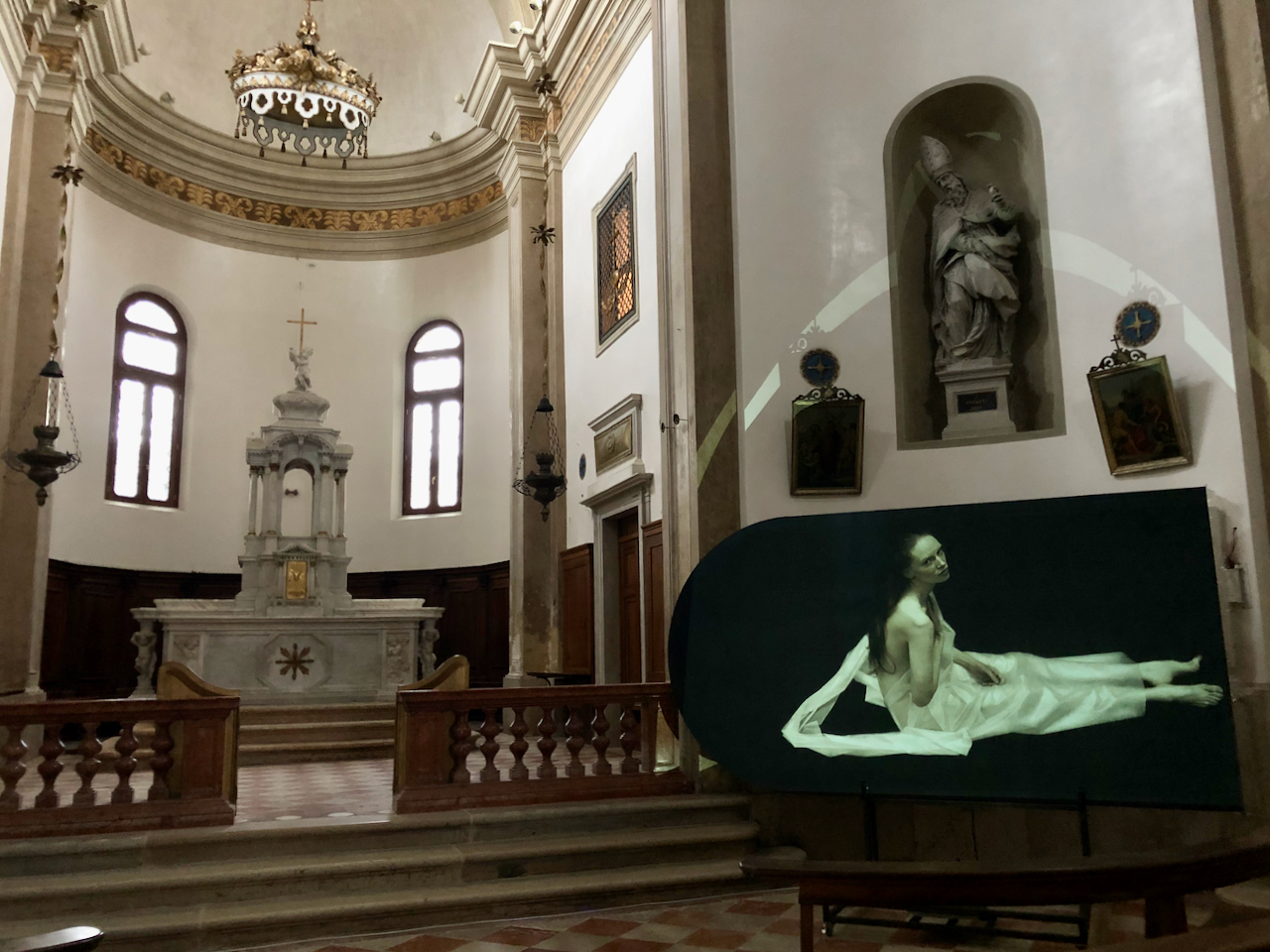
Claire Tabouret: I am spacious singing flesh, Palazzo Cavanis
Francis Alÿs: The Nature of the Game, Belgium Pavilion, Giardini
Beyond: Emerging Artists, Palazzo Franchetti
Sonya Boyce: Feeling her way, Great Britain pavilion, Giardini – winner of the Golden Lion Prize for Best National Pavilion, Venice Biennale 2022
A foyer we stumbled into in a building on Campo Santo Stefano…
Anish Kapoor, Shooting into the corner (2008), Galleria dell’Accademia
From the Arsenale…
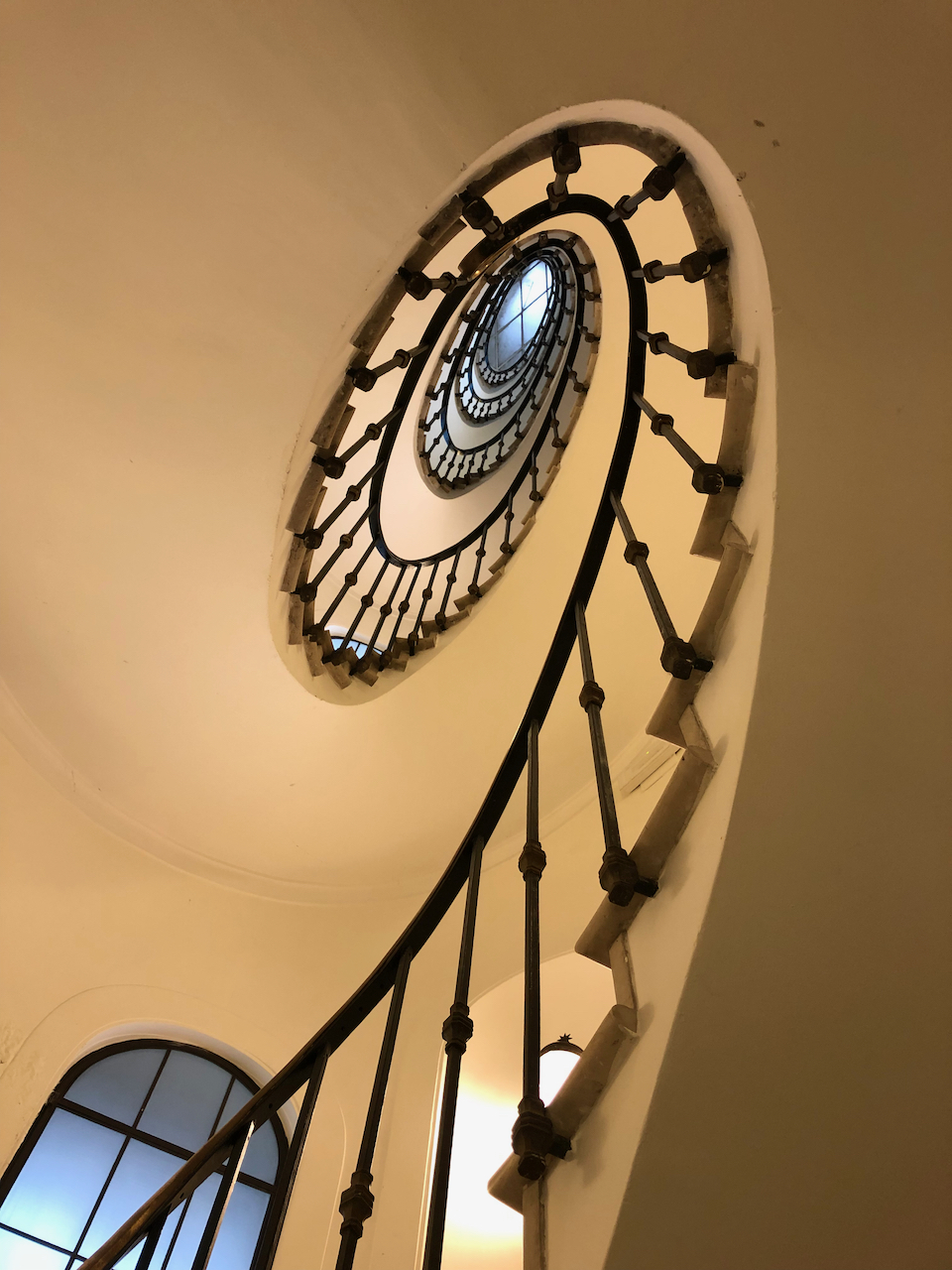
Just a beautiful staircase at Palazzo Cini

I could go on and on. But I’d be interested what themes you see in this microcosmic collection.

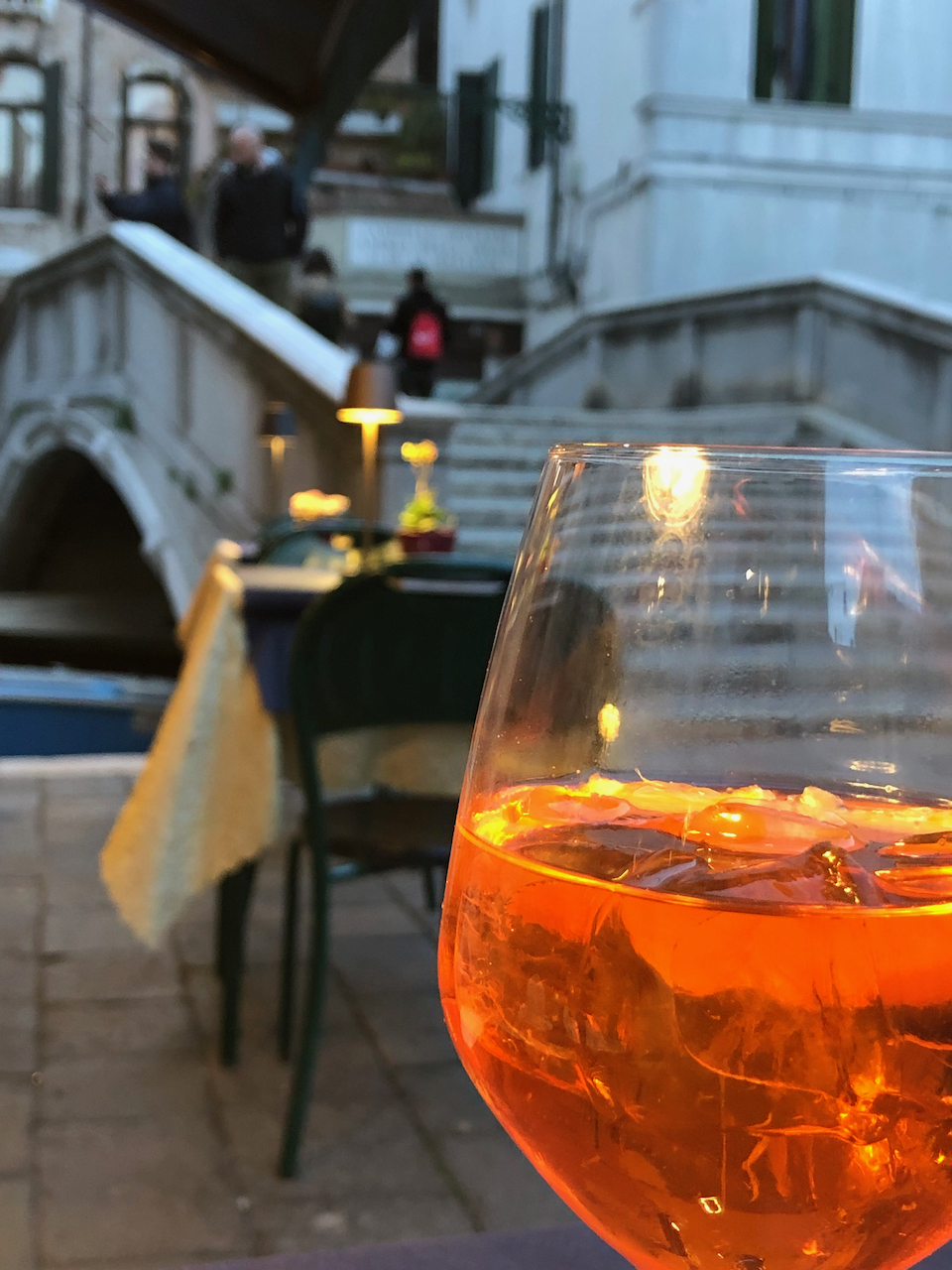
Altogether, it was an inspiring trip. Wonderful people, paintings, palazzos, piazzas, pizzas and of course the delicious Aperol Spritz to round up the day… simply the best in my book. Talking of which…

My book, In My Grandfather’s Shadow, is still on course to be published in mid-July. Do SIGN UP TO MY NEWSLETTER for information about a book launch near you where you will be able to buy a signed copy or for any other news.

I dare you not to look away…

What is the difference between ‘I had no idea’ and ‘I didn’t know’?

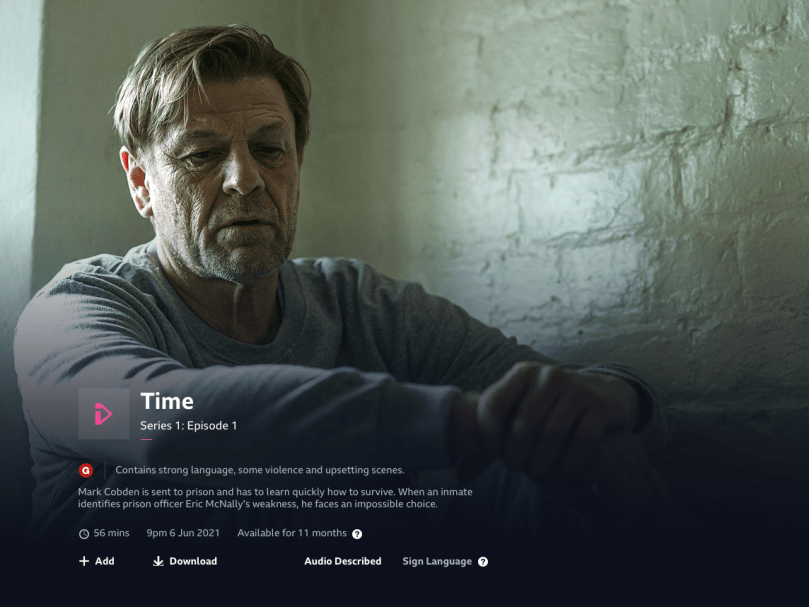
I ask this question in the wake of what must be one of the best television series in the past year: BBC One’s deeply uncomfortable and disquieting three-parter, Time.

It is described as: ‘Jimmy McGovern’s hard-hitting, brutally honest portrayal of a failed public service which gets everything right about prison life – minus the tedium.’ If you haven’t seen it – and sorry to my readers abroad if you can’t get BBC – I would like to invite you to watch it, even to dip into it for ten minutes. I’ll tell you why.

Having worked in many prisons in England, I feel everybody needs to know what is going on in them. In our name. There was nothing in the series that I didn’t recognise from my years inside. As I am up against a tight writing deadline for my book (and this blog actually!), I am going to allow the three episodes to speak for me and bear witness to the sheer illogic, and all too often, inhumanity of our current system.

This doesn’t apply to all prisoners, but if we recognise that many addictive, violent and destructive behaviours derive from childhood trauma; if we fully comprehend the impact of untreated traumatic incidents, then the cruelty of locking up people, who were first and foremost victims, in what are often little more than hell holes, becomes very clear. 

My admittedly provocative opening question stems from a genuine desire to understand the answer.

For decades, the adult-generation of Germans living through the Second World War have not been believed when they say, ‘we didn’t know’ (about the concentration camps). And people around the world often blame them for having looked the other way. I don’t want to get into that debate here. There is a consensus among historians that some would have known, some would have heard about them and not believed it, and others would not have known. Most of the camps were miles away in the east and there was little access to free press. There was also a deadly dictatorship controlling thoughts and actions. Yet not knowing, or knowing and not doing anything, allowed the deadly system to persist for as long as it did.

I have been talking to a wide range of audiences about my experiences of working as an artist in prisons for nearly three decades. The most common thing I hear afterwards is a shocked “I had no idea.” It’s totally valid, I make no judgment. There are loads of things I have no idea about. But why don’t more people know about this? There are prisons in nearly every major town. The shocking statistics of failure, the appalling conditions and the tragic stories of many of the people locked up in them are reported on all the time, in every form of media. How can we not know about them?

There is obviously a wide spectrum from having no idea, to knowing but looking away, to knowing and acting. I would just like to use this month’s blog to encourage you to become more informed, specifically about the system in which we warehouse prisoners. Not just for their sakes, but for all of us who live in the communities into which they are returned… usually worse.

When enough people ‘have an idea’, things can and will change.

Watching this series is a start. It’s tough watching, but the reality is much, much tougher.

I dare you not to look away.

Reviews:

Time review – Sean Bean and Stephen Graham astound in enraging prison drama

Time review – like a punch in the face, but in a good way

Time review: This gripping, gruelling portrait of life in prison is essential viewing

What will it take for the British public to get behind prison reform?

Ok, here’s a challenge for a rainy day. 

Can anybody name one good reason why this country repeatedly does nothing about the state of our prisons? Can you give me any single benefit to us, as a nation, of keeping people in institutions that have repeatedly been condemned for their wholesale ineffectiveness?

Since 2001 when I got involved in Britain’s Criminal Justice System having worked in Germany’s for 6 years, I have heard one government-appointed Chief Inspector of Prisons after another – from the judge, Sir Stephen Tumin, to the army officer, Sir David Ramsbotham, to the current retired senior police officer, Peter Clarke – denounce the conditions in our jails. All their reports reveal systemic failures, appalling levels of filth, readily available drugs, lack of educational opportunities and deeply disturbing practices that arise as a result of overcrowding.

Since the 40% budget cuts of 2010, things have only got worse. 25% to 1/3 of prison officers and staff were lost. This has led to prisoners being left languishing in their cells for up to 23 hours a day because there are not enough officers to unlock doors and take them to education, employment, anger-management or drug rehabilitation courses – all things that have been proven to help prevent re-offending. I experienced it myself in HMP Belmarsh when I was Arts Coordinator to Koestler Arts. We raised the money for a 5-week art project, we provided the artists, the materials, we organised the practicalities and we then showed up. But the prisoners didn’t. Because the officers didn’t have time to deliver them. It is one of the reasons I gave up my front line work and focused my attention on raising awareness of what is going on.

Learning to Learn through the Arts projects in HMP Belmarsh, 2004

Now in 2020, I would finally like to understand the apparent logic behind the criminal waste of time, money, opportunity and human lives. And why we, as a nation, allow it to continue.

What is the block that is preventing the British public, the politicians, the Justice Secretaries – of which there have been seven in the past ten years – from recognising the illogic of depriving people of their liberty with the justification of punishment or deterrent, only to then make everything else infinitely worse? Surely it is not rocket science to comprehend that placing people… and they are people… in squalid, overcrowded environments in which they are likely to become more brutalised, embittered and frustrated; in places where they may well acquire a new drug habit, learn hot tips for new criminal methods, possibly self-harm or commit suicide; in places where they have limited or no access to the services, education and general help they need… cannot produce positive results? How can any reasonable person not see that ejecting them back into society after their sentence with £47.50 in their pocket, a criminal record – and sometimes a TENT! – is not going to stop them from re-offending, possibly within days? How is this supposed ‘tough on crime’ approach to people, who often come from catastrophic, traumatic or hugely disadvantaged backgrounds going to make our communities safer? 

I am no economist or mathematician but let’s just look at 2 figures:

1. The Prison Service budget is £4.5 billion per year.

2. The cost of re-offending is £18 billion. 

Let’s look at 2 more:

1. 70% of prisoners suffer from some sort of mental health issue.

2. 50% of prisoners are functionally illiterate.

The logic is there in black and white, in the figures. So why this dug-in-heels resistance to changes that embrace methods that have been proven to work? Not least Restorative Justice.

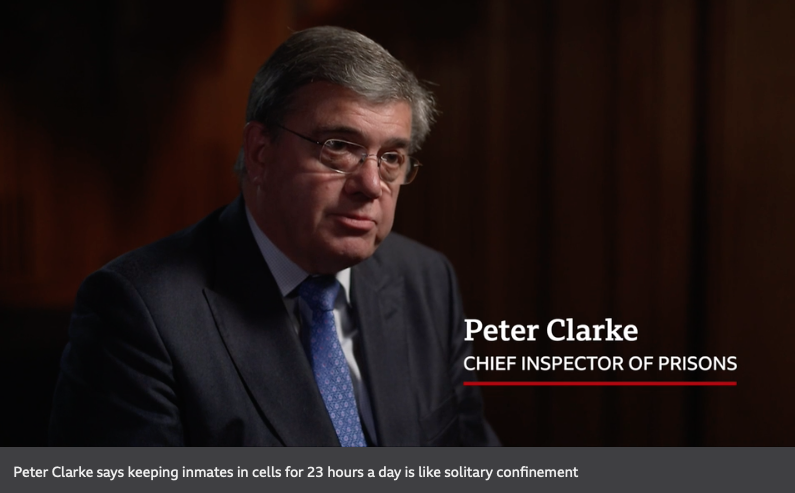
This week, in his last report as Chief Inspector of Prisons, a weary looking Peter Clarke, like so many of his predecessors once again explained the detrimental impact our system has on the mental health of prisoners. Once again he reported rubbish and rat-filled environments, apparently ‘so dirty you can’t clean it’. Once again he described the overall failure of managers who are proud of their data-driven and evidence-based methods but have rarely been inside prisons to ‘taste it, smell it.’ Clarke expresses similar bemusement to me as to why these damning reports so often come as a surprise to the management of the Prison Service. This has been going on for years! We may not be ‘world-beating’ in the appallingness of our prisons but we certainly are close to, if not at the top of the European table of failure. 

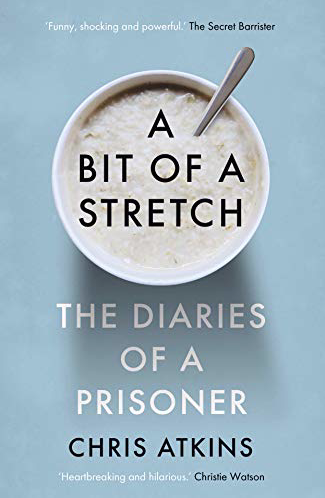
As Chris Atkins says in his new book A Bit of a Stretch, our prisons have become little more than ‘warehouses’ for storing offenders. Justice Secretaries, often lacking any background in law, let alone prisons, announce new initiatives with great fanfare, but nothing gets done and after a year, they move on.

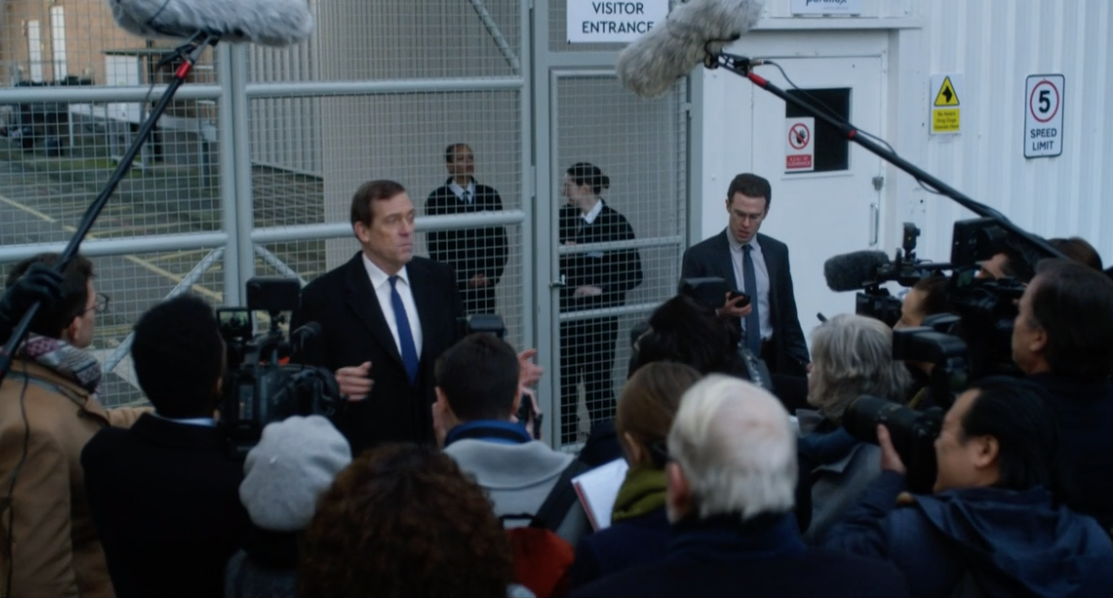
Hugh Laurie as Peter Laurence in Roadkill

How I wish we could have a minister like the actor Hugh Laurie’s Peter Laurence, in the brilliant new BBC series, Roadkill. Laurence is deeply flawed as a man and corrupt as a politician, but in his newly appointed position as Justice Secretary, he at least verbalises the obvious question: Why are we wasting so much public money on a policy that’s not working? ‘Everyone knows the prison system is grossly inefficient,’ he tells the wholly resistant, thankfully fictional, female Conservative prime minister. ‘So I’m going to shake things up. Justice deserves that.’

And it does. But he will fail. Because it is not just the right-leaning politicians who want to stick to our punitive approach. It is also the British public. In the series, both their attitudes are revealed: ‘We lock criminals up and throw away the key… in the interest of public safety… We’re famous for it… It’s our nature… It’s our bond of trust between the Conservative party and the public…’

Covid-19 has of course made conditions even worse. Some prisoners are locked in their cells for 24 hours a day, and for several weeks at a time in what amounts to solitary confinement, as Clarke points out. Of course that leads to the ‘more controlled, well-ordered’ environment the Prison Officer Association is relieved to have. But what does it do to the people inside? Clarke is convinced there must be an exploration of other ways to do things, safely. After all, ‘Are we really saying we are going to keep prisoners locked in their cells for another 3 months… 6 months… a year?’

After my talks on Art behind Bars in which I reveal the shocking but oft-printed statistics of our prison system’s failures, people frequently come up to me and say “Gosh, how awful, I had no idea.” Well maybe with all the upheaval of Covid-19, it really is time for the public to gain an idea of the horrors that are being perpetuated in their name; in the interest of their safety. Of course we can stick with the old approaches, but at our peril. For who pays the price? Don’t think it is just the prisoners and their families who are punished. It’s all of us. We make ourselves less safe. We make ourselves less just. But above all, we make ourselves complicit in a system that is less than humane.

If you would like to do something to help bring about a shift in attitude and policy, you can write to your MP. You can support the important work of The Prison Reform Trust or the Howard League for Penal Reform. Or any of the charities offering help to prisoners and their families. Or you can look at the wonderful work of my favourite charity, The Forgiveness Project, and their excellent and effective prison RESTORE programme, that I have both witnessed and on one occasion co-facilitated.

Links to follow up

Prisoners locked up for 23 hours due to Covid rules is ‘dangerous’ – BBC News

BBC Newsnight 20.10.20 with Chief Inspector of Prison, Peter Clarke Start at 21.27 mins

Chris Atkins A Bit of a Stretch: The Diaries of a Prisoner at Wells Festival of Literature

Roadkill on BBC player

The Guardian view on failing jails: an inspector’s call

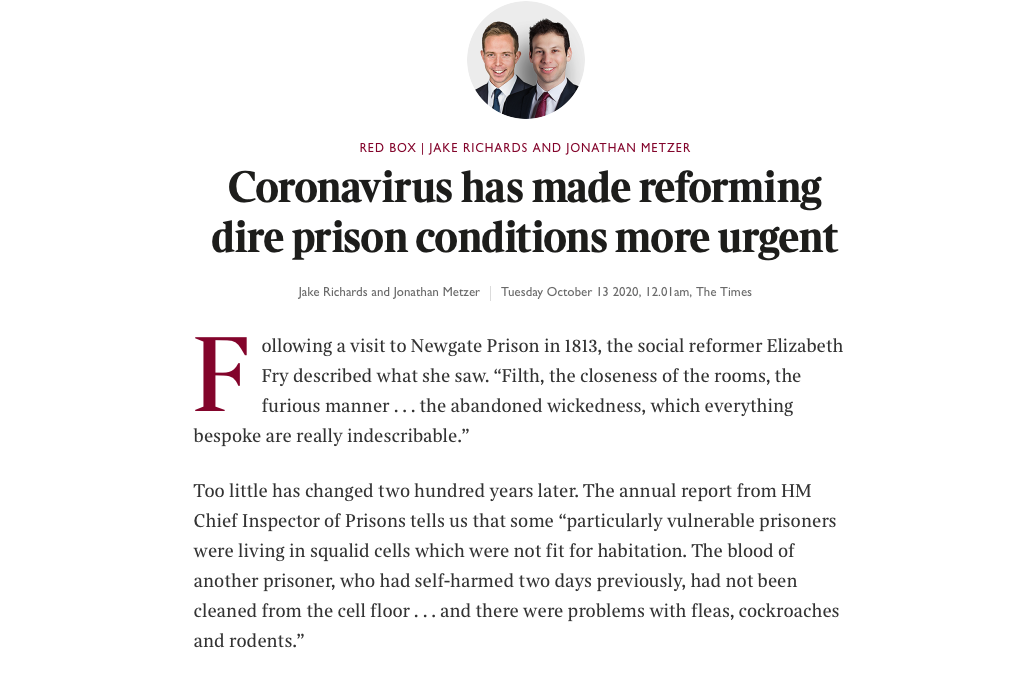
Times article, 13.10.20

A talk, an exhibition and a TV series…

October is a busy month. Lots to see and do or get done. Can I just add three things to your list? The first two are London-based and optional; the third should really be compulsory for everybody.

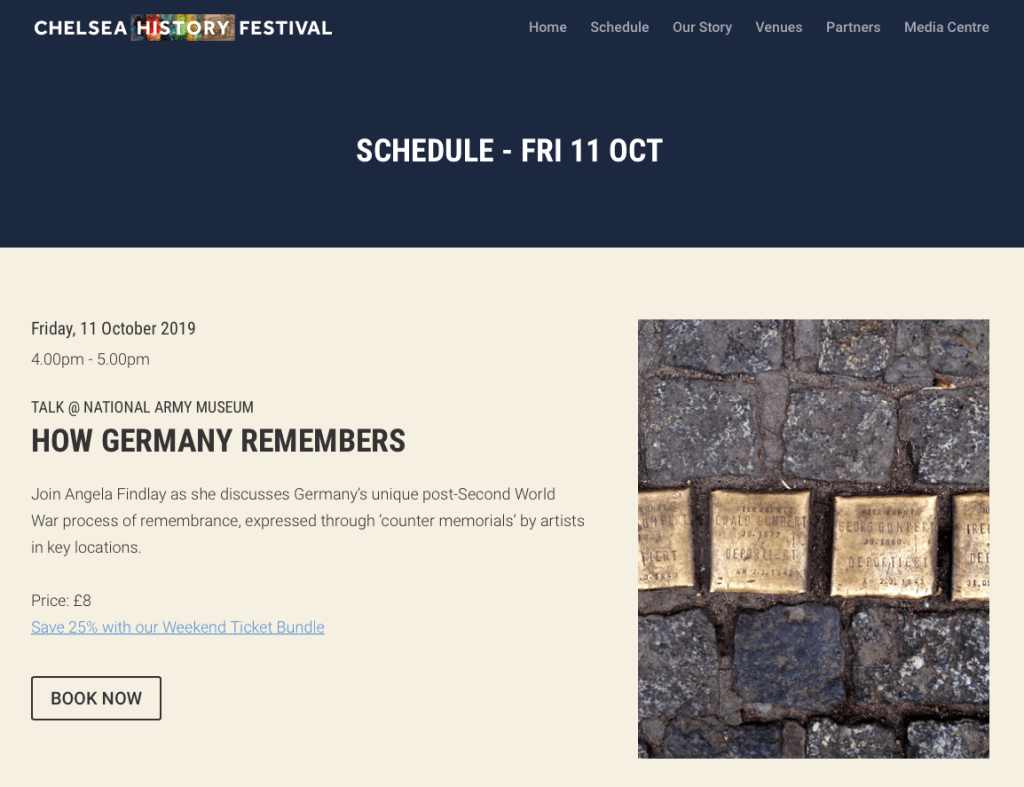
So firstly, for anyone in London on Friday 11th October at 4pm, I am very excited to be speaking at the National Army Museum’s inaugural Chelsea History Festival. My talk How Germany Remembers is just one in a whole line-up of talks by impressive historians, writers and speakers – including Max Hastings.

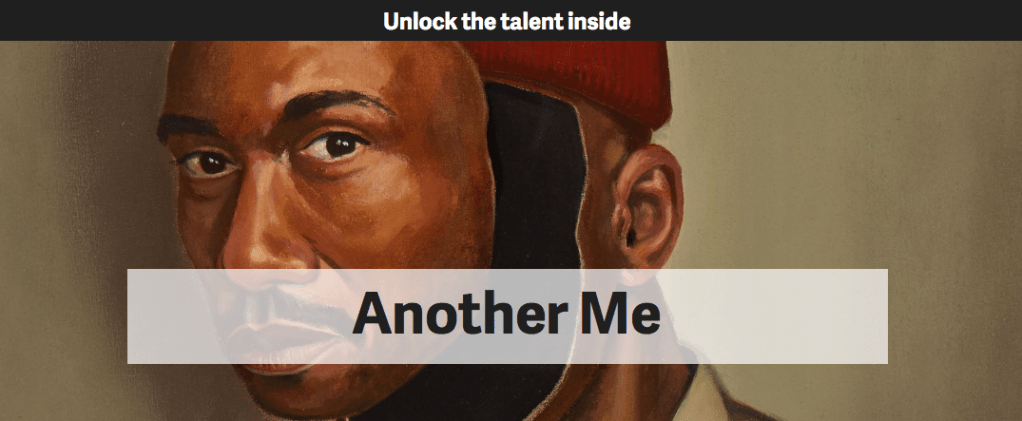
Secondly, and also this month until 3rd November, The Koestler Arts annual exhibition – Another Me – will be showing at the Southbank. I personally haven’t been yet but I know it will once again provide visitors with a glimpse of the huge talent and potential locked up in our prisons. It is a showcase for what the arts can do for people’s well-being, self-esteem and rehabilitation.

I was in fact invited to expand on these benefits for the autumn edition of The Arts Society magazine. Please feel free to read my article ‘Art behind Bars’ to learn more.

But thirdly, and in stark contrast to the positivity of the arts, is the shocking Channel 4 series Crime and Punishment. I know, I know, I have been here many times before. You are probably sick of me going on about the plight of prisoners and state of our prison system. But you won’t be half as sick as all the people involved, who know how acute the crisis is.

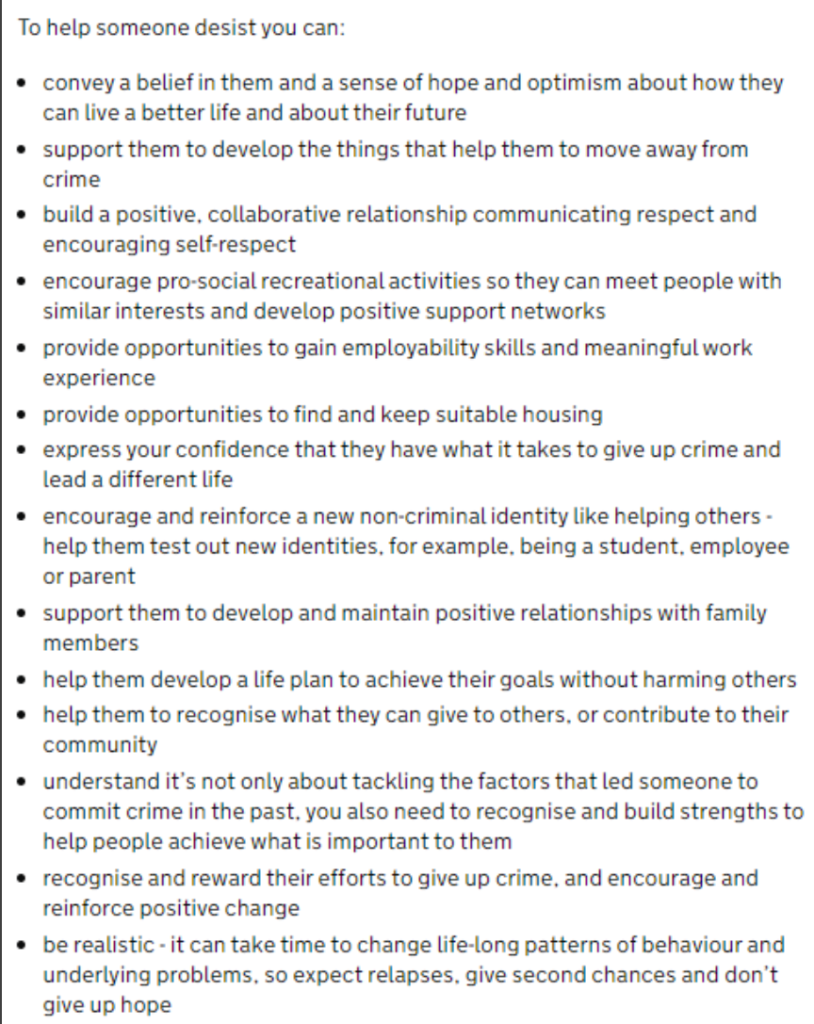
Please watch it. Even just Episode 2. And then compare what you see with the Ministry of Justice’s evidence-based summary of what works…

Even I was aghast at what I saw in the first three episodes, and I have been in many of our jails. Everything has got so much worse since the 43% cuts to the budget from 2011 onwards: the levels of frustration from being locked 23 hours a day in conditions that even animal rights campaigners would protest against; the levels of desperation that lead people to shred their bodies or hang themselves to get a radio or better clothes to wear for a visit from their wife and kid; the levels of terror in young officers who patrol the wings after just 10 weeks training and 2 weeks shadowing; and the levels of weary resignation of those who enrolled to help and make a difference but are repeatedly forced to cower behind plastic shields and just ‘contain’.

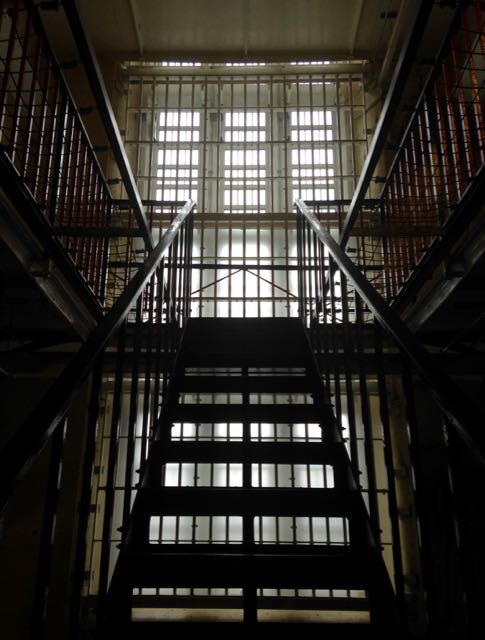
Photograph 3
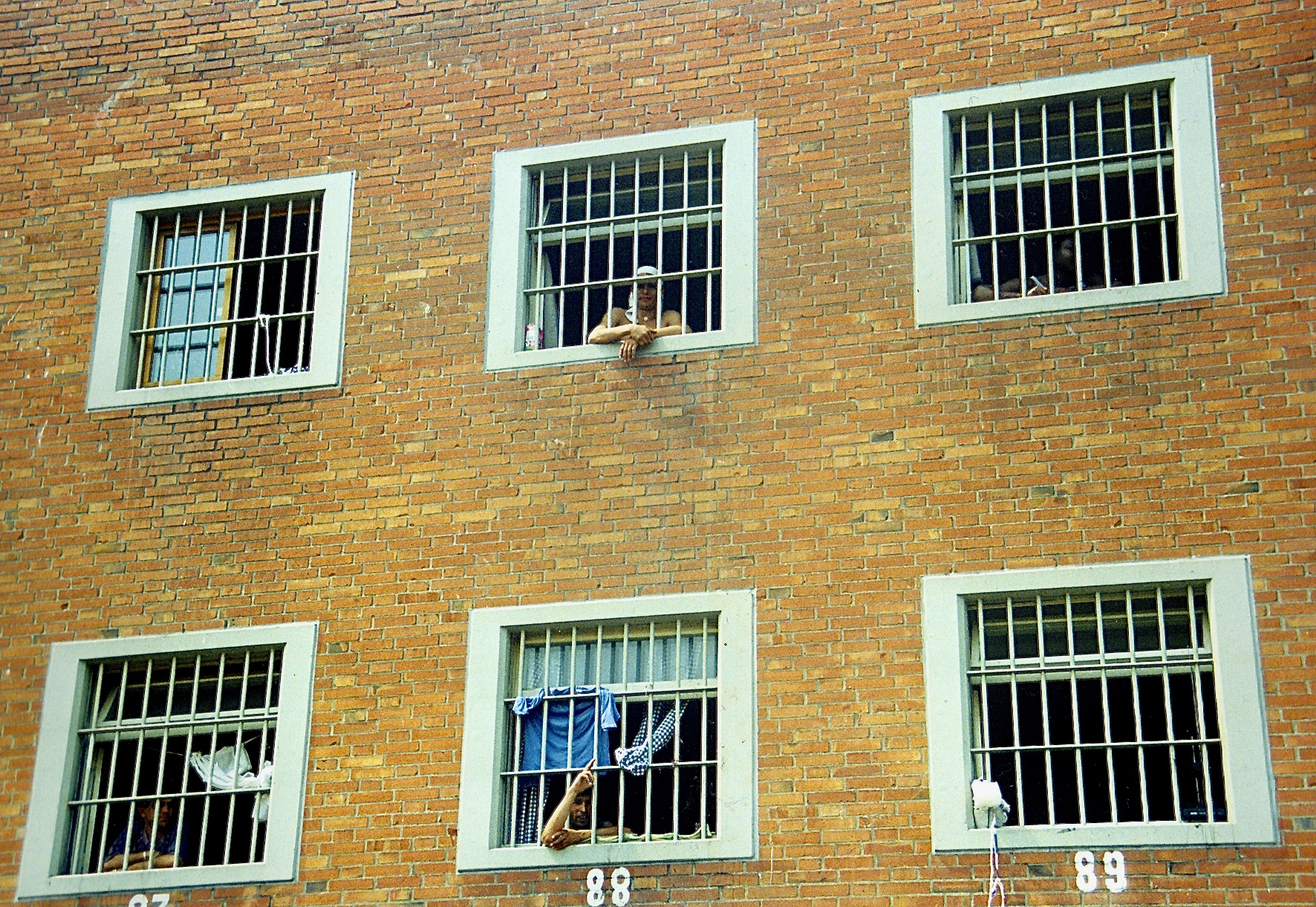
Guernsey Prison, Margaret Macdonald Platinum Award for Photography 2019, Koestler Arts

I believe everybody you see in this series is doing their best. But increasingly without hope of change. What you witness is the underbelly of our society. A society that punishes disadvantage, that punishes mental health, that punishes lack of education. In almost every shot, hopelessness seeps under the cell doors to mix with the blood of self-harm.

We all probably feel there are far better causes to engage with – cancer patients, the rain forests, refugees and hedgehogs; that offenders have only themselves to blame and that prison has nothing really to do with us. But if you are reading this, it probably does. Because so many of us have had advantage, education, guidance and love. And it is precisely us who can help bring about change. How? you might ask. Well a good start would be to recognise that Boris Johnson’s policies to extend sentences and build more and bigger prisons are wholly illogical and will only make the situation worse. You could then take a moment to retreat into your imagination, put on the battered, ill-fitting shoes of some of these offenders and try to walk a few steps. See how far you are able to get. The barriers to a crime-free productive life on release are enormous and once more of us realise just how bad things are, we can all join in with the other voices that are demanding: enough is enough.

Good news and great ideas… or just bleedin’ obvious and long overdue?


So there’s good news and bad news on the prison front this month.

The good news is that the Justice Secretary, David Gauke, has declared that “there is a role for the arts” in criminal justice. He believes it’s a good idea. In an interview with The Times on May 25th, Mr Gauke said “the creative sector is a big employer, you hear stories of someone involved in a prison production who ends up in the West End as a lighting technician…” He wants “a culture of rehabilitation” that encourages “drama, writing and painting in prisons.”

Feltham - Christopher copy.jpg


Read More »

What can we do? What can I do? What can you do?

“What is the most important thing we can do?” That is the question I am so often asked at the end of my ‘arts in prison’ talk. Yet I have never been able to give an answer that feels satisfactory.

Through pictures, stories, statistics and facts, my audiences get a glimpse into our prison system, into the minds and lives of offenders, and into what role the arts can play in the process of rehabilitation. “I had no idea!” is the most common response, and then,  with their new insight, people across the country, from sixth formers to retirees, want to know what they personally can do to help solve the increasingly dire situation that is our criminal justice system (CJS).

Read More »

Wish for 2017: Keeping alive Winston Churchill’s unfaltering faith “that there is a treasure, if you can only find it, in the heart of every man.”

A last minute blog before the curtains fall on 2016. As a year, will it get a rapturous applause and an encore I wonder? No, I don’t think it will. Not from the point of view of one of my main blog themes – prisons – at least. A re-wind to the beginning and a second chance…? Well that would be wonderful.

This time last year I was excited. I think all those who work in the Criminal Justice System (CJS) were. We were facing unprecedented possibilities of genuine reform within the sector. As Justice Secretary, Michael Gove had done his homework thoroughly, rather ironically consulting and listening to the experts more than most of his predecessors had done. He commissioned Dame Sally Coates to create the Education ReviewUnlocking Potential to which even individuals like me were given an opportunity to contribute. My ambition to make the case for the arts at government level was looking set to be realized.

Read More »

INSIDE – an exhibition where art replaces prisoners and visitors can feel how tiny a cell is

“Outside the day may be blue and gold, but the light that creeps down through the thickly-muffled glass of the small iron-barred window beneath which one sits is grey and niggard. It is always twilight in one’s cell, as it is always midnight in one’s heart.” Oscar Wilde, de Profundis, 1897

IMG_9031.jpgReading Prison

People were moving around the building as if it were an ancient site, a relic of times long past. Tentatively they stepped into the tiny cells, their barred windows raised to a height designed to deprive. Metal bunks, the squeak of their springs still echoing in the silence of long nights past; a painted table, names etched into the surface, reminders of identities transformed into numbers; and toilets tucked behind waist-high partitions separating toothbrushes and washing-up from another’s piss and shit.

Read More »

What are the collective nouns for a mass of unknowns or a pile of question marks?

I think I am politically depressed!

As a new academic year kicks off for another round of the seasonal clock, I find myself back behind the steering wheel and darting all over the country to deliver my talks. A busy lifestyle but it has always felt worthwhile. Even just knowing the next generation of school leavers will launch themselves into the world with at least a tiny awareness that our prison system is a disaster and most prisoners are not monsters but people, with stories and needs for help rather than punishment. That’s always been enough.

Something has changed though.

Read More »