Being inspired to be a ‘light in the darkness’ feels a powerful way to honour Holocaust Memorial Day

When it comes to Remembrance, I cannot think of a more important day to take time to reflect than today – Holocaust Memorial Day, the anniversary of the liberation of Auschwitz by the Soviet army in 1945. Eighty or so years lie between us and the horrors that started in Germany and then spread beyond. Most of the survivors of those times are no longer able to bear witness to them. And yet, for many descendents, that past will still be alive shaping their present. It is primarily for them, and all that they carry in their hearts, that I pay such attention to this day.

As readers of my blogs will know, any day of remembrance raises questions in me: what to remember, how to remember it and to what end? I’m always particularly interested in the editing process of our personal, collective and national memories. Which selection of people, events and actions we choose to remember and honour. And which get left out.

Edits of history come about for all sorts of reasons, not least because some memories are too painful… or shameful to re-visit. But what happens to things that happened, but aren’t included in the stories we tell about ourselves? What happens to those awkward truths or people that disrupt more favoured version of events? Obviously politics plays a big role in shaping a country’s historical narrative to support left, right or centre agendas. But I still ask, what happens to the inconvenient truths that get suppressed, denied or banished to the footnotes?

Plans for a Holocaust memorial next to Parliament

I found this recent article by Richard Evans in the New Statesman fascinating: How should we remember the Holocaust? It describes some of the multiple points of view in the on-going debate about the appropriate form, location, size, message and so much more of the proposed Holocaust Memorial and learning centre in the heart of Westminster. It’s complicated. This is exactly the kind of debate Germany has been engaged in almost incessantly since the eighties and that lies behind their extensive culture of ‘counter memorials.’ At one point it was even suggested that perpetual debate on the form of a memorial was possibly the best way to keep the memories alive.

I have many thoughts (obviously!) on what is said in the article, but I will spare you of them here (except one!) in favour of inviting you, on this day, to think about where you stand in relation to Holocaust remembrance. My ‘one’ opinion echoes that of Raphael Wallfisch, a leading international concert cellist whose mother was forced by the SS to play in the infamous women’s orchestra at Auschwitz. He insists that the proposed ‘British Values Learning Centre’ “must reflect clearly and truthfully, the complete and unvarnished truth of Britain’s role before, during and after the Jewish Holocaust…” This request for a fuller picture is echoed by many others in the Jewish community and beyond.

We are witnessing all around the world not only a rise in anti-Semitism, but also eruptions of rage as suppressed, uncomfortable truths surface. Covid-19 is giving us an opportunity to re-think how, what and why we remember. The Britain of today needs to rise to this challenge, now more than ever before. Of course, remembering and hearing the stories of the victims is paramount. But if we primarily focus on what Germany did and how the British triumphed over evil, we are missing a vital lesson. Britain also needs to look at, and learn from, what we as a nation didn’t do… but could have done.
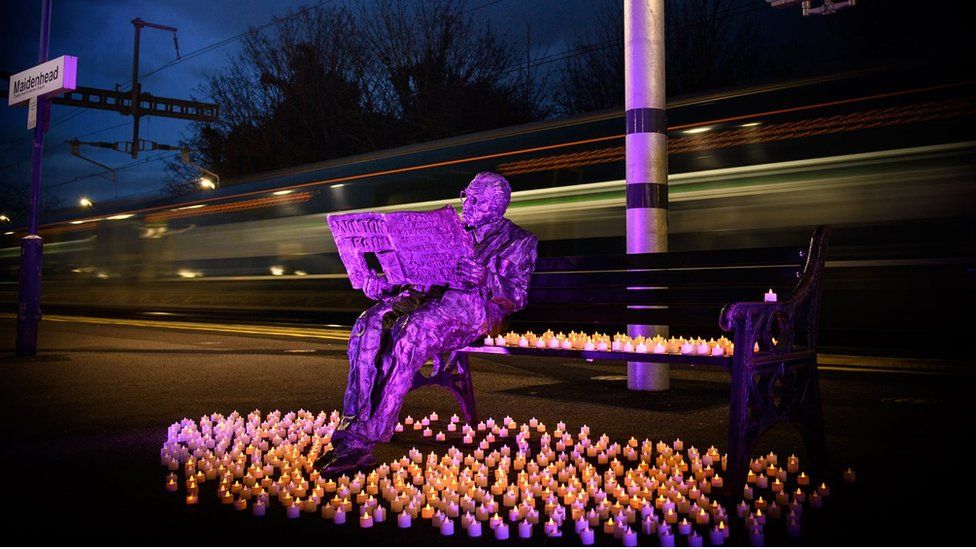
 Statue of Sir Nicholas Winton, the “British Schindler” at Maidenhead railway station

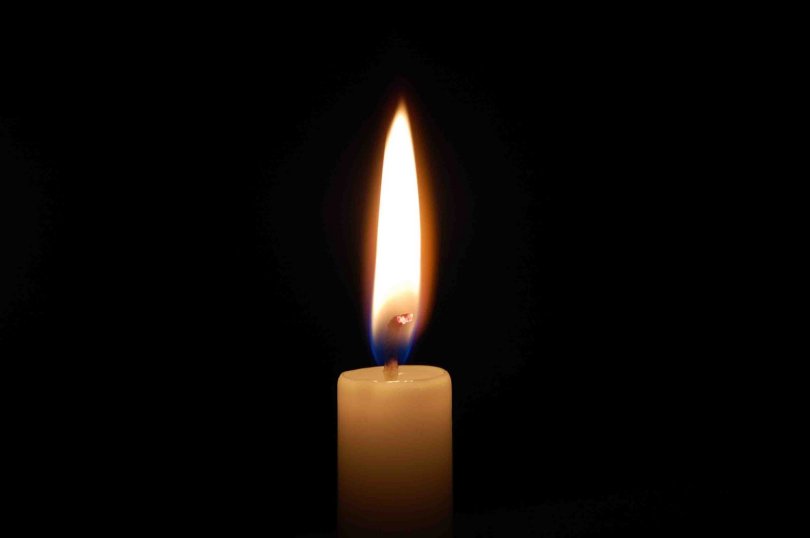
This man, Sir Nicholas Winton, could never be accused of not having done enough. Against all odds, he smuggled 669 boys and girls, destined for concentration camps, out of Czechoslovakia in 1939. Celebrating his unbelievable bravery and life-saving initiative with candles feels a truly fitting way to mark this day. We can all join in for households across the country are being invited to light a candle at 8pm this evening, as an encouragement to us all to “be the light in the darkness.”

A few more things here:

This 4-minute film is a deeply moving testament: Story of Nicholas Winton, BBC That’s life – Short version

Holocaust Memorial Day: Sir Nicholas Winton’s statue lit up: Article about the above lit-up statue

Article in The Conversation: Plans for UK Holocaust Memorial looked promising, but now debate has stalled

BBC 2: Confronting Holocaust Denial with David Baddiel

Should we be seeing the storming of the U.S. Capitol as Trump’s Kristallnacht?

On Sunday 10thJanuary 2021, Arnold Schwarzenegger, the Terminator action hero turned former governor of California, posted a short video on Twitter that went viral. Staring straight into the camera against a backdrop of stars and stripes, the man once known for his body-built body flexed his moral muscles by comparing the mob that stormed the U.S. Capitol with the Nazis.

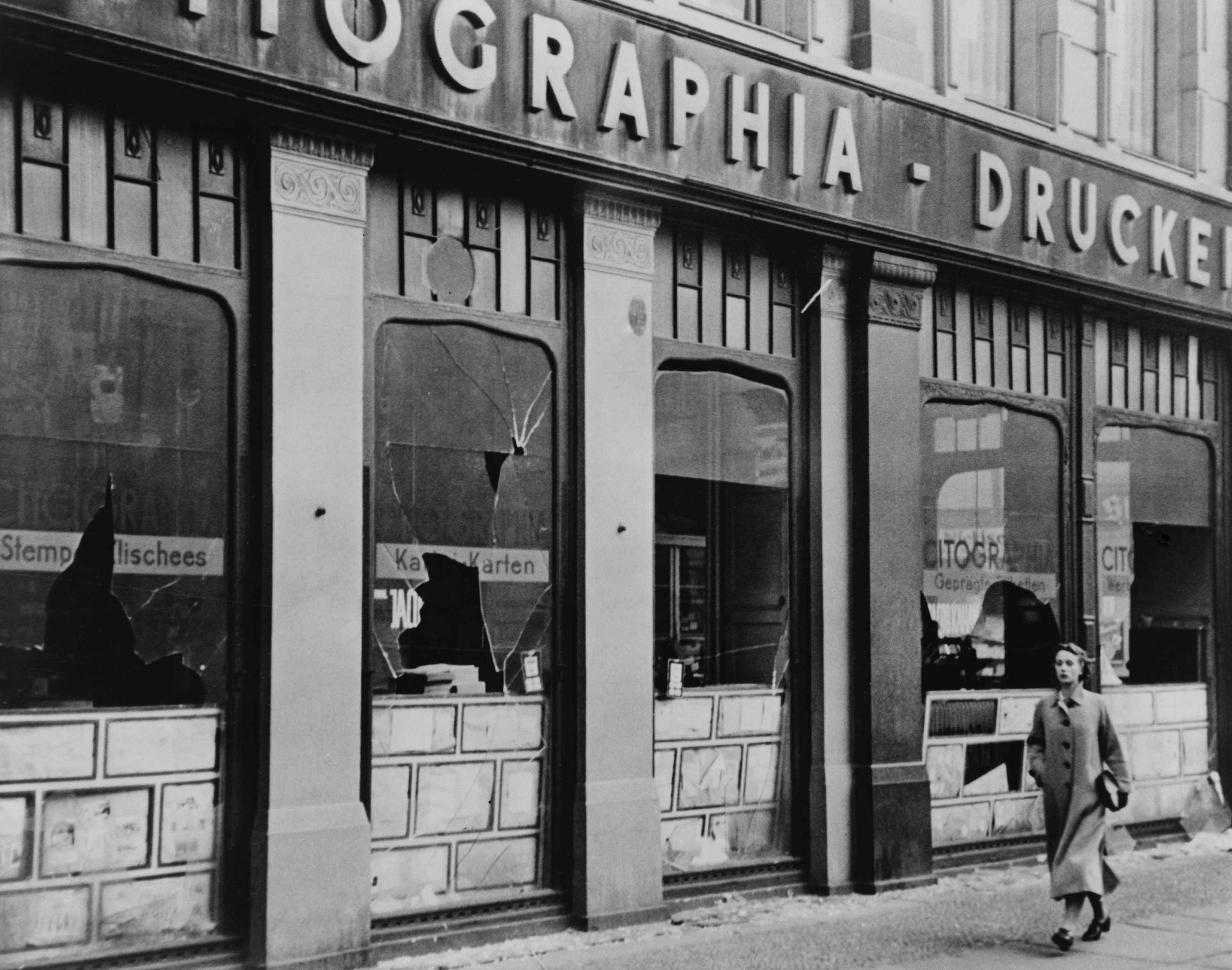
“Wednesday was the Night of Broken Glass right here in the United States,” he said, referring to the horrors of Kristallnacht, the night of 9th/10th November 1938 when Nazis in Germany and Austria smashed the windows of Jewish homes, schools and stores and set fire to the synagogues. “The broken glass was in the windows of the United States Capitol,” he continued. “But the mob did not just shatter the windows of the Capitol. They shattered the ideas we took for granted. They did not just break down the doors of the building that housed American democracy. They trampled the very principles on which our country was founded.”

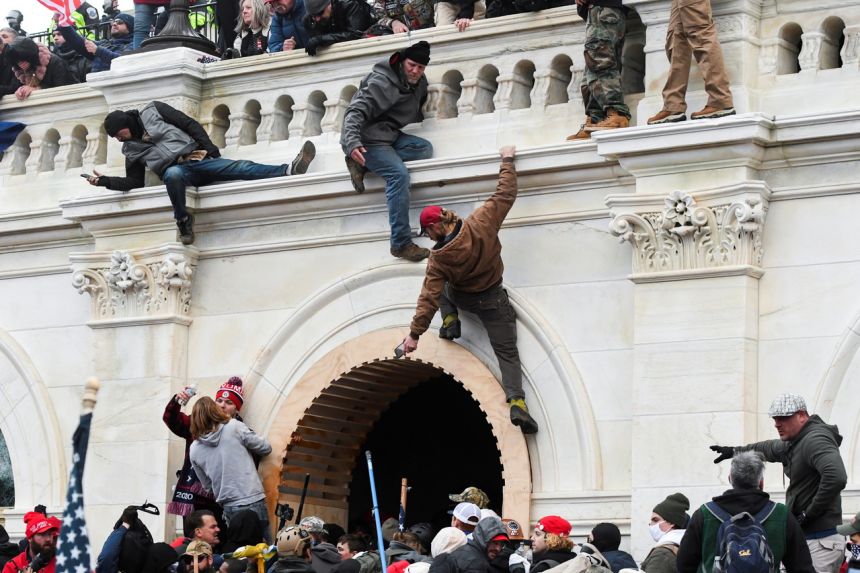
Witnessing, in real time, Trump-incited protestors scale white walls and balconies and swarm into the home of the U.S. Congress was truly shocking. Individually most looked pretty ‘normal’ with their caps, hoodies, beards – or horns – in place of masks. But as a mass emboldened by a collective mission, they felt sinister. A mob stitched together by the blatant, you’d think unbelievable, lies of their leader. Trump’s temper tantrum had turned a corner and stamped on the accelerator to become a genuine threat to life. 

But, though I admire Schwarzenegger for speaking out unequivocally, can you really equate what happened on 6th January with Kristallnacht? Are Trump’s ‘mobsters’ a valid equivalent to the rioting members of the SA (Sturmabteilung) and Hitler Youth? Is Trump an accurate counterpart to Goebbels? And finally, has democracy been shattered in the way Nazis shattered Jewish lives and livelihoods that night? I don’t think so, but I ask genuinely because making such serious comparisons to such a vast audience, albeit diluted by a schmalzy soundtrack and other comforting dollops of Hollywood, carries responsibilities and consequences. If it was America’s Kristallnacht, what should we and the rest of the world be doing about it?

Accurate or exaggerated, Schwarzenegger is certainly more qualified than most to draw such parallels. Born in Austria in 1947, he grew up with and among people who had lived through the Third Reich and Second World War: active cogs in the Nazi killing machine; passive bystanders, looking away but “going along… step-by-step… down the road;” or any of the other shades of innocence or culpability in between. 

What is indisputable in both scenarios – and recent ones here – is the role lies play in leading to things spinning out of control. But it’s intolerance that ultimately fuels these lies. Of course, there’s a healthy form of intolerance, which makes us speak out in the face of ‘wrongness’. But on either side of that, lie two unhealthy extremes: intolerance of anything or anyone that is different to us, ‘other’; and over-tolerance of that which may be familiar, desirable or comfortable to us, but that harms others.

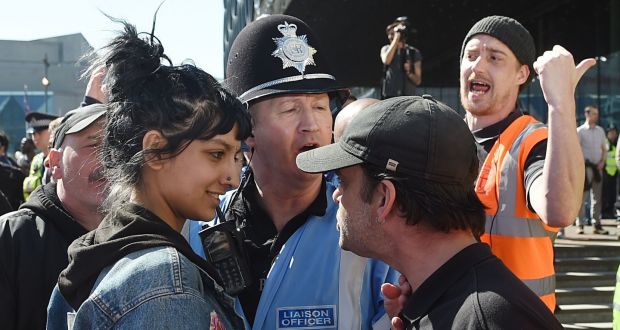
viral image of woman standing up to a far-right protestor

For me, a comparison to Nazi times is more helpful when applied to us… the ordinary people who, back in the 30s and 40s, inadvertently enabled their leaders to carry out murderous plans by doing nothing. Resisting was hard, for it could cost you, or your family, their lives. My mother’s best friend’s family vanished that way. Today, however, we can express a healthy intolerance of what we consider wrong, by resisting the temptation to see the mob as a collective ‘other’ made up of misguided cretins, uneducated loons, neo-fascists, Satan worshippers, conspiracy theorists… Some of them may well be any or all of those things, but they will also all be individuals – fathers, sons, mothers, neighbours – united in believing they are right and on the side of truth and goodness.

Maybe, to prevent re-enactments of Nazi times, we could (or should?) invest the time we spend judging, cursing and dismissing those we see as ‘other’, ‘bad’ or ‘wrong’ more wisely; by trying to listen to and understand them instead. That, after all, was what was neglected in the first instance. And people who feel unheard also feel they have to shout the loudest. And by having to shout, they become distorted versions of themselves. That is what we witnessed on Wednesday. It may sound fluffy or impossible and I am not in any way condoning or defending what happened in Washington. I am just trying to avoid becoming inadvertently complicit in deepening the division between ‘us’ and ‘them’. For we all know where that can lead. 

You can see some pictures here. Or read a bit more about what happened here.